Features of planting plants under an adult tree
Trees in the garden usually take up quite a lot of space, unless, of course, they are columnar, which provide virtually no shade and take up a minimum of space.
Please note! Little sun penetrates under the tree canopy, so not all species will be able to grow there. Shade-loving plants are best suited for this location. You should also choose low plants. Only those species that have low nutrient requirements will feel good under the trees.
Many gardeners successfully use tree trunks to plant useful and beautiful plants, creating the most suitable conditions for them: watering and fertilizing. This will also benefit the trees. Good neighborhood is crucial to ensure their healthy growth, optimal pollination and abundant harvests.
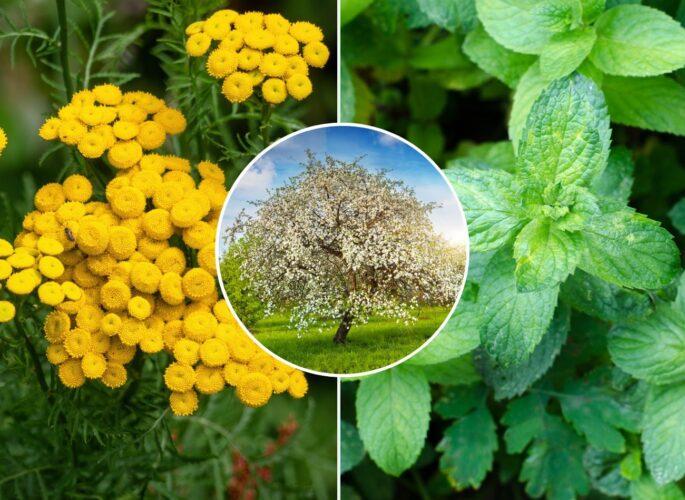
In addition, it is worth planting plants that have a positive effect on the yield of fruit trees. For example, aromatic smells will attract beneficial pollinating insects to the trees, while repelling tree pests.
If you plant the wrong varieties next to each other, you will get smaller yields, greater susceptibility to disease and pest attacks, and poorer plant health.
What plants to plant under fruit trees?
Many garden plants can be grown in circles close to the trunk, taking care that they have enough moisture, fertilizer, light and heat. The soil under fruit trees is usually fertile and moist. In deep shade, with excess or lack of moisture, it is obvious that you will not get a harvest.
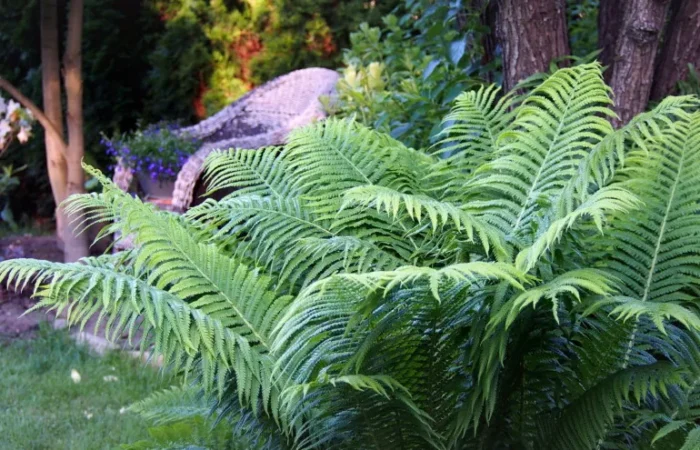
Plants that tolerate shade. Under the crowns of tall large trees in partial shade, you can plant graceful anemones, various varieties of columbine, brunnera, you can also plant lush ferns. The lushly blooming purslane grows beautifully in soft partial shade.
Annual plants are suitable for sowing in tree trunks, sometimes even better than perennials. Most of them are unpretentious, bloom abundantly from spring until frost, have a small root system, so they can be grown even in tree trunks of young trees.
Traditional marigolds are planted in tree trunk circles, only the seeds of low-growing varieties are selected, seedlings of lissum, lobelia, iberis, coleus, and nasturtium are planted.
Low-growing groundcover plants that don’t require much care
Cover crops are a great choice for planting under fruit trees. They can prevent weeds from growing, which can be a problem in this type of garden. Some cover crops attract pollinators, which can help produce more fruit.
Lavender small-leaved is a small semi-shrub, reaching 50-90 cm in height. In summer, flowers appear, usually blue or purple, emitting a very pleasant aroma. But depending on the species and variety, they can also be white or pink.
Lavender repels mosquitoes and aphids. Moreover, bees and bumblebees love this plant. The presence of these insects, in turn, will increase the likelihood of pollination of fruit tree flowers.
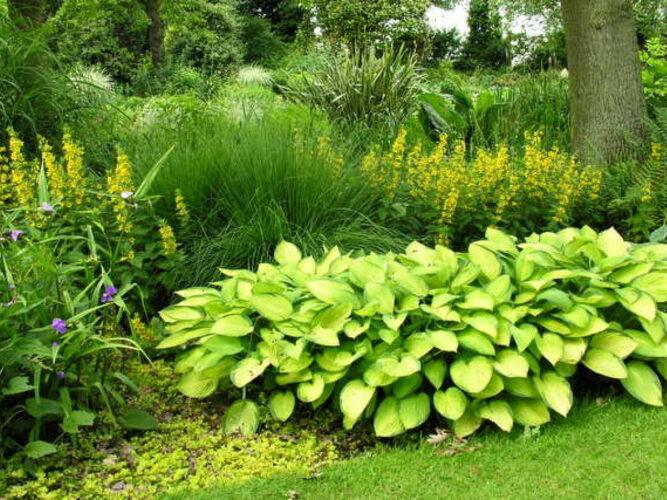
Hosta is a sprawling perennial plant with bright leaves collected in bunches. There are many varieties that can reach a height of 30 to 90 cm. They often bloom in the summer, exuding a very pleasant aroma. However, it is necessary to take into account that they strongly attract snails.
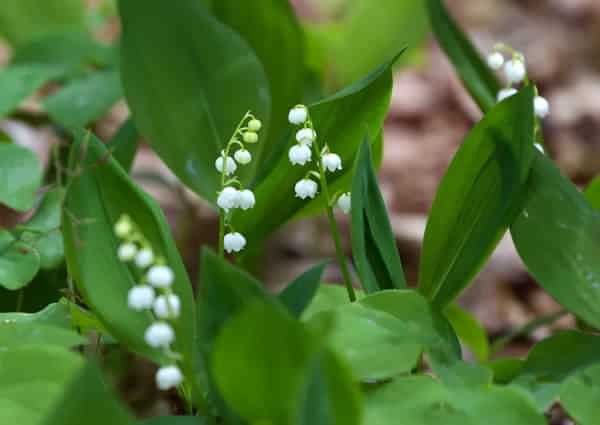
Lilies of the valley are beautiful ornamental plants, ideal for planting under fruit trees. They require virtually no care and love a semi-shaded or shady spot. They can reach up to 30 cm in height. They bloom beautifully in May, producing an intense aroma of flowers.
Violets are groundcover plants suitable for planting under both bushes and fruit trees. Their flowers are small and blue-violet. Violets bloom in spring and grow up to 15 cm in height.
Spring bulbous flowers, tulips and daffodils, will add beautiful color and life to the area around cherry trees in early spring.
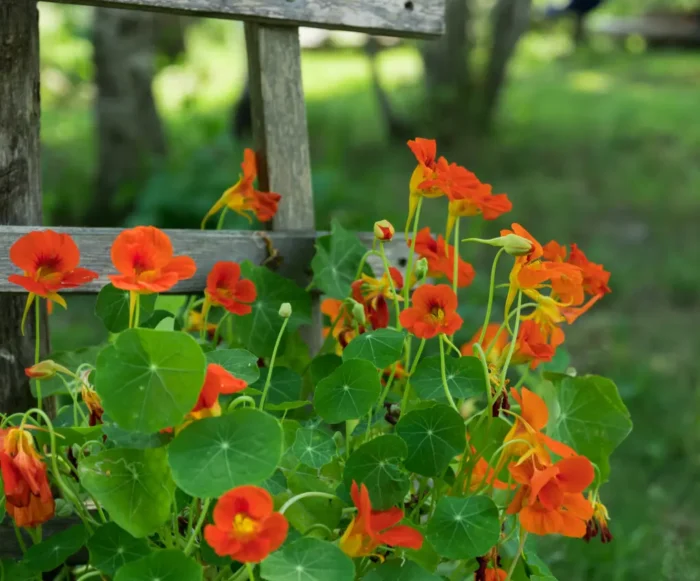
Nasturtium repels aphids that attack apple and pear trees. Although it is better to choose a sunny place for it, it also feels good in the shade of a fruit tree. This annual plant has creeping shoots, spreads by seeds sown directly into the ground.
Common tansy . This perennial is undemanding and helps repel pests (even mites) that attack fruit trees. In addition, tansy can be used to make decoctions, infusions and tinctures that are useful in combating fungal diseases of fruit plants.
Marigolds are a very easy-to-grow ornamental plant. The characteristic, intense aroma repels all pests of fruit trees. In addition, they destroy nematodes that are harmful to plants in the soil. In general, they have a positive effect on the growth and yield of fruit trees.
Peppermint produces volatile compounds that also repel pests. Mint is easy to grow. It requires sandy soil and a shady location. Mint is widely used in cooking. Other plants that are great for planting under fruit trees include ornamental perennials.
Garlic, both common and decorative, protects fruit trees from pests and fruit diseases. It is also effective in combating moles and voles.
Bulbous flowers under trees
While the trees are leafless and do not cast a strong shadow, early bulbous flowers can grow under them: tulips, small daffodils, crocuses, etc.
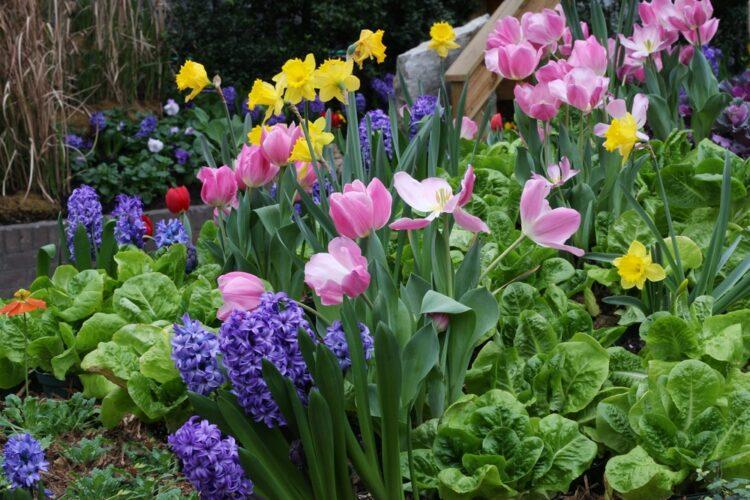
Spring bulbs grow well in circles close to the trunk. Small bulbs – crocuses, grape hyacinths, snowdrops, hyacinths do not require annual digging and develop well in ground circles even in very shaded areas. These plants bloom and grow actively in the spring and have time to wither and fall into a state of rest even before the tree crown is fully open. Therefore, they have enough sun and warmth.
In autumn, you need to make sure that the garden with trees is decorated when spring comes. In September or early October, they are planted under the trees to give them time to take root and prepare for winter. Then in the spring, when the frosts go away, they will break out of the ground and turn into flowers.
Please note! It is not recommended to plant most tulips under trees. If you do, you should choose earlier flowering species and varieties. But remember that the roots of trees and shrubs take a lot of water and nutrients from the soil, so these flowers will suffer a little. Their bulbs will be weaker next year than those grown in the right place.
Crocuses can also grow under trees, as they tolerate shade well. They are planted in September-October. These plants spread themselves. They are grown in one place for 2-5 years.
The small flowers that have faded die, and only the bulbs remain in the ground. Various types of sedum will cover the ground with a picturesque carpet, create a beautiful background for the bulbs, and after flowering, disguise the withered leaves.
Additional information! You should plant many different plants together. This will not only protect against pests and diseases, but also look great.
What to plant under trees to get rid of weeds?
The simplest and fastest solution is to cover the tree trunks with pine bark mulch. An effective solution would be to sow grass. Plants under the tree crown grow well and form a dense turf through which weeds cannot penetrate.
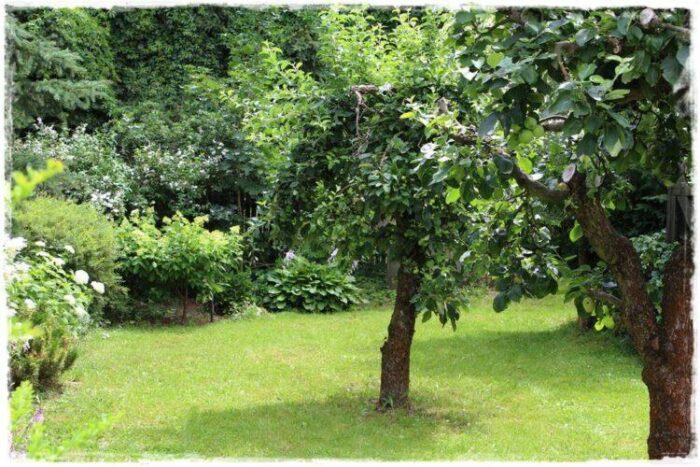
Good lawn care under trees: watering, fertilizing improves their growth, productivity and decorativeness. Fruits become larger and tastier, and tree roots are protected from damage during cultivation.
In the tree trunk circles you can plant fescue, meadowsweet or Moorish lawn, which requires virtually no maintenance. The orchard becomes a wonderful place to relax, beautiful and cozy.
Vegetable plants and herbs
If you follow a number of important rules correctly, you can even grow strawberries, vegetables, salads or aromatic herbs. Modern hybrids and varieties of cucumbers increasingly need protection from the scorching sun during hot summers. Therefore, cucumbers can be placed under the crowns of large trees and get a normal harvest.
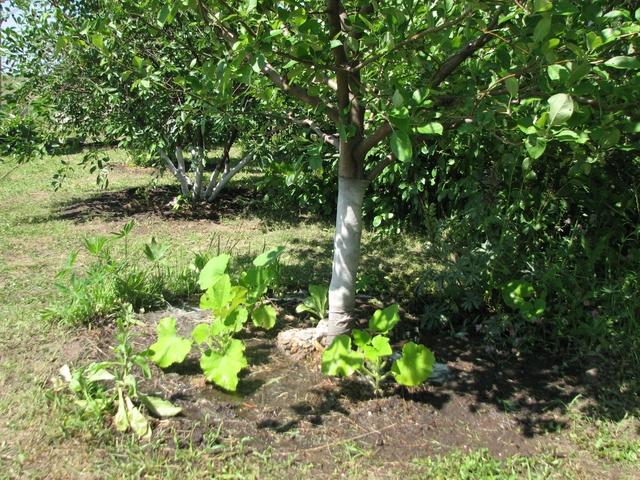
They choose varieties that tolerate shade well and are resistant to major diseases, and also choose good self-pollinating hybrids. In order for cucumbers to grow well in tree trunk circles, they create good conditions for them.
In the shade of trees, you can grow onions for greens and even get small but tasty bulbs. And onion species that grow in bulb nests grow even better in partial shade, for example, shallots and chives.
In spring and early autumn, you can get a good harvest of leaf lettuce. Dill and leaf parsley grow well under trees. Sorrel also grows well in tree trunk circles.