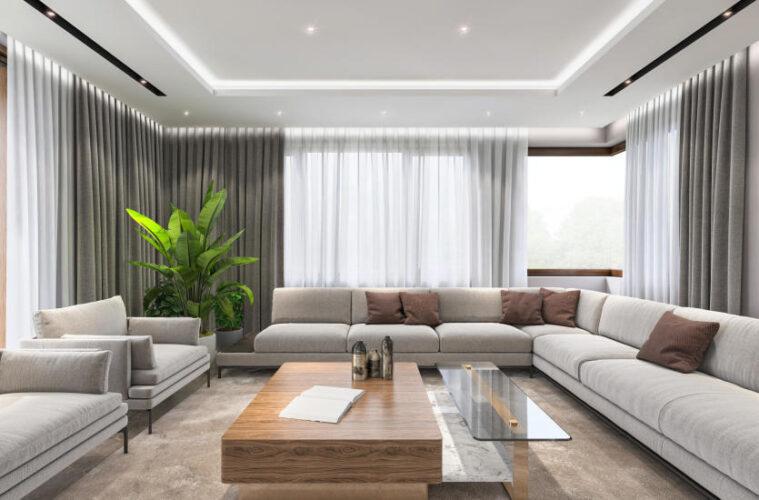
What is a suspended ceiling and its advantages?
This is an alternative to a traditional ceiling finished with paint or plaster. The very light structure, located just below the ceiling, performs both functional and decorative functions. It is worth knowing that classic ceilings often crack, resulting in unsightly scratches. There is no such problem with the suspended model. This solution has other advantages:
- a beautiful decorative effect that is perfect for modern interiors:
- able to both reduce the height of the room and visually increase it;
- the possibility of separating zones in a particular interior;
- allows you to install lighting that is perfect in the kitchen, bathroom or bedroom;
- the ability to mask visible installation cables;
- a suspended ceiling makes the acoustics quieter.
Can be used by both those who want to make their apartment smaller and those who want to visually enlarge it. Lowering the ceiling can give narrow or very small rooms a new shape. In addition, it will be easier to install spot lighting on such a ceiling, which will play with light in the interior.
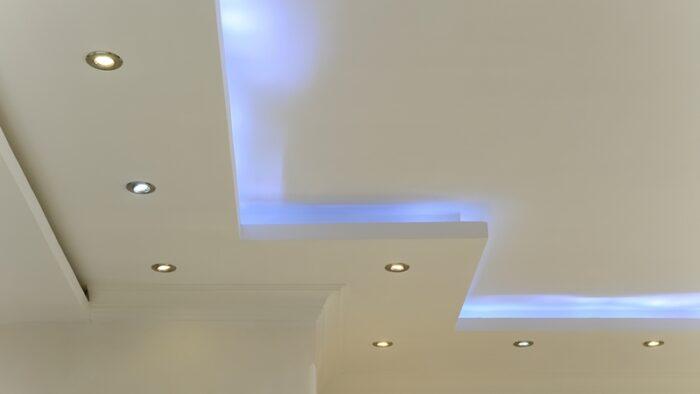
This is a way to make the interior more attractive and disguise various shortcomings, provide an aesthetic finish, and hide installations running under the ceiling. Under the suspended ceiling you can easily hide any cables, pipes or ventilation that you do not want to be built into the wall. It will increase fire safety and improve the heat or sound insulation of the room. Lowering the ceiling will improve the thermal insulation of the apartment
Note! A suspended ceiling is not necessarily a uniform surface. It can be multi-level, have interesting shapes. The design allows for the free formation of shapes and arches, including decorative shapes. The possibilities in this case are almost endless. Implementation depends on the ingenuity of the designer and the financial capabilities of the user.
A suspended ceiling has not only advantages related to its functionality. It is a decorative element and can look extremely attractive. The ceiling creates natural boundaries and transitions between one area and another.
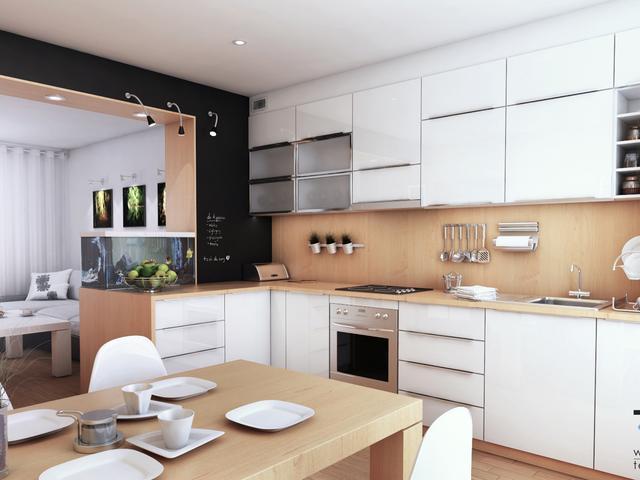
This can be used in the kitchen/dining room and many other rooms.
Types of suspended ceilings
Suspended ceilings look very aesthetically pleasing and fit into modern apartments. They can be divided according to the materials used. Kitchens and bathrooms can be problematic due to high humidity and require materials of appropriate quality, but nowadays the choice is so wide that different technologies are often combined.
Note! It is worth remembering that in rooms exposed to moisture, it is necessary to install a suspended ceiling of the appropriate type. Otherwise, water may begin to accumulate and after a while fungus will appear.
Before installing a suspended ceiling, you should decide on its type:
- monolithic is made of plasterboard, but has some disadvantages, since it needs to be painted;
- The coffered ceiling is lighter, faster to manufacture and provides easy access to installation under the ceiling;
- In addition, there are suspended ceilings for wet rooms.
Gypsum boards are lighter than gypsum fiber boards, but less resistant to high levels of humidity. Due to their structure, fiber gypsum slabs perform well as sound insulation. Plasterboard ceilings are highly durable.
Cassette ceilings have the ability to create various patterns and compositions that add character and elegance to the room. They optically enlarge the space and make the room more stylish. You can choose from a variety of models, colors and materials.
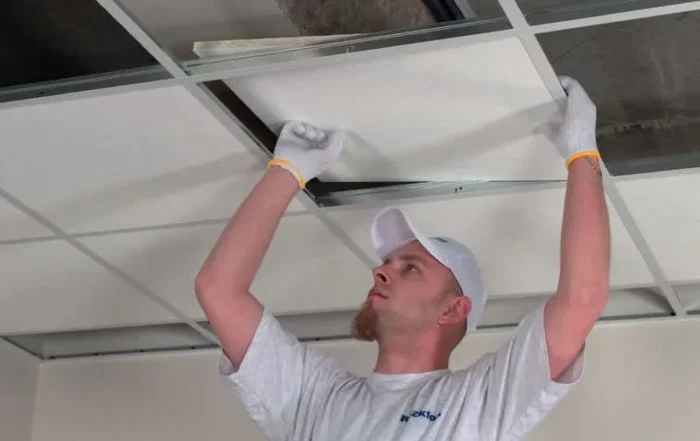
One of the biggest advantages of such ceilings is the ease of installation. The cassettes are placed on a suspended metal profile. The most common elements are 60×60 cm in size.
The installation of panel ceilings is similar to the installation of coffered ceilings. Panels can be made of various materials, for example, PVC, metal or materials imitating wood. They are also available in various sizes and colors.
A suspended floating ceiling creates the visual impression that it is floating in the air.
This is due to the fact that floating ceilings are attached to special cables attached to the ceiling or walls. These types of suspended ceilings are also quite easy to install.
Stretch ceilings are made using sheets of flexible foil and tensioners. This type is usually installed only in large rooms where the ceilings have a large surface area. Sheets are available in various colors and textures, which allows you to best match them to your interior
The disadvantage of suspended ceilings is their fragility – they are not strong enough to support the weight of the lamps.
How to make a stretch ceiling
You can install a suspended ceiling yourself, but you must have the appropriate knowledge in this area. Installing a suspended ceiling is a complex task, since both installation and subsequent aesthetics are important.
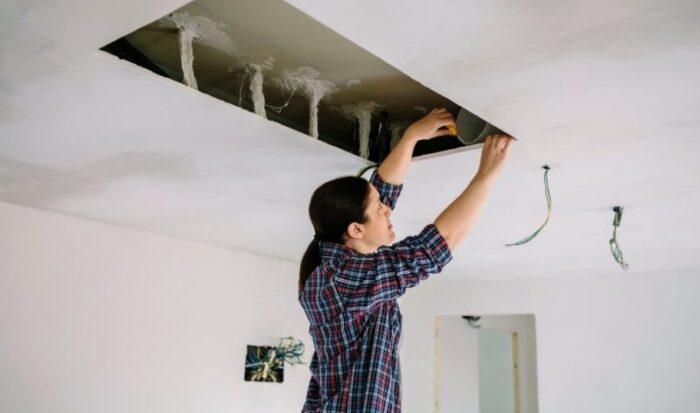
Bent surfaces can be prepared by the manufacturer, but most often they are bent when working with the ceiling. Sometimes the suspended ceiling needs to be additionally painted and elegant lighting installed. Therefore, it is best to entrust this task to specialists.
Why choose a stretch ceiling? There are more advantages than disadvantages, but they are there. It should be borne in mind that although a suspended ceiling is a lightweight structure, it is not always possible to install it with very weakened ceilings and in relatively low rooms. Another disadvantage of this type of solution is that if the devices or installation cables located under the suspended ceiling fail, the panels have to be dismantled, which leads to a lot of chaos in the apartment.