


Spinach – botanical description
Spinach (Spinacia oleracea) is an annual plant belonging to the Amaranth family. Wild spinach is native to Asia and is now grown in many parts of the world. The plant usually grows up to 50 cm in height. The long tap root reaches up to 180 cm.
The edible part of this plant is its leaves, which grow on a short shoot. Leaves in the initial phase of growth are grouped in the form of a rosette, then stretched along the stem.
Flowers in spike-paniculate inflorescence, dioecious: male – collected in inflorescences, female – grow singly in the axils of the leaves.

The edible leaves are low in calories, with only 23 calories per 100-gram serving. Spinach composition: contains vitamin A (most of all vegetables), vitamin C, B1 and B2, E and mineral salts: iron, potassium, phosphorus, magnesium, sodium, iodine and folic acid. It can be eaten fresh or after processing. Spinach leaves can also be frozen.
Growing conditions for spinach
The vegetable grows best in cooler climates – it is resistant to low temperatures. Seeds germinate already at 3-4°C. A place to grow spinach should be sunny.

In summer, when the temperature is high and there is little moisture, it gives many shoots with inflorescences, and loses its value. The optimum temperature for growing vegetable spinach is 15-18°C.
We grow spinach on fertile sandy and loamy soils with a neutral reaction. Spinach growing on barren soil becomes bitter.
Vegetable spinach requires moist soil, both during emergence and during growth. Proper soil moisture contributes to good crop quality: the leaves are large, juicy and tasty. During drought, spinach has leathery and small leaves.
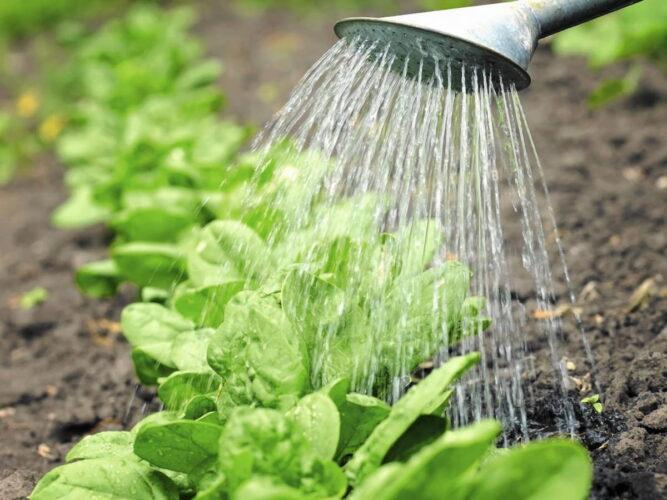
The plant responds well to organic fertilizers. Spinach is susceptible to manganese deficiency.
The vegetable is grown in the garden in the second year after manure is applied; on lighter soil, compost can be applied before sowing. In spring and autumn, they are fed when 2-4 leaves appear on plants, and the second time in a week.
When and how to sow spinach
It has a short growing season, so it can be sown three times in the ground.
Spinach planting. It can be held from March to September, but when the day is long, it quickly produces flower shoots instead of tasty leaves. It also grows poorly in hot weather. Therefore, spinach must be sown at the following times:
- in early spring (until mid-April), you can count on a harvest in May;
- in late July and early August – the harvest will be received in September-October;
- at the end of summer from the third decade of August to mid-September for the next year’s spring harvest.
Spring sowing is carried out before tomatoes, cucumbers and late cabbage.
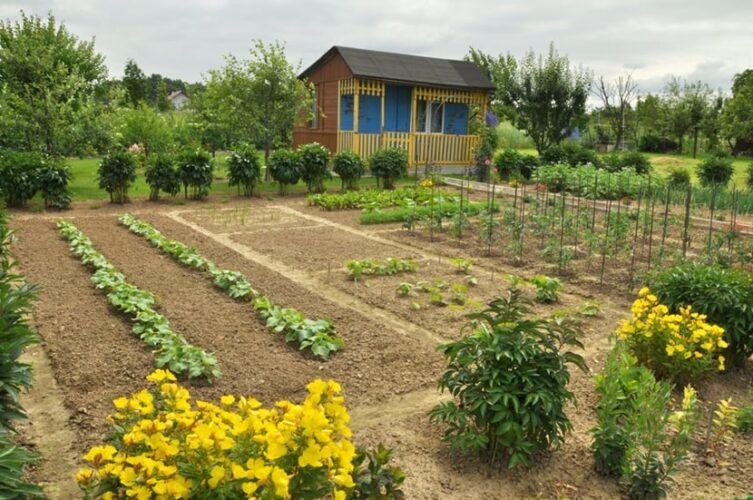
For autumn harvest, it can be grown after early cabbage, cauliflower, early potatoes.
Note! It is worth remembering that due to common diseases and pests, vegetable spinach should not be grown after or next to beets. They belong to the same family.
Choose the right variety for each harvest. Spinach seeds are sown at a depth of 2 cm, in rows every 20 cm. If planted too densely, it should be thinned out after emergence, leaving plants at a distance of 5-10 cm. Spinach that grows too densely does not produce large leaves and break into seed shoots . A vegetable in the same place can be sown every 3 years.
During the growth period, spinach should be systematically weeded and watered. You also need to loosen the soil around the plants. Young shoots are tender and can easily be drowned out by unwanted neighbors. The crop is harvested 6-8 weeks after sowing, cutting off rosettes of leaves.
Note! In vegetable spinach, under the influence of long-term storage at high temperature (due to heating), harmful nitrites are formed. Excess fertilization with nitrogen also contributes to the accumulation of nitrite.
Blooming spinach is not suitable for cooking – it can only be used as green manure. Wintering varieties should be carefully covered even before the first frost. Shelter should be removed in early spring.
Use of spinach
Wintering varieties give the first harvest in April. Fresh spinach is the tastiest, but if you have too much to harvest, you can freeze the leaves. The vegetable can also be grown in pots on the windowsill and boxes on the balcony.
Vegetable spinach is best harvested in the early morning or evening hours and either frozen or used for cooking right away. Long-term storage reduces the nutritional value of spinach leaves.
In the kitchen, spinach is served both as a side dish and as a main dish. It is worth cooking with pasta, cheese and meat.
Delicious salads are prepared from fresh leaves with the addition of other vegetables, as well as seeds, nuts or cheese. The sour spinach soup is also great.
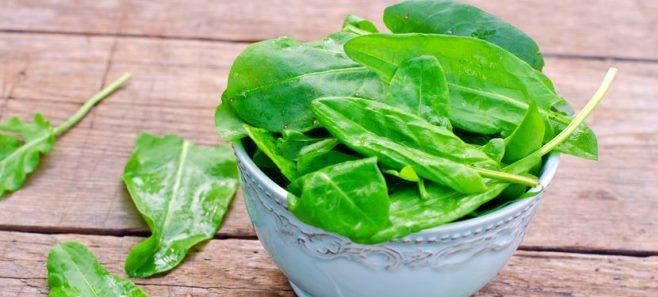
In addition to the beneficial properties of spinach, you can hear the relatively high content of oxalates. These oxalic acid salts limit the absorption of healthy substances, namely calcium, magnesium and iron (plant-derived). On the one hand, spinach is a fairly rich source of minerals, on the other hand, the substances present in it prevent their absorption.
Due to the content of oxalic acid, the leaves should not be eaten in large quantities by the elderly and people with kidney and liver diseases.
Healthy people who consume spinach in reasonable amounts are not at risk because oxalates are efficiently excreted in the urine.
Spinach in the kitchen
Spinach salad has a rather characteristic taste, the use of fresh, young leaves in the salad is not only the most useful, but also the most delicate in taste. Spinach is easy to add to your daily menu, for example, adding it to sandwiches instead of lettuce, as well as to salads, soups, scrambled eggs or pancakes.

Green leaves can be the main dish. Spinach is paired with cream, cheese and egg. These protein additives pleasantly soften the savory taste and give the leaves a rich texture. Ideal spices for spinach include garlic, nutmeg, onion, as well as cayenne pepper, cardamom, and sesame. The health benefits are really significant!


