

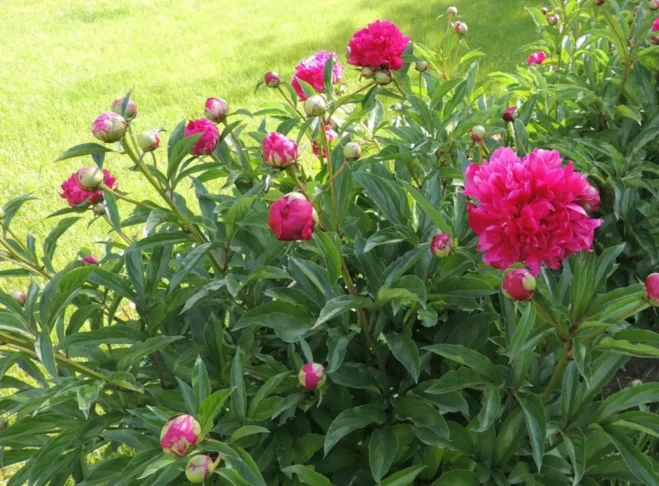
What do peonies look like?
The history of peonies begins in China and Japan. In their countries of origin, they symbolize happiness, well-being, success and prosperity.
Peony is a perennial herbaceous plant or shrub. There are about 35 species of this flower, and each variety delights with its uniqueness and delicacy, and with proper placement it can grow in one place for up to 20 years. The most popular are Chinese peonies, which have a tuberous root, and their inflorescences are unusually decorative.
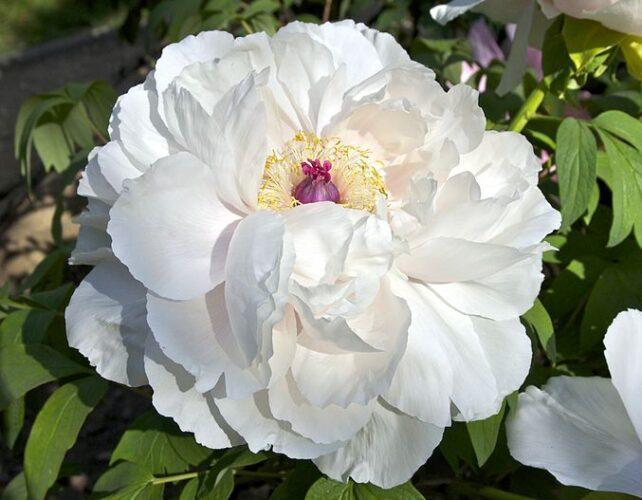
Peony flowers are large, round, with tightly packed petals. They can be single, semi-double or double, and even two-color. They come in a whole range of colors: from white to orange, pink and deep red. Some of them change color as they ripen, and almost all varieties have a wonderful aroma.
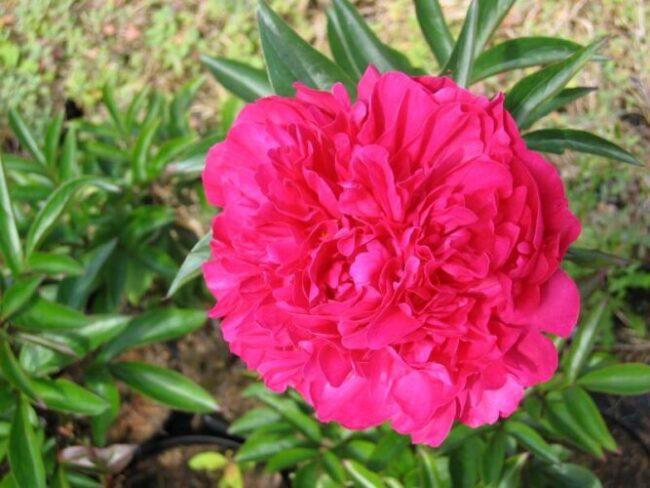
Types of peonies
From a botanical point of view, peonies are herbaceous perennials or small shrubs.
Herbaceous peonies are a group of peonies popular in gardens due to their beautiful flowers and ease of care. Their shoots die off in winter, but grow back in spring. Herbaceous peony flowers are usually single or double and come in a variety of shades, such as pink, red, white, yellow or a mixture of these colors.
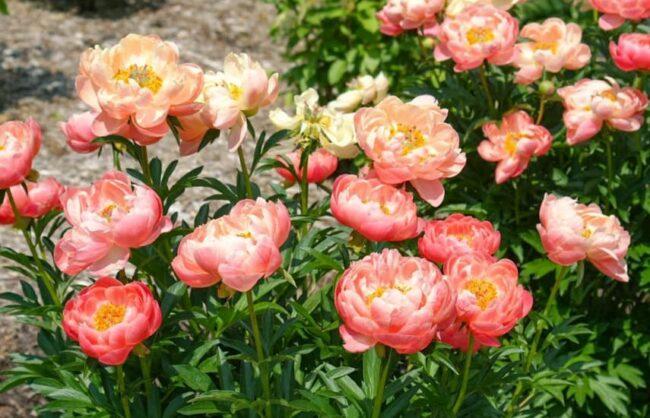
Peony officinalis. This plant has beautiful pink flowers and is used in traditional medicine mainly to relieve pain and inflammation. Reaches approximately 60-80 cm in height. Flowers bloom in the second half of May and do not require special care.
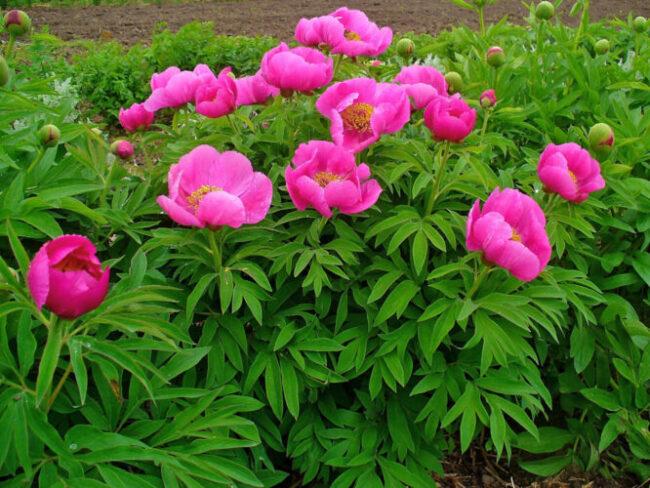
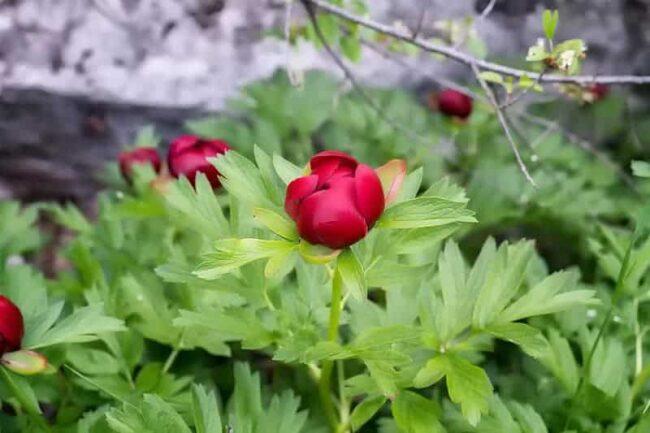
Delicate peony is a variety characterized by delicate feathery leaves and bright red flowers. A short peony, called “dill” because of its delicate leaves. It is a decorative species valued for its sophistication and unique beauty. This species blooms from April.

What are the features of tree peonies?
The tree peony has a spreading shrub with woody or semi-woody shoots, numerous leaves and lush and impressive flowers. Rigid stems do not require support. Compared to well-known perennial peonies, they reach much larger sizes; they can grow up to 1.5 – 2 meters in height, and those growing in the natural environment – up to 4 m. Every year, flower buds appear on their tops, which begin to bloom at the turn of May and June .
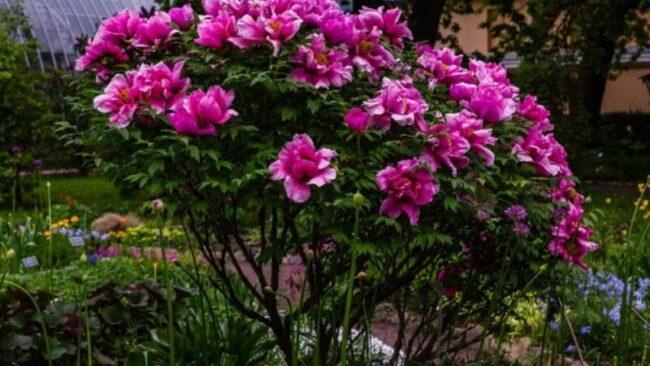
Tree peonies are prized for their exceptional beauty and ornamental value, both in gardens and as cut flowers for bouquets. The older the bush, the more spectacular the flowers. They are usually large, reaching a diameter of 15 to even 30 centimeters. They are very impressive with their color and aroma. Pink, red, white, yellow are also found with two-color petals.
Note! Another advantage of peonies is their ease of care. Choosing the right place is the key to abundant flowering.
They do not like stagnant water and heavy and acidic soil, which is why they often die in such places. In particular, feeding the plant is important, as it affects the development of flowers. This should happen every spring, in March or April.
Tree peony is the most disease-resistant of all other varieties. However, it happens that it is attacked by a fungal disease – gray rot. To combat it, you need to react quickly and spray with fungicides.
How to properly care for peonies?
Peonies are perennials that usually do not bloom profusely in the first year after planting. Sometimes it can take several years before a peony reaches full maturity and begins to bloom profusely.
Rules for growing peonies:
- We plant peonies in the fall so that they take root;
- they don’t like to be replanted too often – perhaps that’s why they stop blooming for many years;
- it is advisable to feed them with organic fertilizers – it is best to use compost;
- love soil with a pH of 5-6;
- long-lived plants, growing in one place for a long time, producing more and more flowers;
- during the period of their growth and flowering, you should water abundantly, then moderately;
- pests and diseases are rare;
- They are grown by dividing the bushes in early September.
They should be planted in sunny or semi-shaded places, but should be protected from the wind. Peonies tolerate any type of soil well, but the best solution is fertile soil with a pH of about 5, rich in humus.
The best time for planting is late summer (August, September). The rhizomes should be covered with soil about 4 centimeters. Planting too shallow or too deep will delay the flowering period.
The plant does not like transplanting; those planted in a new place need time to take root. They are unpretentious and grow in any soil, but they require a lot of energy to produce flowers. And this requires a large amount of nutrients. Peonies bloom better and more abundantly in fertile, heavy soil, although then they grow a little slower. In sandy soil they may produce many leaves each year but few flowers.
Note! Peonies have large flowers, but they can be made bigger. When the main apical buds on the stems begin to bloom, the accompanying lateral buds can be removed. Nutrients will be sent directly to the main kidneys. There will be fewer flowers then, but they will all bloom a few days earlier and will be really huge.
Planting peonies
The most important thing for peonies to bloom is the planting depth. There cannot be more than 3–5 cm of soil above the buds growing from the roots. If you plant peonies deeper, they will not bloom. Planted too deeply, they may not bloom even for several years. For the same reason, peonies should not be mulched with too thick a layer of mulch.
They also will not bloom well in shady areas or if they have too much competition for nutrients from other plants growing nearby.
Before planting peonies, it is best to dig a large, deep hole and mix the selected soil with plenty of compost or well-rotted manure. Place a layer of drainage at the bottom of the prepared hole, which will protect the roots from immersion in water.
The plant requires watering, especially during flowering. It is also worth watering it during dry periods. In the remaining months, rainwater collected from the soil is sufficient for its development.


