


Why you should grow annual plants
The beautiful annual flowers grow quickly and are easy to fill your garden with, even if you’re just starting out in gardening. It is worth choosing well-known and proven species that will not cause any special problems and will cope well with our climate.
Many gardeners sow annuals directly into the ground, as this is a much less labor-intensive method than growing from seedlings. April is usually warm enough to sow seeds directly into the ground. Seeds of plants that require a relatively short period of time from sowing to flowering (usually 8 to 10 weeks, up to a maximum of 12 weeks) can be sown directly into flower beds and flower beds.
This is correct, especially in the case of plants that do not like transplanting. They should always be sown immediately in a permanent location. Some annual plant seeds can be sown in the fall, allowing the plants to bloom earlier in the spring. Young plants should be covered with coniferous branches to protect them from frost.
How to grow annual seedlings
Some of the most popular annual flowers include, for example, cornflowers, field poppies, zinnias, snapdragons, marigolds, sweet peas, nigella (black cumin), delphiniums, Irish bluebells, purslane and many others.
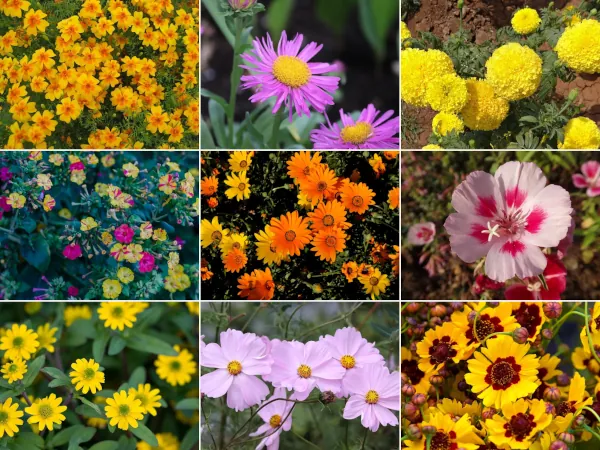
Some can be sown directly into the ground, without the need to prepare seedlings, while others should be sown in a greenhouse, or in boxes placed on a windowsill in an apartment. Only when they grow up should they be planted in a permanent place. Annuals grown from seedlings are more beautiful, of higher quality and bloom much earlier than flowers sown later directly into the ground.
Depending on the requirements of individual species, seedling preparation begins at different times:
- from January to mid-March – in a greenhouse or on a windowsill in an apartment;
- from the second half of March in unheated polytunnels;
- from the beginning of April in greenhouses or in beds.
You can sow in this way in the second half of March on a windowsill in an apartment, providing the seedlings with a suitable temperature, humidity and light. Boxes can be either plastic or wooden. A drainage layer of sand 1 cm thick is placed at the bottom of the box, and then filled with seedling substrate.
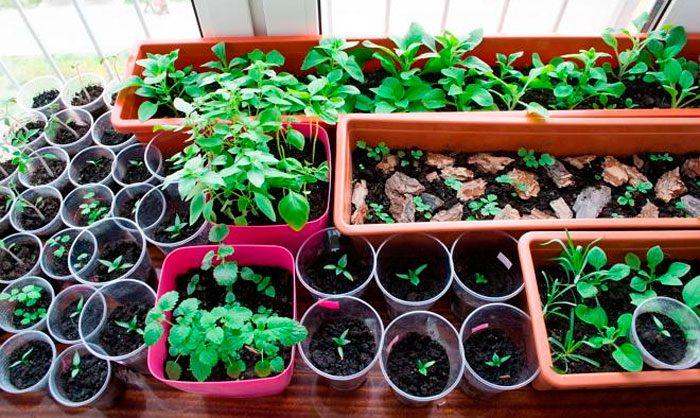
It is best to use a ready-made substrate designed for this purpose. They also use a disinfected mixture of deoxidized peat, sand and leaf soil (in equal proportions)
The seeds are sown scattered and then covered with a very thin layer of sand (petunia seeds are not covered at all). Cover the top with glass or transparent film. The optimal germination temperature is 18-20°C. When the first shoots appear, the glass or film is removed.
Plants need to be provided with a constantly moist substrate, but it should not be too wet. Watering is provided by carefully spraying the substrate.
Picking seedlings
Most of the sown plants should be pruned two to three weeks after emergence. All plants first produce two (or one) so-called cotyledons, which most often have an oval shape, and only then do leaves appear that are similar to the leaves of the given plant. You should wait until 2-4 true leaves appear on each seedling.
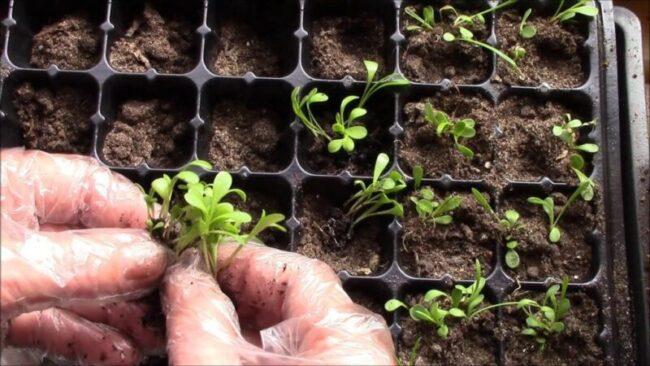
They are transplanted into larger pots or unnecessary plants are removed to prevent them from growing too densely. This means that we select the strongest seedlings and transplant them into separate pots. This is due to the fact that we most often sow seeds more densely. Some plants have very small seeds and it is difficult to sow them in any specific quantity.
Note! During this procedure, it is worth slightly shortening the roots of the seedlings, which will stimulate their growth and better rooting of the plant.
Seedlings are planted in the ground after May 15, when the threat of frost has passed. Before planting outdoors, plants need to be hardened off, which prepares the plants for the harsher conditions they will experience outdoors. This involves gradually lowering the temperature, limiting watering and intensive ventilation, which lasts about a week.
Where to buy seeds of annual plants for seedlings?
Storage conditions have a huge impact on the ability of seeds to germinate. Buy seeds from well-known and trusted places (stores and garden centers). Never buy seeds from street vendors. Perhaps such seeds are cheaper, but there is no guarantee that they were stored correctly.
How to sow seeds directly into the ground
Seeds can be sown in the ground when the ground has already warmed up. Hard, frozen soil is not suitable for sowing seeds. Dug up, loosened soil provides young plants with the best conditions for development.
Additional Information! Before sowing seeds in the ground, the soil in the garden bed should be well cultivated so that it has a fine structure. This will prevent the seeds from sinking too deeply between the earth clods. It is better if the soil is dug up in the fall with fertilizers, such as compost or manure. Then in the spring, simply loosen it with a hoe and level it with a rake.
The depth of sowing seeds in the soil depends on their size. Typically sown at a depth equal to three times their size. Very small ones are sown on the soil surface without falling asleep. Small seeds are sown in rows so that when the seedlings appear too densely, some of them need to be broken through.
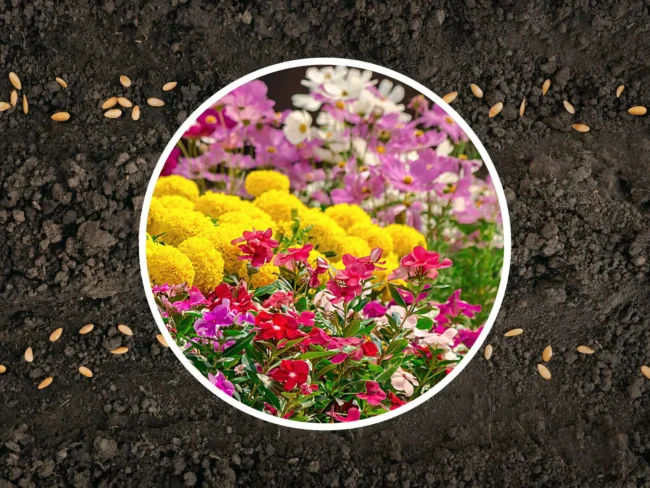
Larger ones are sown in nests, for example, nasturtiums, or can be sown individually (so-called spot sowing). Seeds sown in the ground need a lot of moisture to germinate, so the beds should be watered regularly. To avoid washing out the seeds, water with a gentle stream of water.


