

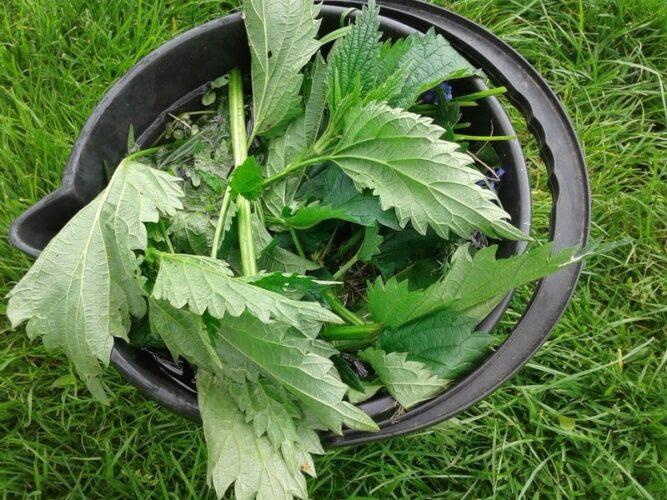
Nettle infusion: properties
Common nettle (Urtica dioica) is one of the most common species. It can be found in forests, gardens, clearings and thickets. Although she is not very beautiful, her presence on the site can bring a lot of benefits.
This plant has many valuable properties. Currently, it is increasingly used to produce high-quality fertilizers and plant protection products – liquid manure, extract and decoction.
Nettle, as a fertilizer, contains large amounts of nitrogen, potassium, iron, calcium, silicon, zinc, as well as organic acids and mineral salts. Thanks to such a high content of nutrients, it stimulates other plants, ensuring their abundant flowering and productivity. Making this natural fertilizer is extremely simple, and the positive effect is noticeable after the first use.
Nettle infusion recipe :
1 kg of freshly picked nettles;
10 liters of water,
Additional Information! It is better to collect grass before the flowering period. Young leaves contain concentrated amounts of nutrients. Then the nettles must be cut into smaller pieces and placed in a wooden, ceramic or plastic container and filled with water. The container should be covered in such a way as to provide air access. The free flow of oxygen is essential in fermentation processes.
The nettle infusion should be stirred once a day for 2-3 weeks. Although in the summer months, when it is hot outside, the fermentation process can be completed within a week. Natural fertilizer will be ready for use when the water turns brown and foam disappears from its surface.
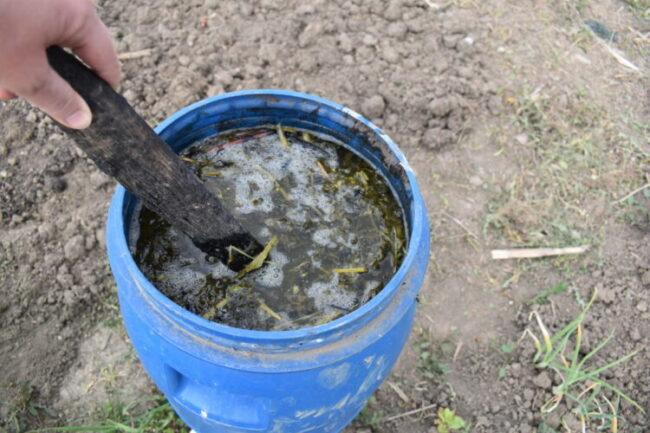
Unfortunately, fermenting manure smells very bad. By adding basalt flour or valerian to the solution, you can slightly eliminate the unpleasant smell of the fertilizer.
Using nettle infusion for plants
Properly prepared nettle slurry should be diluted with water before use. If used for watering plants, dilute it in a ratio of 1:10; if we want to spray it, dilute it in a ratio of 1:20.
Manure is usually applied every 10-14 days or less frequently, depending on the fertilizer needs of the plant species. Plants regularly fed in this way grow faster and become more resistant to pest attacks. They have more leaves, stronger stems and root systems. Nettle infusion has a particularly positive effect on tomatoes, as it helps protect against late blight.
In addition, slurry can also be used as an effective plant protection product, suitable for combating pests such as aphids, spider mites, scale insects, as well as fungal diseases, such as gray mold or downy and powdery mildew.

For best results, slurry should be applied as soon as the first symptoms of pests or diseases appear. Otherwise, it may be necessary to use specialized chemicals to control pests and fungal diseases.
Note! Plant residues can be turned into compost. An undiluted solution is perfect for watering compost. The ingredient contained in nettle and nettle manure accelerates the formation of compost and significantly enriches it with nutrients.
What should not be watered with nettle manure?
Unfortunately, not all plants tolerate nettle fertilization, especially those that are sensitive to excess nitrogen and those with a short growing season. It should be borne in mind that nettle slurry provides plants with a large amount of nitrogen. Nettle cannot be used to feed cultivated plants.
It is also not recommended to use liquid manure for edible species with a short growing season. Intensive fertilization can lead to the accumulation of nitrates, which is harmful. Great moderation should also be observed when it comes to root vegetables. You should not water garlic, onions, radishes and legumes with nettle infusion, as it slows down their growth and development.

Plants that prefer acidic soil may also react poorly to fertilization with nettle manure: hydrangeas, rhododendrons, heather and rose hips, as well as blueberries. At the same time, nettle will be beneficial for everything else.
Nettle extract
Nettle extract can be successfully used instead of slurry for spraying plants that feed pests (aphids, spider mites). The preparation process is almost identical, with the difference that the solution is ready for use within a day.
In this case, 1 kg of freshly picked nettle should be poured into 10 liters of water and left in a shaded place for 24 hours. Nettle extract should be diluted with water in a ratio of 1:5 before use. It can be used throughout the growing season.
Nettle decoction can be used to combat stem diseases and late blight of tomatoes. Prepare a decoction of 0.5 kg of fresh plants and 5 liters of water. Cook for about 0.5 hours. After cooling, dilute with water in a ratio of 1:5 and water and spray the diseased plants.
If slurry and nettle infusion do not cope with pests, you can prepare a decoction from its roots. 0.5 kg of nettle roots should be boiled in 5 liters of water for about 30 minutes. Dilute the prepared and cooled decoction with water in a ratio of 1:5, and then spray the plants. It is usually used in early spring.
Nettle decoction, containing a large amount of lectins, has antifungal properties. The drug is highly effective in the fight against powdery mildew of apple trees and gray rot of raspberries.


