


Features of planting plants in rock gardens
In order for a flower bed in a rocky or mountain style to look impressive and decorative, the plants planted there should not be random and should be planted correctly. It is also worth placing the plantings so that the plants among the stones do not cover each other.
Note ! It is best to choose low shrubs or perennials that love the sun, do not require complex care and, of course, are decorative. Typically, creeping plants look best in rockeries.
Of course, the plants must also tolerate sunlight well, be drought-resistant and be content with permeable, often rocky soil. If part of the flowerbed is in a slightly shaded area, it is best to plant more shade-loving plants there.
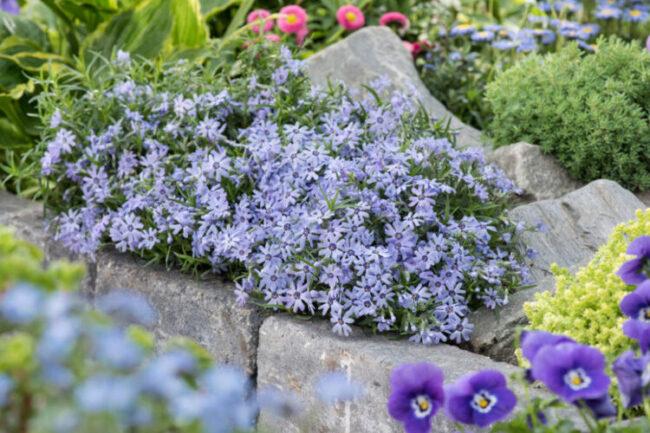
Not only alpine plants are planted in a garden rock garden. The dominant species are low, creeping species with a compact shape, richly colored flowers, often also with evergreen leaves. Most of them are small perennials with a compact shape or growing into large “pillows”.
What types of perennial plants should you choose for a rock garden?
Perennial plants are best suited for planting in rock gardens. Weather-resistant ornamental plants will decorate your flower bed for many years, so you won’t have to spend a lot of time and money planting them every year.
Additional Information! It is worth remembering that for a rock garden on a slope, the best choice would be fairly low plants, including creeping or turf plants, which also strengthen the soil well. Low perennials, colorful bulbous plants and dwarf conifers should predominate.
Low bulbous plants look great in rock gardens. They provide beautiful colors in early spring. Among them are tulips, daffodils, grape hyacinths, crocuses, etc.
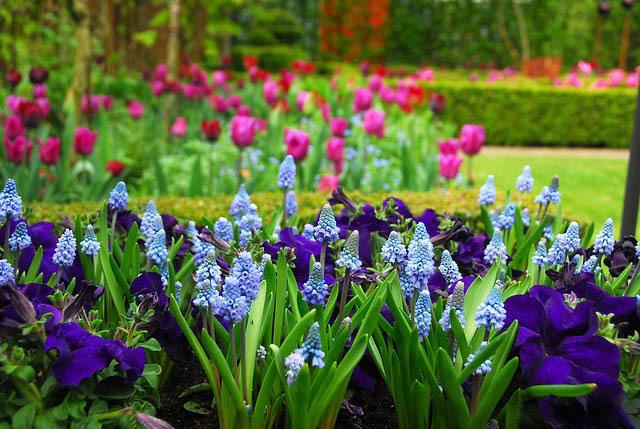
A rockery bed is also a great place for herbs such as lavender and oregano. In addition to their decorative value, these plants smell great and will be useful in the kitchen.
Coniferous plants can serve as a background for a rock garden – they are decorative all year round thanks to evergreen needles. The most commonly planted species and varieties of dwarf conifers are junipers, thujas, cypresses, pines, spruces and larches.
Decorative rock garden all year round
When planting plants, you should choose them taking into account seasonal variability. Combine species that bloom at different times so that they attract attention throughout the season. It is very important to position them correctly, so that they are clearly visible from all sides. Lower plants are placed in front of taller ones.
Note! Bulbous plants are a wonderful spring decoration, but after a few weeks of flowering they lose their charm, and their yellow leaves do not look decorative, so it is best to plant as few bulbous flowers as possible in the rock garden itself. They are planted at the foot.
Low perennials create colorful cushions during the flowering period, for example, rosemary, sedum, phlox, saxifrage. However, not only decorative flowers are planted in rock gardens. Many plants also have interesting shapes and colorful leaves or shoots.
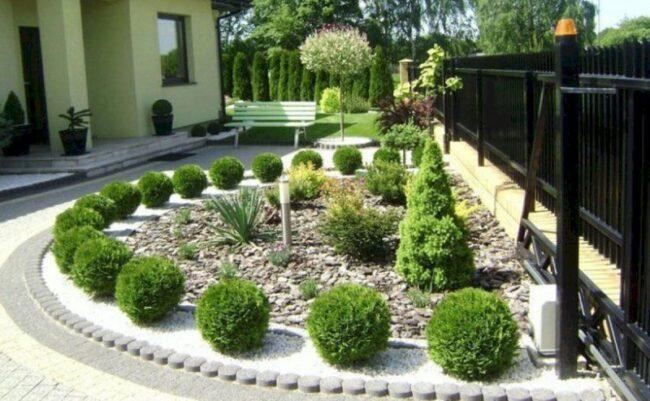
An additional variety of flower beds will be some types of ornamental grasses, for example, different types of fescue, hakonechloa, low varieties of miscanthus, imperata cylindrical.
What flowering plants should I plant in a rock garden?
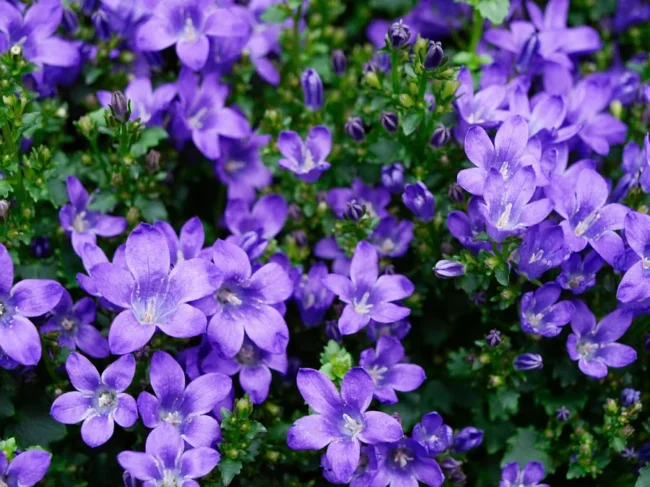
Bluebell Dalmatian is a perennial with purple-blue bell-shaped flowers that appear from June to August. It prefers sunny places and tolerates drought well, making it an excellent choice for a rock garden. Reaches a height of 10-20 cm and forms compact clumps that look beautiful between stones.
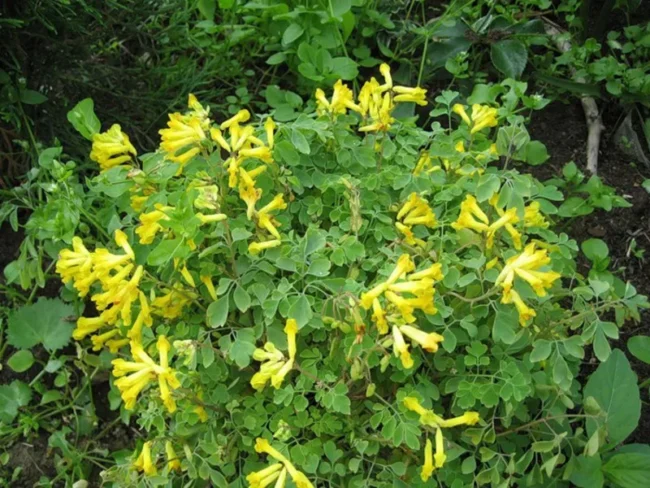
Yellow corydalis . Delicate yellow flowers will decorate the rockery in early spring. This perennial enjoys partial shade and grows well in the company of other plants, reaching a height of 20–30 cm. Easy to grow and not demanding, it is an excellent choice for novice gardeners.
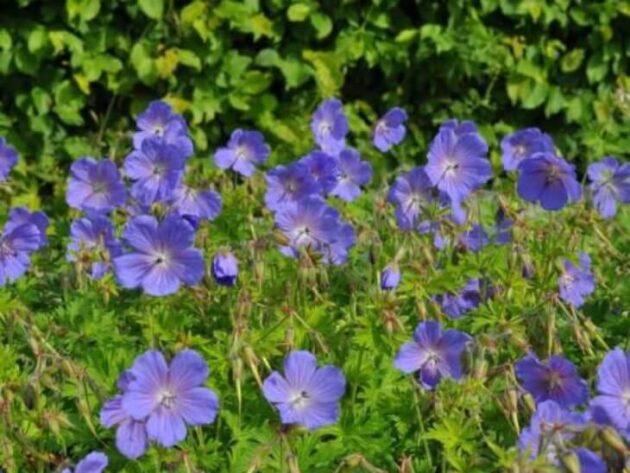
Himalayan geranium . Pink flowers with delicate petals of Himalayan geranium bloom from May to July, attracting attention and giving the rockery a romantic character. Geranium does not have high requirements and can cope even in partial shade, reaching a height of 20-30 cm. This is an ideal plant for those who want to create a colorful rock garden without much difficulty.
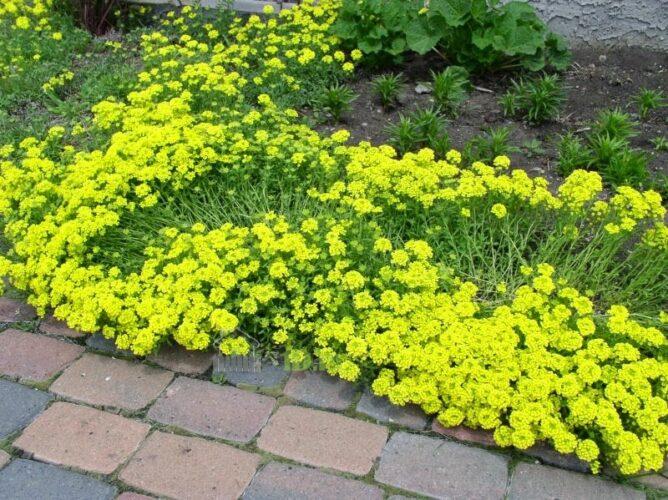
Rock alyssum is a drought- and frost-resistant plant, loved by beginning gardeners, one of the most popular spring perennials. A carpet of tiny yellow flowers covers the rockery from April to May. Reaches a height of 10-20 cm and forms compact clumps that look great between stones.
Caucasian Arabis. Pink star-shaped flowers appear in May and June, giving the rock garden a charming, sophisticated look. This perennial forms compact clumps 10-20 cm high and looks good along the edges of the rock garden. Easy to grow and low maintenance, making it an ideal choice for busy gardeners.

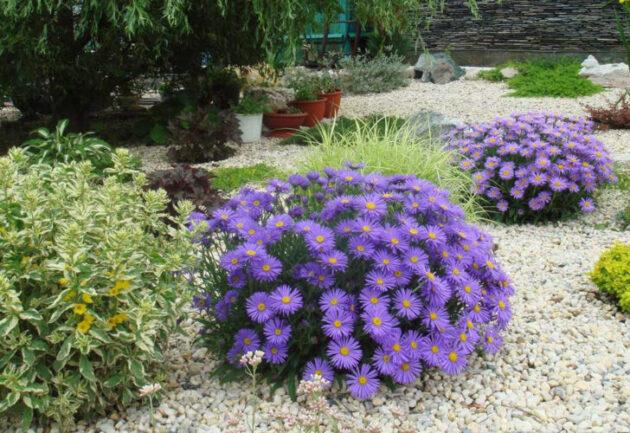
Alpine aster has purple flowers with a yellow center. They appear from May to June. Alpine aster tolerates drought well and is easy to grow. In optimal conditions it reaches a height of 20-30 cm.
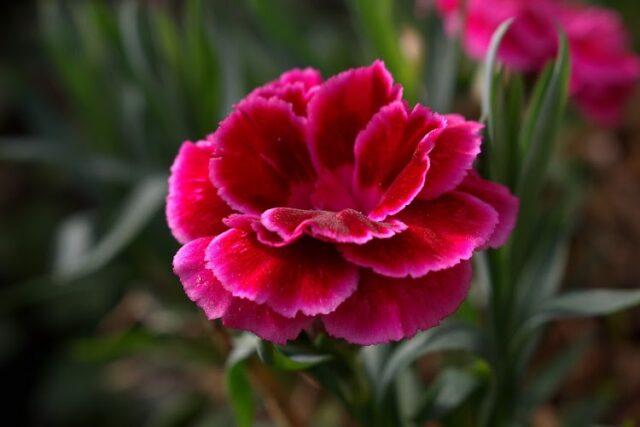
Chinese carnation flowers , which bloom in May and June, will fill the garden with a wonderful aroma. This perennial prefers sunny locations and combines well with other rock plants, reaching a height of 10-20 cm.
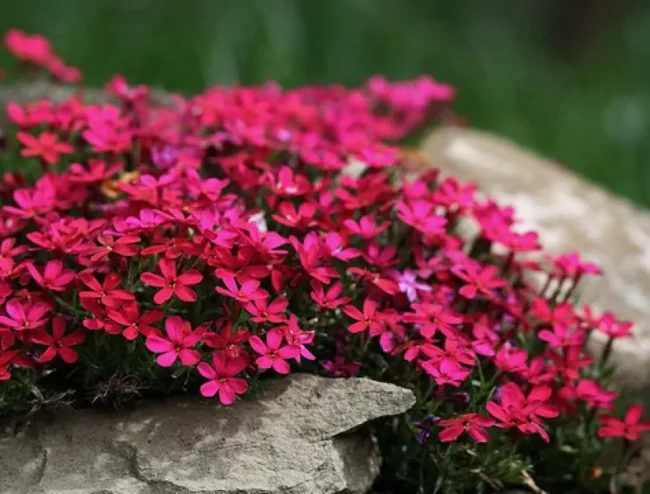
Phlox subulate. Pink or purple phlox flowers bloom from April to May, creating a colorful carpet in the rock garden. The perennial grows well in sun to partial shade, reaching a height of 10–15 cm. Phlox subleaf forms dense clumps and is easy to grow, making it an excellent choice for beginning gardeners.
When can you plant plants?
This can be done almost throughout the season, but the best time is spring and late summer. In the spring, from the beginning of May to the end of June, there is still no threat of heat, and the planted plants will have excellent conditions to take root well. Late summer is also a good time as temperatures are cooler and higher humidity encourages plants to take root.
When planting plants, you need to leave space between them so that they can grow freely for many years. They should not be planted too densely because after a short time the expansive species will begin to encroach on the slower growing species. Vigorous plants need to be pruned regularly.
How to care for plants in a rock garden?
Rock garden plants are usually easy to care for because they tolerate drought and poor soil.
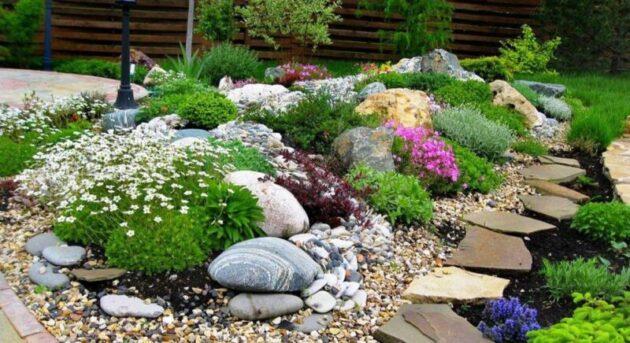
It is important to provide them with a sunny or semi-shaded place and a permeable substrate.
Watering plants in the rock garden
Like other garden plants, rock garden plants need plenty of water immediately after planting. For the first few weeks, water them deeply and regularly to ensure they take root well.
Fertilizer
Many rock plants grow well in poor soil, so frequent fertilization is not necessary. However, it is worth pouring a thin layer of fertile soil on top several times a year – for example, compost. You can also use a slow-release granular mineral fertilizer early in the season. In special cases, emergency foliar fertilizer can be used, but this is done very rarely.
Weed removal
Plants grow much slower than weeds, so they require regular care. Weeding is necessary and must be regular; this procedure cannot be skipped. As the plants grow and form dense mats or cushions, the weed problem will naturally decrease because there will be nowhere for them to grow. You can sprinkle gravel or crushed stone on top of the soil. This will limit the growth of weeds and the evaporation of water from the soil.
Pruning and propagation of plants
After a few years, the plants no longer have room to grow. Moreover, the oldest parts of plants often no longer look decorative. Then it’s worth digging up or trimming the plants and propagating them. Faded inflorescences are also removed, so that the plants will not waste energy on producing seeds, and some will bloom again.
Frost protection
Some more sensitive plants need protection from winter frosts. especially in windy and snowless winters. You can protect them with branches of coniferous plants or white agrotextiles. Shelters are removed in the second half of March.
Water them sparingly, allowing the soil to dry out between waterings. Also prune spent flowers to prolong flowering. In spring, you can apply a small amount of fertilizer for flowering plants. However, remember that do not overdo it with fertilizers – rock garden plants prefer poor soil.


