

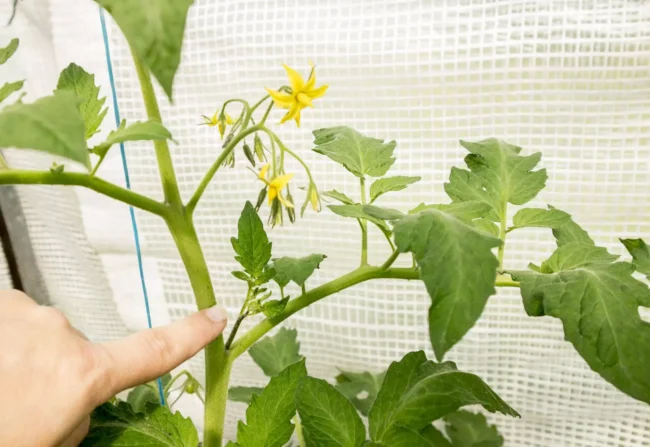
What you need to know about pinching plants
Uncontrolled growth of green mass leads to severe thickening of plantings. Trimming plants improves air flow and the ability to reduce disease.
Leaves dry faster after rain, so they are less susceptible to disease. Additionally, fewer leaves make it easier to spot pests that might otherwise be hidden under the canopy of foliage.
When and how to plant tomatoes
Removing shoots involves pruning or breaking off shoots. Tomatoes grow very quickly and produce many shoots and constantly bear new fruits. There is no point in delaying the removal of stepchildren.
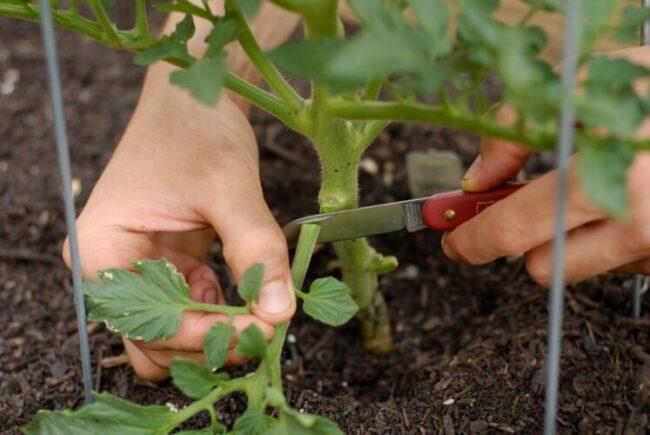
Shoots growing from the leaf axils are removed to direct the plant’s energy to fruit production, providing them with sufficient light and ventilation between individual leaves. The lower leaves touching the ground are also cut off or plucked off. This way you can reduce the likelihood of fungal and bacterial diseases.
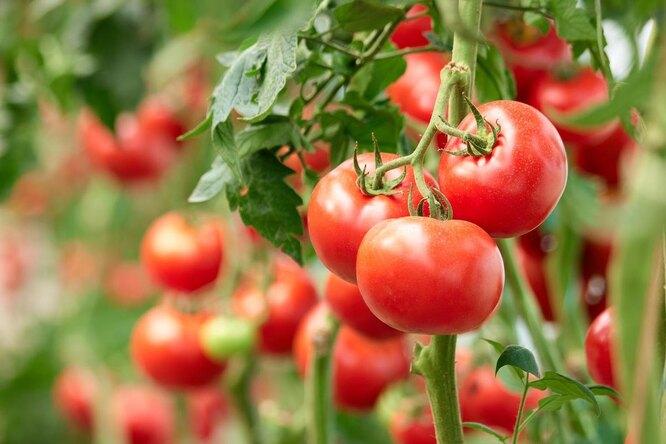
If you do not plant tomatoes, the lower leaves will take a large amount of nutrients, so the upper parts of the tomato, including the fruits, may not receive the necessary microelements and water. If you leave the bushes too thick, this will cause a disruption in the exchange of air between the planted crops.
Tomato plants remove excess leaves and sucker stems that form along the main stem so that they grow as single-stemmed plants.
How to properly pick tomatoes?
In tomatoes, one main shoot is usually left, and all side shoots growing in the leaf axils should be removed. If you leave several shoots (2-3) on the bush, there will be much less fruit. When the lowermost fruits begin to ripen, all lower leaves below the ripening cluster must be removed.
Important! Pinching side shoots and tops are two important procedures that should not be forgotten when growing tomatoes.
In the second half of August, the tops of the main shoot should be removed. 2-3 leaves should be left above the tallest fruiting bunch. This process will speed up the ripening of the fruits and allow them to ripen before the arrival of autumn cold weather.
Removing unnecessary shoots from cucumbers
Pruning cucumbers is a key element of caring for these plants, which has a significant impact on the quality and quantity of the harvest.
Why is pruning cucumbers important?
The meaning of pinching cucumbers is to shape them to produce strong and healthy shoots. This improves air circulation, prevents diseases and facilitates access to the fruit.
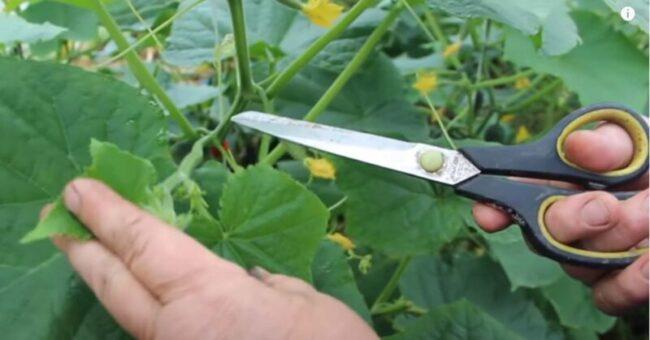
Side shoots grow in the axils between the leaves and the main shoot. They may compete for resources and light, resulting in slower growth and reduced fruit yield. By removing them, the density of plants is eliminated and air circulation improves. Trim them carefully, trying not to damage the main shoot.
Pruning helps limit growth to certain proportions, ensuring that nutrients are delivered to the rest of the plant. Removing unwanted shoots directs the plant’s energy towards fruit production, which is critical.
Removing side shoots on cucumbers increases air flow and allows sunlight to better reach the plants, resulting in a healthier, more abundant harvest. Removing diseased or damaged parts of plants by pruning can help prevent the spread of diseases and pests.
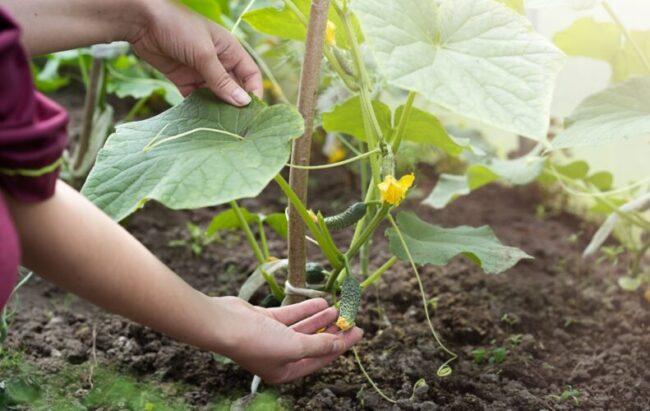
The best time to prune is when the plant has about 4-5 true leaves. This will allow the plant to develop healthy side shoots that will bear fruit. Remove anything that is too close to the ground. This will help prevent leaves from coming into contact with wet soil, which promotes the development of fungal diseases.
Note! Pruning should be done regularly, preferably every few weeks or whenever excessive side shoot growth is noticed. Harsh pruning right away is not recommended as it can stress the plants.
Do I need to chop peppers?
The main thing is to carry out the procedure correctly. More often, peppers do not require pinching, but some varieties of pepper can easily do without it.
Stepsynching is necessary for the following reasons:
- with the development of a longer main shoot;
- reduces root shading;
- eliminates the consumption of nutrients for the growth of unproductive shoots;
- the fruits grow larger and ripen earlier.
Pruning of an overgrown bush is carried out in order to prevent tangling of shoots and provide the root system with a sufficient amount of light and moisture.
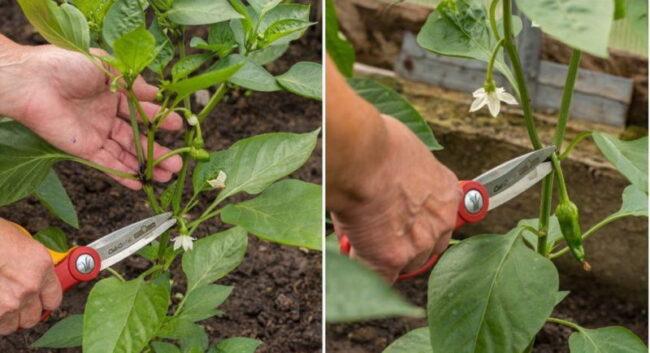
The procedure is not only desirable, but vital for sweet peppers in case of illness, excessive planting density, unplanned flowering and stunted growth.
Removal of sick, weak, stepchildren growing inward is required in order to protect still healthy parts of the plant from infection. Pruning of peppers that have stopped growing is carried out in order to direct nutrients towards the healthiest and strongest shoots.
At the first stage, the lower leaves on excess shoots are removed (no more than two leaves every 5 days). The second step is to remove the shoots themselves so that only a “stump” 2-3 mm in length remains. Treat the resulting wounds with a special technical powder or sprinkle with crushed wood ash.
Before you start pruning your plants, make sure you have the right tools. It is recommended to have sharp garden shears or pruning shears to make neat and clean cuts. Remember to keep garden tools clean. They are regularly disinfected to avoid the spread of diseases from one plant to another.


