Wood stain – a beautiful decorative effect
Wood, thanks to its unique charm, is a material that is often used both inside and outside homes. The main enemy of wood is moisture, ultraviolet rays and harmful organisms. Timely protective measures, such as appropriate coatings, prevent premature wear of wooden parts and ensure their durability.
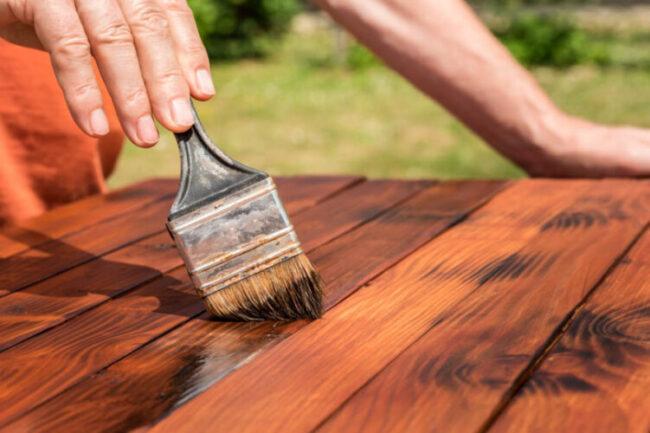
You can easily and quickly achieve beautiful decorative effects on wooden surfaces using stains. They are intended for painting wooden parquet floors, stairs, furniture and paneling indoors and outdoors. They differ significantly from each other, and the entire coloring effect will depend on the correct selection.
Treating wood with stain:
- will highlight the natural color of wood;
- will age the wood, adding depth;
- get shades of exotic trees that are not found in the natural environment;
- will highlight wood of unusual shades for interior design;
- protects from atmospheric influences, from ultraviolet radiation and from pests.
Note! When coloring wood, stain does not hide its natural beauty. Most of the mixture is water, which makes the substance light and it easily penetrates the structure of the wood, rather than “coating” it with color.
Types of wood stains
For a stain to be effective and look good, you need to know which one to use for a given type of wood. This is why every type of wood can look beautiful and be properly protected.

Water stain is considered an environmentally friendly product due to the absence of solvents. Gives a delicate color and goes well with all wooden elements.
Solvent-based stains help achieve intense color, and at the same time are resistant to sunlight, so they are suitable for outdoor use (for example, for painting fence elements or garden furniture.
Nitromortar is a mixture of high-quality solvents, pigments and dyes, therefore suitable for professional painting of solid wood and veneer products.
Oil stain is made from natural oils and waxes, as well as mineral pigments. The durable product penetrates deeply into the wood, leaving its natural structure and is resistant to weather conditions.
Among all these types of wood stains, you can find a different range of colors, but each type of wood is colored differently and absorbs different amounts of pigment. Therefore, before choosing the desired color, it is worth familiarizing yourself with the purpose of the type of stain and making sure that it matches the material being painted.
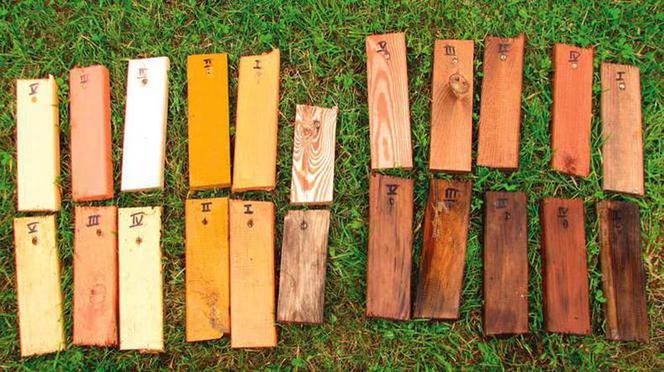
There are various colors to choose from, which, on the one hand, imitate natural wood, and on the other, even give an artistic touch.
How to apply stain?
To successfully paint a wooden surface, work must be carried out in favorable conditions. If possible, choose a clear, calm day. The air temperature should be between 5°C and 30°C. A higher or lower value may adversely affect the consistency and properties of the product.
Additional Information ! When covering wood with stain, you need to take into account not only the color, but also the type of finish. Select products from a wide range of stains from various manufacturers that will not only make the wood look beautiful, but will also be easy to apply and effective.
The first step is to prepare the surface for painting. The wood should be smooth, even and dry. To achieve this effect, use sandpaper. The smoother the base, the brighter the final effect will be. Remove greasy and tarry stains with alcohol.
Old coatings should be carefully removed, cleaned, and everything should be prepared as in the case of painting untreated wood. Careful surface preparation will facilitate the application of stain and ensure a flawless final result.
The wood prepared in this way can be painted with the first layer of stain. As with any wood protection or decoration product, it is important to carefully follow the manufacturer’s recommendations for use.
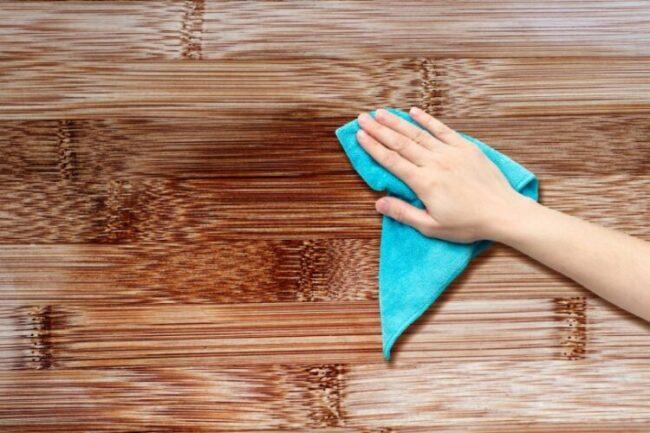
Application is carried out with a sponge or soft cloth, evenly rubbing the product into the surface. Excess that is not absorbed into the wood is removed with a rag. Painted elements should be left to dry for 6 hours. To achieve a darker color, you can apply a second coat of product without sanding between coats.
Stain is not a wood preservative. It gives a spectacular appearance, but the surface is not resistant to scratches and external factors.
Impregnation of wood with oil
Popular types of wood stains are oil-based, with admixtures of waxes and mineral pigments. Manufacturers offer special mixtures called oils. Oiling is an environmentally friendly and simple way to care for and protect wood.
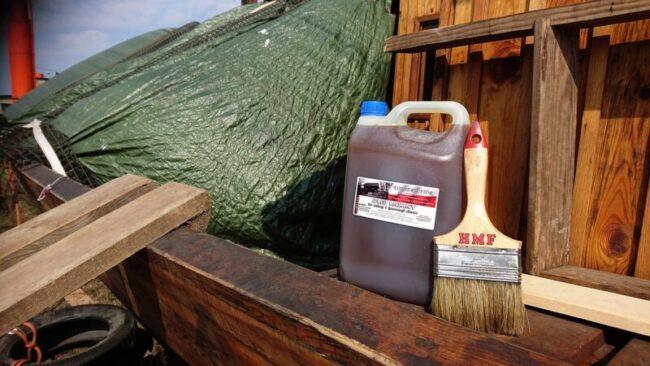
The semi-matte finish, highlighting the natural grain of the wood, is a unique decoration for each wooden element. You can get this coating using wood oil. It can be used both indoors and outdoors to protect wooden surfaces. After the oil is absorbed into the wood structure, its outer layer acquires a deeper and richer shade of natural wood.
Wood oils are usually suitable for hardwood. There are colors available according to the type of wood, emphasizing its natural character, for example, larch.
Wood oils protect and care for wood, make it more durable and resistant to stress, and are increasingly used to protect wooden garden furniture.
The products mainly contain vegetable oils. This is usually linseed oil. Wood oils also contain natural dyes (in coloring oils), natural resins (in hardening oils), esters of wood oils (for example, pine oil) and, less commonly, diluents.
Note! Edible oils should not be used to lubricate wood. Wood preservatives must contain inedible vegetable oil without proteins.
Most wood oils are colorless. For exterior use, the use of colorless oil is not recommended, as it does not provide sufficient UV protection. The material will be subject to the damaging effects of rain, snow and sun. Therefore, the surface should be protected with a suitable varnish. The varnish should be applied after complete drying, i.e. 24 hours after applying the last layer.