

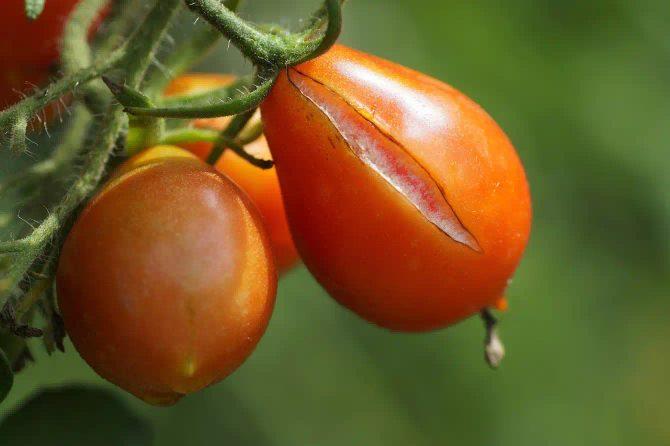
Why do tomatoes crack on the bush?
Various diseases can penetrate through cracks and infect the plant, which leads to a decrease in yield. In addition, such tomatoes have a much worse appearance,
There may be several reasons for cracking. The greatest influence is exerted by soil moisture, if the differences in soil moisture are large. Heavy rains after a period of drought will cause tomatoes to accumulate water, and the skin will crack as a result. Therefore, it is worth ensuring a constant level of humidity.
Additional information! Tomatoes like regular watering – then the fruit and skin grow together. A tomato that has not received enough water and suddenly receives it absorbs a significant amount of it, and the skin does not keep up with the fruit and bursts.
The same thing happens if the humidity increases sharply. Cracks in tomatoes occur due to large fluctuations in soil and air humidity. Large temperature differences, especially the contrast between day and night, most often occur in late summer and autumn. When the difference exceeds 10-15°C, the risk of skin cracking increases, especially in sensitive varieties.
The reason for cracking tomatoes may also be improper removal of shoot tips. If there are too few leaves on the bush, the risk of cracks increases significantly. Removing the tops of tomato shoots is necessary to stimulate the plant to set fruit. However, if there are too few leaves left, all the water is absorbed by the fruit, causing the skin to crack.
When pruning tomatoes correctly, you leave enough leaves so that the sun can reach the fruits, and at the same time do not leave the plant without them at all. Optimally, 3 to 5 leaves remain above each inflorescence.
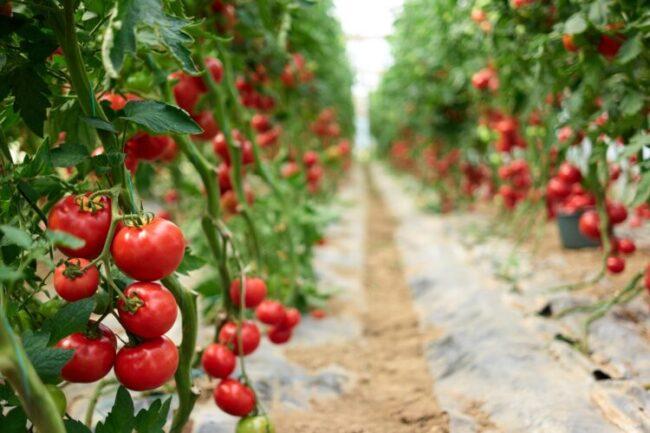
Excess nitrogen. Using fertilizers with too much nitrogen promotes brittle tissue, which, among other things, increases the tendency to crack. Low potassium content in the plant reduces the tendency to crack. Too little potassium in the plant can come from highly saline soil, which makes it difficult for the plant to absorb this macronutrient.
What to do to prevent tomatoes from cracking?
You will be able to grow beautiful tomatoes, which will also be suitable for storage for up to several days. What can be done to prevent tomatoes from cracking on the bushes?
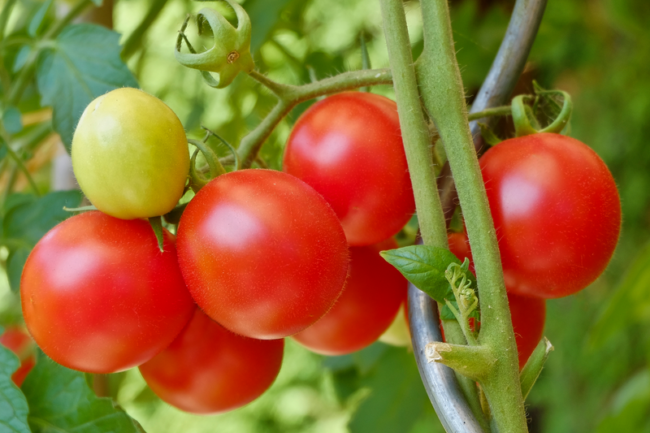
You can pre-select tomatoes that are resistant to adverse climate conditions and cracking. If in recent years we have had a problem with cracking tomatoes on the bush, it is worth choosing tomatoes that are resistant to peel cracking, for example, Baron F1, Yavor, Koneser F1, Koralik, Rumba, Tamaris F1.
Please note! Regular watering of the bushes is absolutely necessary when growing tomatoes. The plants should have constant soil moisture – this will ensure their uniform growth. If the soil is dry, do not pour too much water under the bush.
In May, when planting tomato seedlings, add hydrogel for plants to the soil. The granular polymer substance helps maintain constant soil moisture. When watering the plant, the hydrogel swells, absorbing water. When the soil dries, the hydrogel gradually releases the accumulated moisture. Thanks to this, the soil is constantly kept moist, which prevents tomatoes from cracking on the bush.
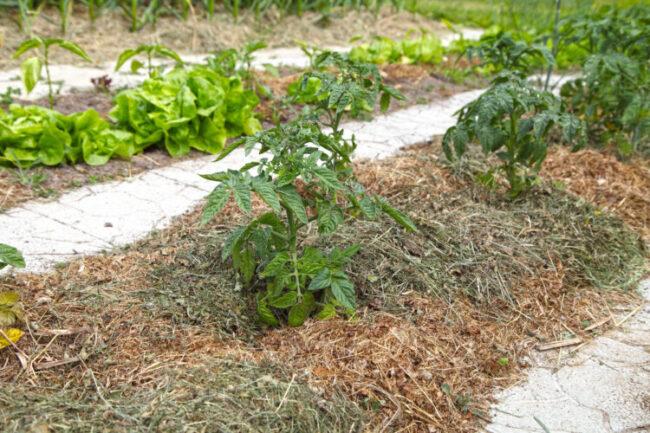
Due to changing weather conditions, tomatoes grown in open ground are most susceptible to cracking. To avoid fluctuations in soil moisture levels, mulch the soil under tomato bushes. Soil covered with mulch (straw, dry grass, branches) retains moisture longer, which means that even during periods of drought, water does not evaporate as quickly.
When growing tomatoes, it is also worth using fertilizers rich in phosphorus and potassium. A good solution is also to use nettle manure, which is an excellent source of nitrogen.
Secrets of Growing Tomatoes
Tomato fruit cracking is a physiological phenomenon. It is caused by excessive water absorption by the roots and insufficient evaporation by the leaves and fruits. The tissues then burst. Although tomato fruit cracking is not a disease, you can lose a large part of the harvest. Mold grows in damaged areas. This phenomenon most often occurs in August and September.
Most often, this happens when the weather is warm (or even hot) during the day and cool at night. If tomatoes are watered too much during the day when it is warm, their roots absorb water very intensively, and if it gets cold in the evening and at night, too much water remains in the fruits. As a result, they swell and their skin cracks. Prevention: from August onwards, avoid watering tomatoes, especially heavily, in the evening.
In tomatoes, the skin of the fruit is mainly damaged. Cracks can be both transverse and longitudinal. They usually appear near the stem, but can also be found on other parts of the fruit.
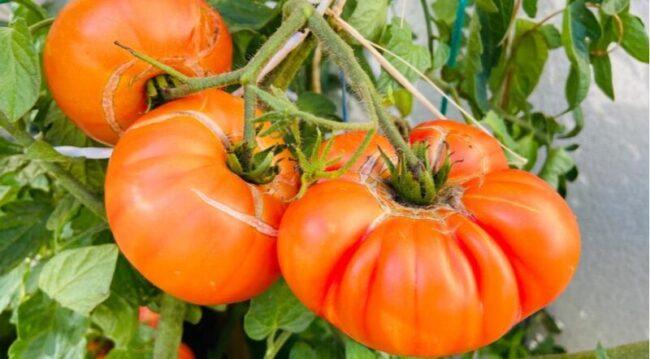
Ripe or nearly ripe fruits crack more often than green ones, and traditional raspberry tomatoes are more susceptible. Cracked fruits lose their beautiful appearance. Such fruits are not suitable for even short-term storage. Moldy ones should be thrown away. Tomatoes grown under cover are less susceptible to cracking.
Can you eat cracked tomatoes?
There is nothing to stop us from eating tomatoes “decorated” with cracks. However, as soon as we see them on these fruits, we should immediately pick them and simply cut off the part with cracks.
Those tomatoes that have concentric cracks should not be picked immediately – they are more resistant. Tomatoes crack in two ways – concentrically, i.e. creating a spherical shape around the stalk, or vertically, i.e. the crack goes from the stalk down. Not only the skin of tomatoes can crack, cracks can also reach the pulp.
In both cases, the tomato can be eaten if the crack is only superficial, simply by cutting off the skin. This should be done as quickly as possible – before the microorganisms that cause rotting processes penetrate the fruit through the open “wound”.
Growing tomatoes is a great pleasure to pick from the bush. Many problems can be avoided by paying attention to watering and the right temperature, and growing will bring good harvests.


