

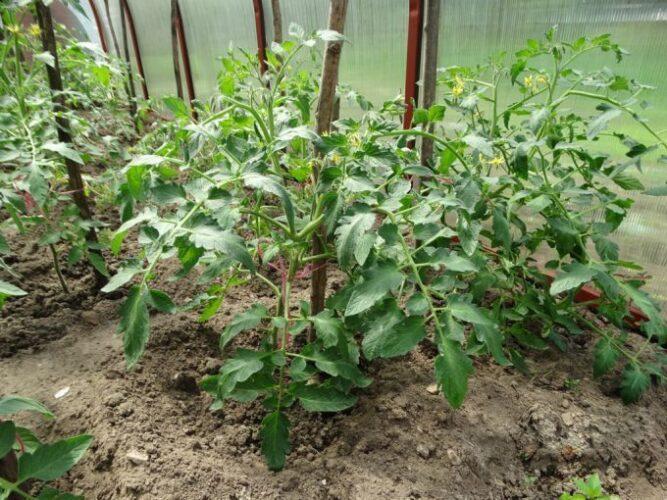
Removing leaves on tomatoes: rules
Want to get a big harvest of tomato fruits? It is necessary to ensure that the bushes are properly cared for. When growing, in addition to watering and fertilizing, it is also important to pluck the leaves.
Why remove leaves from tomatoes? This procedure ensures faster ripening of fruits, as ventilation of bushes and access to sunlight improves. It is better to refrain from supporting treatments during rain or immediately after watering. Leaves should be dry.
The plant spends a lot of energy on the growth and development of foliage, which could be used to produce fruit. In addition, removing leaves from tomatoes reduces the risk of developing many diseases. This will make tomatoes healthier, larger and tastier.
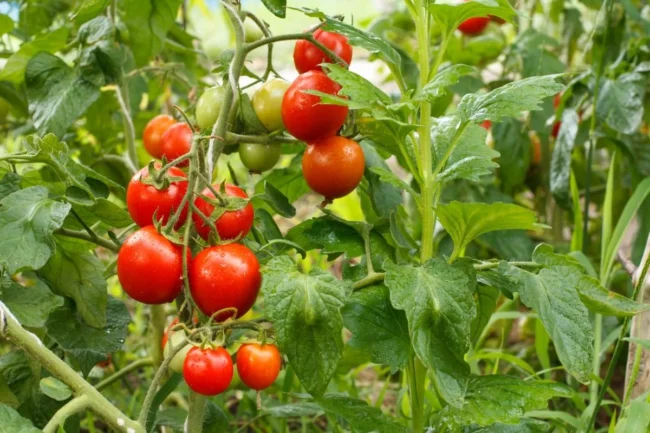
Additional information! This procedure is not mandatory, but it is worth doing. Removing tomato leaves also reduces the risk of diseases, especially fungal ones. However, you should not allow too many tomato leaves to be removed.
Regular pruning of tomatoes will help the plant to bear more fruit. Although it is not difficult to do, it is worth following a few basic rules. If done incorrectly, the procedure can cause more harm than good. Check which leaves should not be removed from tomatoes.
There are a few basic rules you need to know:
- you should remove tomato leaves only when the plant is already developed and has bunches on which the fruits are ripening;
- treatment should be carried out on a dry, warm and sunny day (moisture promotes the development of fungal diseases);
- No more than three leaves can be removed from a bush at a time, as more will weaken the plant.
- Removing dead, diseased or simply unnecessary leaves and stems from tomatoes increases yield;
- when tomato leaves touch the ground, during watering they most often get wet and are easily infected with diseases;
- Removing tomato leaves that grow directly under the flower buds will provide more energy for fruit formation.
Tomatoes, especially tall ones, often form dense bushes with lots of leaves. Although leaves are necessary for photosynthesis, extra leaves can block sunlight from reaching the fruit, delaying ripening. In addition, dense leaves can impede air circulation, increasing the risk of fungal diseases and pest attacks.
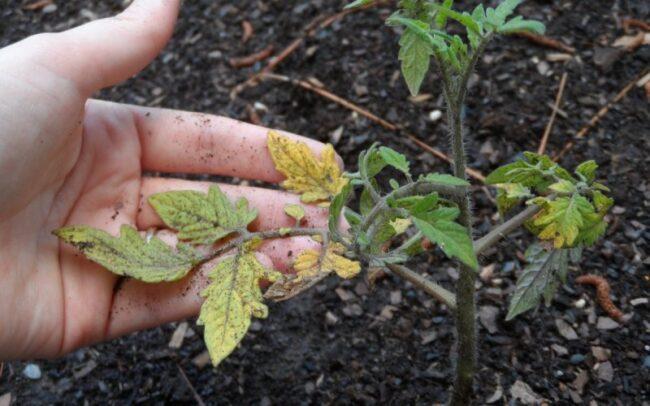
Which tomato leaves should be removed? Tear off those located below the set tomatoes, but not all, leave those located close to the fruits of the bush. It is also not worth removing them all at once, it is best to remove one to three leaves at a time.
It is assumed that after treatment, 15 to 20 leaves should remain on each bush. First, remove yellowed and diseased leaves, as well as those located near the ground. The entire leaf should be removed together with the petiole so that the wound after tearing is as small as possible.
Tomato leaves can be removed by hand or with pruning shears. Before moving on to the next plant, wash your hands or disinfect your tools. This will help minimize the risk of disease transmission from plant to plant.
When to remove leaves from tomatoes?
When the bushes have grown well, it is worth starting to remove the leaves under the lowest bunches. However, you should not overdo it with this. Leaves are necessary for the proper flow of life processes, from which they receive nutrients. If you deprive the plant of too many leaves, it will result in poor harvests. It is worth leaving a few leaves closest to the fruits, thanks to this the harvest will be abundant, and the vegetables tasty and ripe.
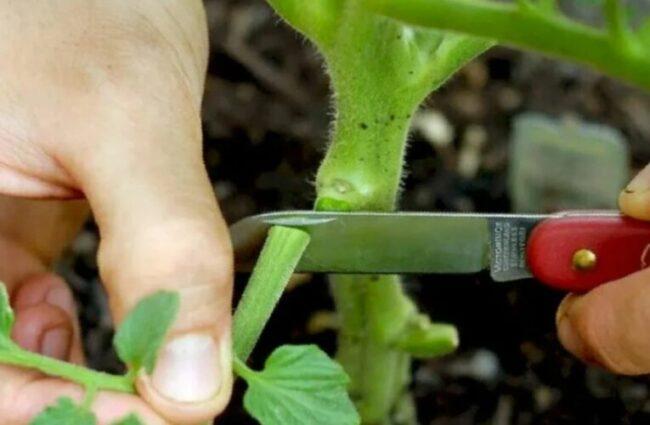
Tomato bushes (especially tall varieties) require pruning of side shoots. Initially, the plant forms one shoot, but the higher it grows, the more it begins to “branch” and form side shoots in the leaf axils. The more side shoots, the thicker the tomato bush becomes.
Please note! The procedure for pruning side shoots is very simple and quick. This allows plants to use energy to create tasty fruits. A plant with one shoot grows better than a dense bush, bears more fruit and is less susceptible to breakage and damage by diseases and pests.
As the plant grows, prune off crossing, twisted, damaged or diseased stems and foliage. In late summer, the top can be pruned to redirect the plant’s energy toward ripening its last fruits.
Why is it important to remove leaves from tomatoes and pinch shoots
To keep the plant in the correct shape (one or two, rarely three shoots), it is enough to pinch or break off small shoots with your fingers, the so-called “stepchildren”, which grow in the leaf axils. These shoots are not needed, and their removal will prevent the development of excessive green mass and the plant will focus on flowering and fruit formation. Therefore, we leave only 1-2 main shoots and do this throughout the season.
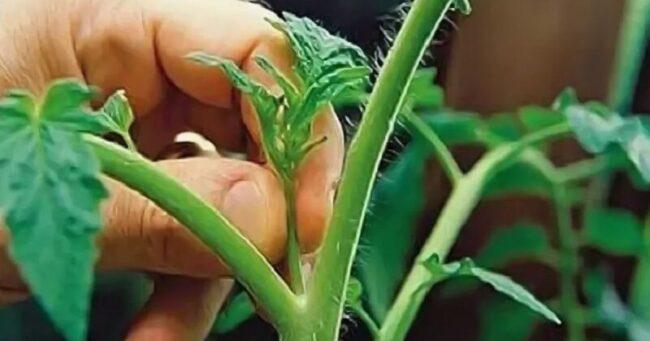
Check the plant once a week for the formation of new shoots. It is best to remove them manually while they are still small. You can use a sharp pruner. It is important to have disinfected tools. This minimizes the risk of disease transmission from bush to bush.
When growing, leave 4-5 bunches of ripening fruits on each shoot and remove the growing top. This will allow all the fruits to ripen. By cutting off the top of the bush, we force the plant to grow sideways, which allows it to produce more flowers. Tomatoes will grow large if they receive the necessary amount of nutrients. The bush should not grow upward, especially at the end of the season, it will not have time to produce fruits before the first frost.
Regularly removing tomato leaves is the key to healthy plants and proper ripening of tomatoes. It’s a simple task that can greatly improve the appearance and health of your tomatoes.


