

Characteristics of watermelon
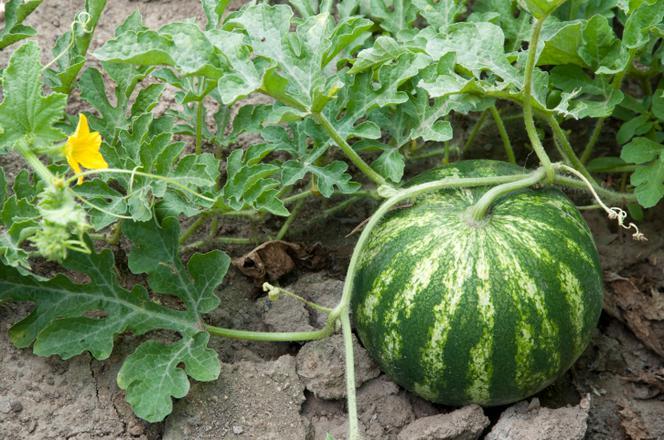
Watermelon is an annual heat-loving plant from the pumpkin family. It is native to South Africa, where it grows as a wild plant in the Kalahari Desert. They are very different from varietal ones. Their fruits are the size of a tennis ball, and they take a very long time to ripen – six months. When fully ripe, the stalk to which the fruit is attached to the vine dries up and the watermelon falls apart.
Watermelon is a vegetable, not a fruit, as many people think, just like zucchini and cucumbers. Growing watermelon from seeds is not difficult and even novice gardeners can do it. There are varieties of watermelon that are ideal for growing in a garden, greenhouse or film tunnel.
First of all, you need to know that watermelon is grown from seedlings prepared from these seeds. Extracting seeds from store-bought watermelons yourself is risky, since they may have grown and ripened in a different climate and their cultivation may be a complete failure. It is worth buying seeds in trusted places to avoid unpleasant disappointment.
The lobed leaves are heart-shaped, cut, attached to the petioles. In the axils of the leaves grow monoecious yellow male and female flowers on the same stem. The male ones appear first, and after a few days the female ones appear.
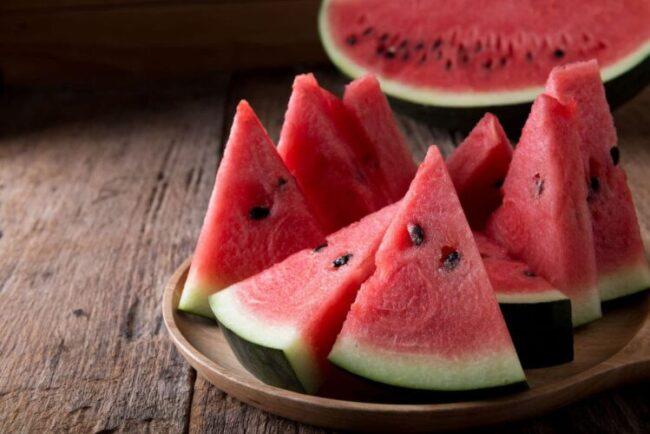
The outside of the watermelon fruit is smooth, light or dark green in color, with a hard skin. The sweet pulp is white, pink, orange or yellow (depending on the variety).
Watermelon contains a lot of sugars, as well as vitamins, organic acids and mineral compounds (potassium, calcium, magnesium, phosphorus). The characteristic red color inside the fruit is due to lycopene, an antioxidant substance.

Creeping shoots grow up to 2-3 m in length. Most varieties of watermelons bear fruit at the ends of their shoots, so there is no need to trim the stems. The fruit can weigh on average up to 5 kg, making it one of the largest.
Growing watermelon from seeds
It is considered a demanding crop for the novice gardener, with high thermal needs. Nevertheless, it’s worth a try and learn the secrets of growing. In order for cultivation to be successful, you need to choose the right variety that better tolerates weather conditions and bears fruit quite early.
How to prepare watermelon seedlings?
These plants like warm climates and have a long growing season. Do not sow seeds directly into the ground – first you need to get strong and high-quality seedlings at home. It will take about a month and a half to produce seedlings, and therefore it is best to start preparing in mid-April.
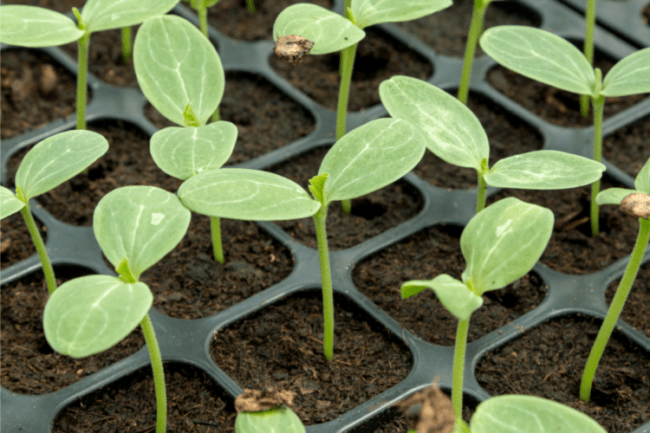
Note! The seeds are soaked for about 24 hours to allow them to germinate. After this time, they are sown in containers filled with a substrate containing peat.
They will need a lot of light and warmth while growing. The temperature should be 25-30℃ during the day and around 20-25℃ at night, with sufficient air humidity. Spray the seedlings more often. Seeds should germinate approximately 7-12 days after planting.
What are the differences between watermelon varieties?
There are many different varieties of watermelon, which can be divided according to taste and size of the fruit. The most popular watermelons are those with green skin and pink flesh.
There are many varieties and hybrids:
- with different shapes: from oblong and oval to spherical;
- with larger or smaller fruit size;
- with different collection times (early or late);
- with varying resistance to various fungal and bacterial diseases.
However, there are many watermelons and they can differ in the color of the skin and pulp, the shape and size of the fruit, the sweetness of the pulp, ripening time and disease resistance. There are also seed and seedless varieties of watermelon.
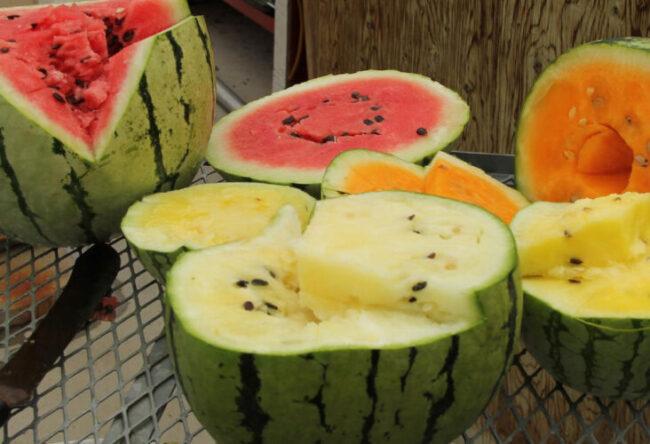
The most commonly grown varieties of watermelon are those with a shorter growing season and greater resistance to lower temperatures.
Planting watermelons
In the southern regions, watermelon ripens well in open ground. When planted directly in the field, watermelon takes root better and produces more fruit. Seeds can be sown immediately into the garden bed after May 25, at a soil temperature of 12-14°C. They are sown mainly at a depth of 4-6 cm, depending on the soil and variety. Row spacing – 150 cm, row spacing – 70 cm.
In more northern regions, watermelons, even early ones, must be grown through seedlings. In this case, the seeds are sown at the end of April immediately in separate cups with a diameter of 11 cm. The seedlings are planted in the ground in the second half of May.
If the seedlings are of poor quality, they will not cope after planting in the ground. Large and healthy seedlings are planted at a distance of 80 x 100 cm from each other after spring frosts, i.e. after May 15th. Temperatures below 15℃ inhibit the growth of watermelons. After planting, it is good to cover the plants with non-woven material for several days to protect them from the night cold. The cover must be removed at the beginning of flowering.
Note! Avoid dense planting of watermelons to ensure better ventilation and less risk of disease development. This way, the plants receive more sunlight and more sugars are produced, resulting in better ripening and sweeter fruit.
Watermelon is very light-loving; it will not produce a crop in the shade. Therefore, you should choose a sunny, open, well-warmed area for them, on fertile soils fertilized with manure or compost, with a pH of 5.5 to 6.0.
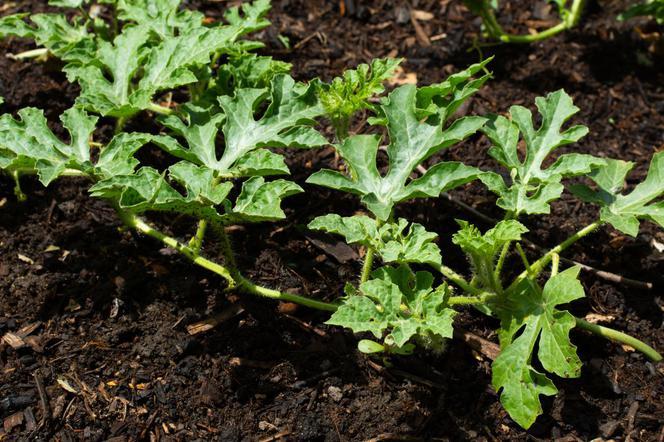
How to grow watermelon at home in the garden
A crop that should be grown in open, unshaded areas. The best soils for growing melons are sandy, light loamy and sandy loam chernozems.
Watering
Plants need watering only during the first month of growth and no more than once a week. They have fairly deep roots and are therefore resistant to periodic droughts. However, during periods of intensive growth, soil moisture should be ensured. The number of waterings and the watering rate depend on the weather, soil properties, and the degree of drying. During dry periods, water more often.
Additional Information! Watermelons should be watered moderately and infrequently, but systematically, preventing the soil from drying out. The top layer should not contain a lot of water, which increases the risk of infection with fungal diseases. Do not water with cold water. When the fruits become large, the plant will need less water, and then watering can be reduced.
There is no need to water them after the ovaries form – in conditions of high humidity, the soil becomes watery, tasteless, or even begins to rot. Excess moisture during this period causes a decrease in sugar content. During rainy summers, watermelons often begin to rot where they touch the soil. Therefore, planks should be placed under the fruits.
Fertilizers for watermelon harvest
They need enough fertilizer to produce a good harvest, as they are particularly demanding of nutrients. The soil for seedlings is first enriched with manure (in the fall of the previous year) or well-processed compost (in early spring). Mineral fertilizers are applied immediately before sowing. Provide plants with complete organic fertilizer every 20 days to speed up plant growth and produce quality fruits.
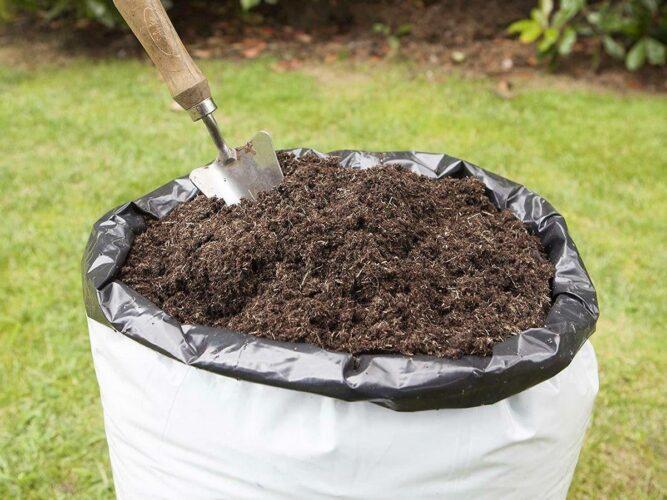
It is necessary to apply a significant amount of complete organic fertilizer enriched with potassium to the planting sites. In spring, fertilizers should be evenly scattered on the ground and dug up onto the bayonet of a shovel. In summer, watermelon does not need feeding. Nitrogen fertilizers are especially dangerous for them – fruits easily accumulate nitrates
When the first leaf appears, loosen the soil to a depth of 12-15 cm between the rows. Deep loosening promotes better absorption of nutrients and water.
Diseases and pests
Watermelons can be susceptible to various diseases that can affect their growth and yield. Excessive watering in combination with temperatures of 25-30°C can cause root rot due to the development of fungal diseases such as fusarium. In this case, the watermelon plant looks wilted and lifeless when watered.
Downy mildew causes yellow or pale green spots on leaves, while powdery mildew causes white spots. To actively protect watermelon plants from fungal diseases, watermelon foliage is sprayed with a solution of copper and sulfur.
For preventive protection against insects, dissolve a tablespoon of grated green soap and 1 teaspoon of medical alcohol in a liter of water and spray the plants
Harvesting
The right time to harvest ripe watermelons is when the stems dry out or when the outer white spot where it touches the ground turns yellow.
You can distinguish a ripe watermelon by tapping the fruit with your fingers, and determine by the sound – in ripe fruits it is dull. It is best to store watermelon at a temperature of 5°C and a humidity of 80-85%, that is, in a cellar or refrigerator. In such conditions they can lie for up to 3 months.


