

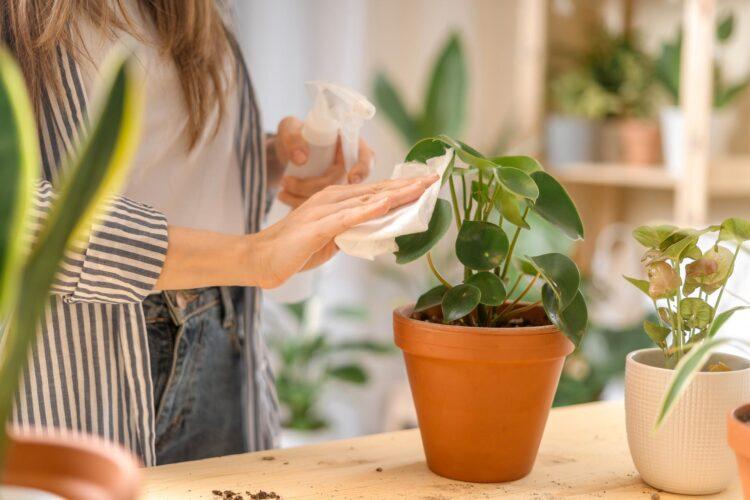
Why do indoor flowers get sick?
Flowers must be monitored, as numerous diseases can appear on them. Some of them require special conditions such as the right soil, fertilizer, temperature and amount of light. Just watering the flowers is not enough.
Improper care of plants leads to the fact that they can get sick. These diseases are not dangerous, they do not infect other specimens, and most often it is enough to correct care errors.
The most common mistakes people make when leaving
Excessive watering and flooding of the plant leads to rotting of the roots, loss of leaves and, as a result, the death of the entire flower. With rare watering, many plants do not tolerate the drying of the root ball.
Plants have different lighting requirements. It all depends on the type. Some like direct light (succulents), others feel good in diffused light, and still others in a shaded place (monstera or sansieria).
In order not to harm the plant, it is worth finding the right place for it in the house. If this position is not known, it is worth putting the plant in diffused light, and then burns can be avoided.
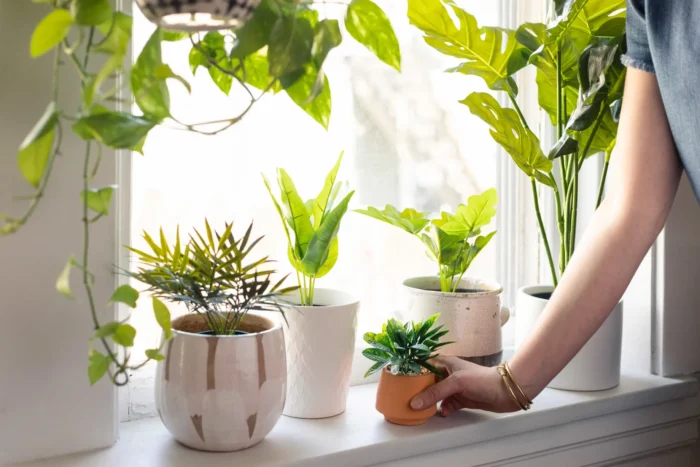
It is worth remembering that not a single plant will feel good with a direct source of heat, so it is not advised to put flowers near the radiator.
Note! To keep home plants from getting sick, they need to be watered with water at room temperature, and special fertilizers for potted plants should be used during the growth period. They need to be repotted when the pots are too small.
The substrate is a very important element in the cultivation of indoor plants, as it affects the growth and development of plants. Good potting soil should provide proper drainage, good air circulation and nutrients. It should be loose and airy so that the roots can grow freely and have access to air.
When planting potted plants, choose a substrate designed for a particular species. A versatile potting soil purchased from a flower shop is suitable for growing various groups of houseplants.
Definitely don’t use soil from the garden for planting potted flowers because it contains weeds and is too heavy.
Plants have special nutritional requirements. Most often, they are supplied with nitrogen for stronger growth, potassium for better nutrition, phosphorus for more lush flowering and micronutrients for good root growth.
If the plants are fed too often, this, in turn, leads to salinization of the substrate. Therefore, it is better to fertilize potted specimens in moderation.
Diseases associated with an insufficient amount of minerals in the soil are also common. Such diseases include, for example, chlorosis, which is manifested by yellowing of the leaves near the veins. If a slowdown in growth or general development is noticed in the spring-summer period, then an appropriate fertilizer should be used.
The pot should also be selected according to the shape of the plant. For tall and climbing plants, it is worth choosing narrow and tall pots, and for low, but spreading plants, wide ones.
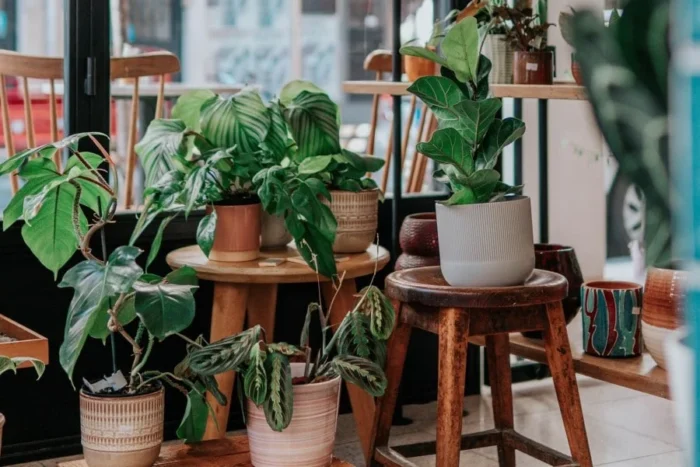
Additional Information! Recently, pots have become very popular, which look attractive, but do not necessarily have a good effect on the condition of the plant.
Most flowers require pot holes. Excess moisture that accumulates at the bottom of the container is dangerous for the roots of the plant. A layer of drainage layer should be laid on the bottom of the pot.
Indoor greenery gets used to this place and reacts poorly to frequent rearrangement. Ficus Benjamin is especially sensitive to this, quickly losing leaves.
When transplanting, mistakes can also be made. When changing a pot, a much larger container is often chosen than the one in which the plant grew before. This will result in stunted growth or interruption of flowering.
Fungal diseases of indoor plants
One of the most common diseases affecting indoor plants are fungal diseases. Fungi attack weakened plants – those that are not properly cared for, poured or placed in the wrong substrate.
The cause of these diseases can also be too little light in autumn and winter. It is also worth remembering that plants can become infected by standing close to each other.
Fungal diseases can affect not only leaves and stems, but also the root system, which rots, darkens and softens. Infected roots prevent the plant from getting the necessary nutrients from the substrate, and it dies of starvation.
The cause of the disease is too high humidity in the room where the plant is located. The most commonly affected are: begonia, ivy, cyclamen, dizigoteka, ficus, philodendron, dracaena, kalanchoe and ferns. This disease is most common in autumn and winter.
Decay spots can be seen both on the leaves and on the stems, which are then covered with a characteristic gray bloom. The plant is cleaned, the upper part of the substrate is loosened, and placed in a more lit place and a good air flow is provided.
Fungal diseases can manifest themselves in different ways. One obvious symptom is leaf spot. Lesions appear inside the leaf blade or on its edges. When they appear, the affected parts are cut off, and the plant is transplanted into a more permeable environment. Water very carefully. You can also use a chemical preparation for fungal diseases.
Vascular fusarium is manifested by inhibition of plant growth, yellowing and wilting of leaves and tubers.
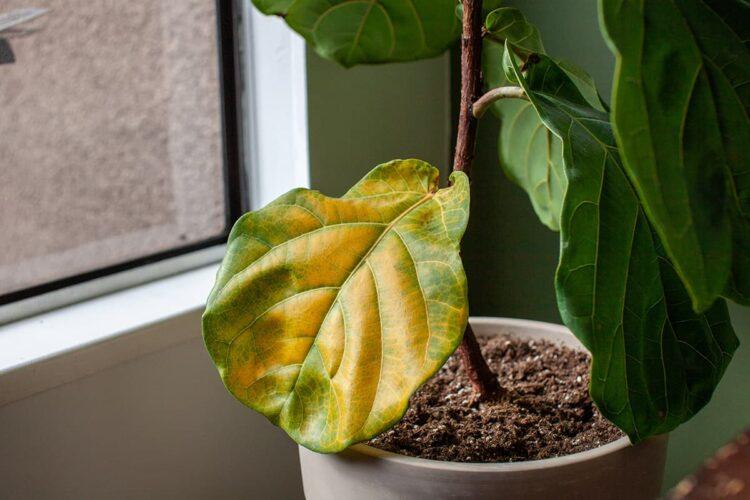
This condition is caused by over watering the plant. Most often it affects such species as: asparagus, cyclamen, nolina and chrysanthemums.
Plant disease control. To combat the disease, first of all, reduce watering, remove the affected leaves.
Pay attention ! The most important element in the fight against fungal disease is cutting out the infected parts of the plant. When alarming symptoms appear, you need to inspect the plant, remove it from the pot and check the condition of its roots. Cut out the unsightly parts of the roots with a sterile tool.
Add perlite, vermiculite or pine bark to the universal primer. This mixture will provide the plant with better air circulation.
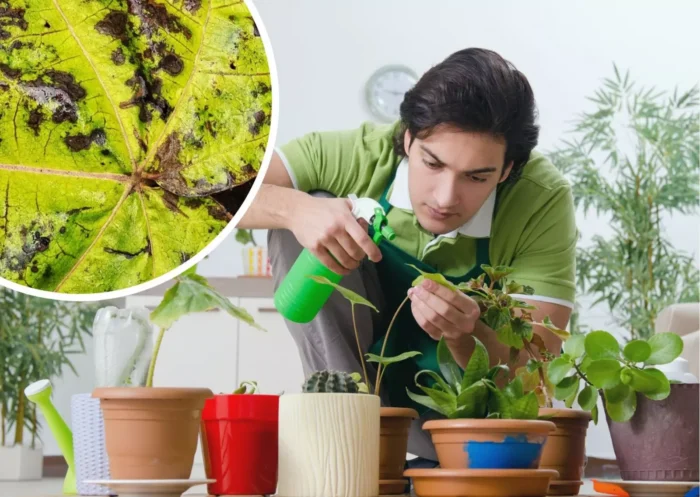
As a preventive measure, you can also use natural remedies, such as a decoction of tansy, horsetail or onion.
Home remedies for diseases and pests
Artificial plant protection products are effective, but many people do not want to turn to chemicals. That is why it is worth knowing what are the home remedies that are present in almost every home.
They need to be used as early as possible, and the effect will not come as quickly as in the case of chemical ones. However, the advantages of such protection, of course, more.
Using the pathogenic properties of nettle, garlic ensures that the cultivation remains organic. A big advantage is also the availability and low cost of preparing sprays.
You can use home remedies to control insects, such as sprinkling cinnamon or activated charcoal on the ground. Unfortunately, these methods do not always work. Cinnamon has a fungicidal effect, repels ants.
Garlic has a bactericidal and fungicidal effect, and also prevents the appearance of many pests such as aphids, scale insects, thrips or whiteflies, and is also a safe way to get rid of them.

Baking soda solutions help fight plant fungal diseases. They are used in the fight against diseases such as: downy mildew, leaf spot.
Plants very often become victims of many pests. The most popular include: aphids, caterpillars, scale insects and spider mites. They feed on the sap of plants and thereby lead to their weakening, and often to complete destruction.
Insect Control: Home Remedies . Chamomile is excellent for fungal diseases, effective against aphids, spider mites and caterpillars. In turn, nettle works well in the fight against aphids, spider mites, gray mold and powdery mildew.
For spraying, you can also use plant material from nettle, tansy, dandelion, horsetail, comfrey, wormwood grass, calamus or marigold.
Unfortunately, sometimes home remedies for pests may not work. If the pest attack is very intense, use chemicals, observing the safety rules when spraying.


