

How to propagate popular indoor plants?
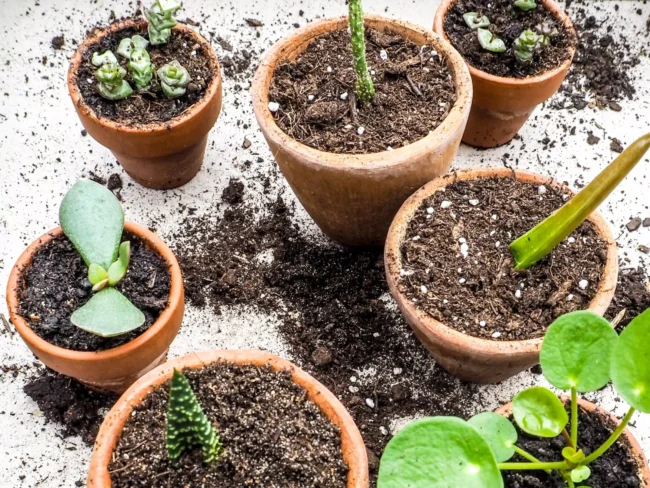
Houseplants can be propagated in several ways. Some of them are quick and easy, others require more practice and patience. Reproduction methods can be divided into generative, i.e. by sowing seeds, and vegetative – by cuttings taken from the mother plant, division, layering or offspring. To choose the right method, you need to know the characteristics and properties of a particular plant.
In this way, you can replenish your collection of scindapsus, dracaena, fittonia, dieffenbachia, ficus, cissus and, above all, the popular monstera.
How to propagate indoor plants from cuttings? Undoubtedly, this is the most popular method of propagating indoor plants. The simple and fast method of propagation additionally guarantees the repetition of most of the characteristics of the mother plant, such as the color and shape of the leaves.
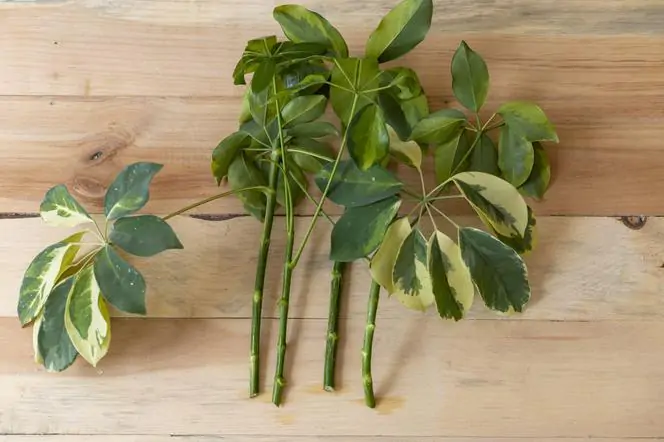
To do this, a fragment of the mother plant is taken, which is placed in an appropriate substrate, where it will take root and begin an independent life.
Since new roots grow only from nodes, cuttings should be cut so that each of them has at least one such place. Leaf cuttings can be obtained from potted plants such as Sansevieria, Begonias, Saintpaulia, Peperomia and Kalanchoe.
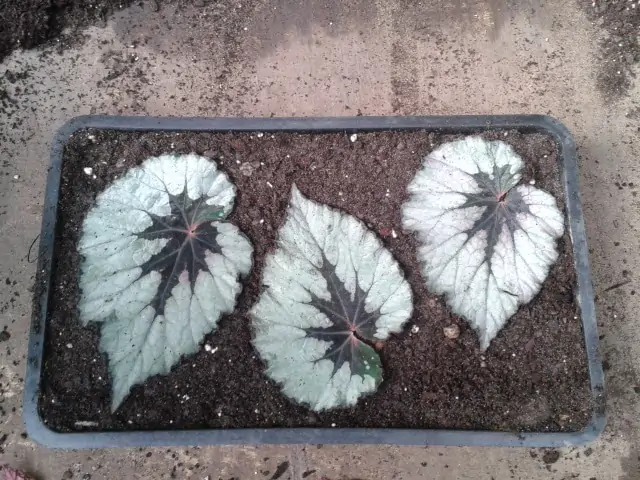
After receiving the cuttings, the next step is to root them properly. To do this, place the prepared cuttings in a moist substrate.
Since the rooting process is relatively long (about 2-8 weeks depending on the species), it can be accelerated by using a special rooting product containing plant hormones that stimulate root development. Coating the cut end of the shoot with this preparation can certainly increase the propagation efficiency of potted plants.
Additional Information ! It is worth remembering that some types of potted plants secrete milky sap after cutting, which makes rooting difficult. Therefore, when obtaining cuttings of popular varieties of ficus and milkweed, they should be placed immediately after cutting in a vessel with water to dissolve the juice and prevent the formation of a crust on the shoot.
The best time to propagate potted plants
Early spring is the best time to propagate most potted plants. The days are getting longer, and sufficient sunlight stimulates plants to grow vigorously and take root quickly. At this time they have the most strength and energy for life, so they begin to transplant them,
Plants take root easily in water
Many plants can be propagated by taking stem or top cuttings and rooting them in water. In this way, you can propagate ficuses, dracaenas, ivies, scindapsus, cissus, epipremnums, gardenias, phytonias, begonias, dieffenbachias, monsteras, peperomias, philodendrons.
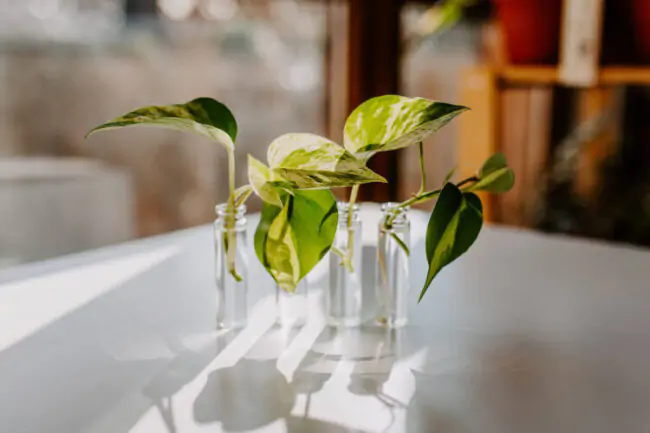
A container of water is the easiest way to root a plant. This does not require any special skills or experience. Simply place the seedling in water and wait for the roots to appear. This is a simple task even for an inexperienced amateur.
Note! Cut off a piece of the shoot using a pre-disinfected sharp knife or pruning shears. It is not recommended to use scissors for this purpose, as they will crush the shoot tissue and prevent the seedling from taking root.
The correct cut should be made straight or diagonally about 2 cm below the node, then the seedling is left to dry for 1-2 hours. After this time, sprinkle the cut area with cinnamon, ash or charcoal for disinfection. Allow the drugs to act for about 10 minutes and place the seedling in soft, preferably filtered water.
Place the vessel with the seedling in a bright place, but protected from direct sunlight. When the first roots reach a length of about 8 cm, the plant can be planted in permanent soil. Fill a pot with large holes with the substrate to ensure proper air circulation.
What to do if the cuttings are rotten? Unfortunately, you can encounter a number of problems, for example, rotting of the stem or a very long (sometimes even months) wait for the roots.
- Rooting in water becomes difficult, especially in winter and autumn.
- The water in which the plant takes root should be changed every few days to avoid rotting of the cuttings.
- Washing the vessel will also help maintain sterility during the rooting process.
- Activated carbon is used as a means of preventing rotting when rooting seedlings in water.
If the cutting begins to rot while rooting in water, you must react quickly. First of all, cut off the infected parts of the shoot with a sterile instrument. You can soak the plant in water with a small amount of fungicide for 1-2 days. Then place the shoot in clean filtered water with the addition of activated carbon.
It is likely that such procedures will have to be repeated several times, since even careful removal of rotten tissue can lead to the progression of the infection. However, even with such a problematic seedling there is a chance to grow a new plant.
Potted plants that are best propagated by division
Indoor plants that have a well-developed root system can be propagated by dividing the mother bush. Species such as ferns, calathea and aspidistra are removed from the pot and parts of the plant with healthy roots are carefully cut. The separated fragments are planted individually, in containers corresponding to the size of the new roots.
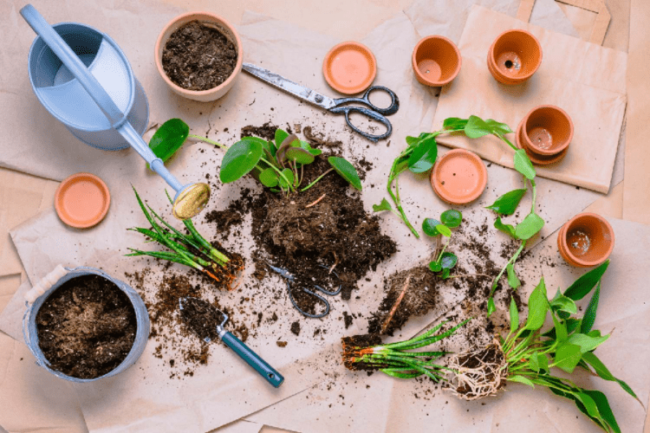
This method of propagation will rejuvenate the grown specimens of potted plants and improve their appearance.
Reproduction of herbaceous plants
When growing potted plants, you may notice that some species produce what are called suckers, small plants that grow around the base of the mature plant. Most of them grow directly from the root or stem.
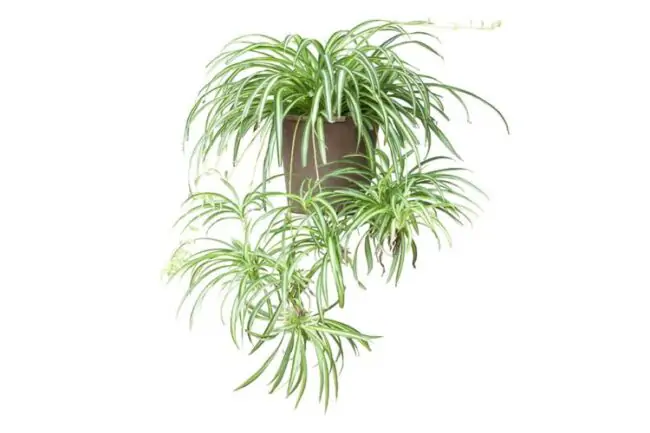
By cutting off the “baby” and planting it in a new place, you can get a young sansevieria, as well as many succulents. Some plants, such as herbaceous plants and saxifrages, produce young specimens on stolons that can be rooted.
Growing plants from seeds
Unlike vegetative propagation, for some species, sowing seeds is an easier method of propagation.
Seeds are sown in a pot with permeable soil. Cover with glass or film to retain moisture. Maintain a temperature suitable for the species. When the seeds begin to germinate, place them in a bright place and open them every day so that condensation does not accumulate on the glass. After a few days, when the seedlings have grown, the cover is removed. When the seedlings have two pairs of leaves, transfer them to a larger container for several weeks. Transplant the grown plants into small pots.
The joy of rooted cuttings is well worth the time it takes to prepare them. Just try it and see for yourself that it is an extremely wonderful experience.


