

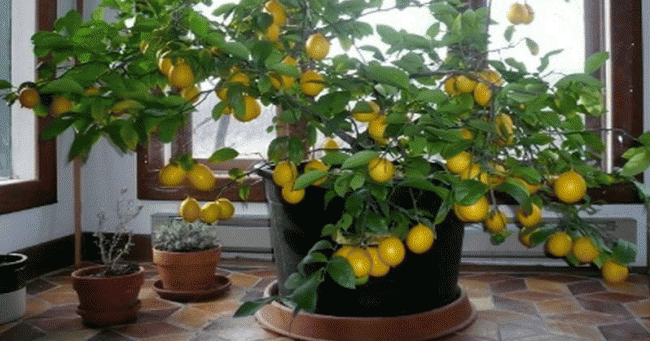
What does a common lemon look like?
One of the most beautiful and delicious varieties of lemon is the common lemon. Lemon (Citrus limon) belongs to the Rutaceae family. It is native to southeastern Asia (China), but is not found there in the wild at present. Lemons grow in places with dry and hot summers. Today, lemon gardens are located mainly in Greece, Spain, Mexico, the United States of America and Italy. In Mediterranean countries (where it is warm enough), lemon trees are grown as ornamental plants. They can be found in parks and gardens, as well as along squares and roads.
The lemon tree growing in its natural climate can reach several meters in height, usually growing to about 5 m, but can reach up to 10 m. It is characterized by large elliptical green leaves and white flowers about 3 cm in diameter, with a very intense aroma. Interestingly, it can also bloom during fruiting. Very often, flowers appear near the ripening fruits.
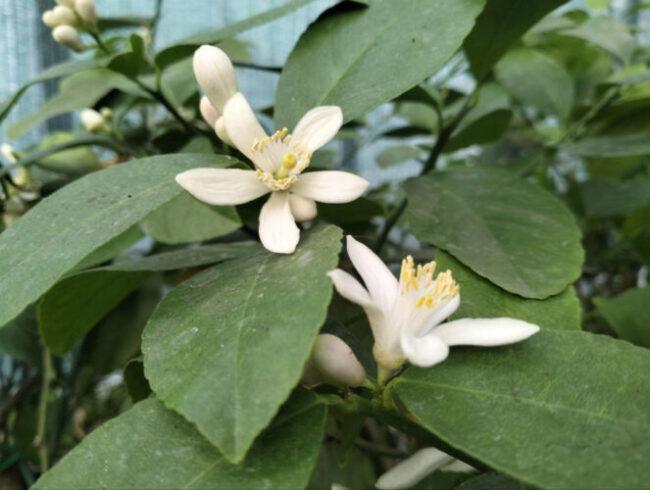
The fruit has the shape of an elongated ellipse with a pronounced neck at the base and a conical top. This lemon gives full productivity only after reaching maturity. When ripe, they turn yellow. The lemon pulp is very juicy and sour, yellow in color.
Lemon tree at home: how to grow citrus on a windowsill? In a moderate climate, lemons can be grown in greenhouses and hothouses, as well as at home as potted plants. For home cultivation, special mixed species have been bred that have a more compact and dense form and can reach a maximum height of 2-2.5 m.
Additional information! Lemons contain a lot of vitamin C and other vitamins (including vitamin A and B vitamins), as well as citric acid, which is used in the food industry. Essential oils are obtained from the peel. Lemon fruits are also used in pharmacology and cosmetology (for example, in the production of perfumes or creams).
How to grow a citrus tree?
It is easy to grow and does not require special care. You just need to provide this exotic plant with the appropriate conditions:
- the lemon tree must stand in one place;
- likes diffused light;
- do not place it in the kitchen;
- lemon does not like sudden changes in temperature;
- cannot stand in drafts;
- Strong sunlight can burn the leaves, causing them to fall off.
In winter, when the plant is dormant, it needs to be provided with a slightly lower temperature (about 12-15 degrees Celsius). Lemons naturally grow in warm climates where the summers are very hot and dry, and in winter the temperature does not fall below 10 degrees Celsius.

Please note! Lemons require a warm and bright place with plenty of diffused light. The best option is a southern windowsill.
The container with the lemon tree should not be moved too often, as this has a negative effect on the plant. However, in the summer, the lemon pot can be taken out to a sunny terrace or balcony. It is worth remembering that lemon does not tolerate temperature changes and drafts.
Caring for a lemon tree at home
As for the soil, the lemon tree will grow best in light and permeable soil with a slightly acidic or neutral reaction.
Watering lemons at home
It is necessary to ensure that the soil in the lemon tree pot is constantly slightly moist. Drying out of the plant can lead to the loss of flowers and fruits, and flooding of the lemon tree can lead to root rot.
In summer, the plant should be sprayed quite often, since lemons need high air humidity. Hard water with a high calcium content is harmful – it slows down the absorption of iron. Lemon is often sprayed with soft, settled water.
In winter, of course, watering and spraying are limited, since the plant is experiencing a dormant period. Water less often and less abundantly than in summer. It is worth remembering that in autumn and winter, lemon should not be placed in a dry and hot room (for example, near a heating battery). Do not place it next to a gas stove.
Fertilizers
As for fertilizers, during the period of intensive growth and development (spring and summer), the lemon tree should be fed once a week or once every two weeks. It is best to use a special fertilizer for citrus fruits for this purpose. You can also use a universal multi-component fertilizer with a slightly higher concentration than recommended by the manufacturer on the package, since during intensive growth the plant needs a higher dose of nutrients. In autumn and winter, fertilize the lemon tree once a month and reduce the concentration of fertilizers.
Trimming a Home Lemon
Regular pruning helps maintain healthy growth and shape of the plant, and also promotes fruiting. A mature lemon tree should be pruned at the end of September, which will stimulate the plant to form new shoots. Pruning will also give the plant a beautiful shape.
Propagation and transplantation
There are two ways of propagating citrus plants: generative (from seeds) and vegetative (cuttings).
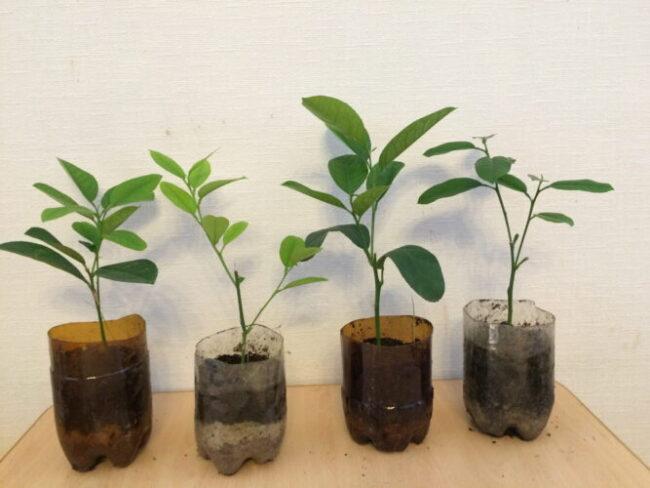
Propagation of lemon by cuttings. It is better to take herbaceous cuttings in summer. They should have at least three leaves. Remove the lowest leaves, dip the tip in a root former and insert into a prepared hole in a special substrate, water. Move to a place where the temperature is not lower than 25 degrees Celsius, and make sure that the soil in the container is constantly slightly damp.
Lemons can be propagated by seeds, but specimens grown this way will never repeat the characteristics of the mother plant. They may begin to bear fruit even 10 years after planting, or they may never bear fruit.
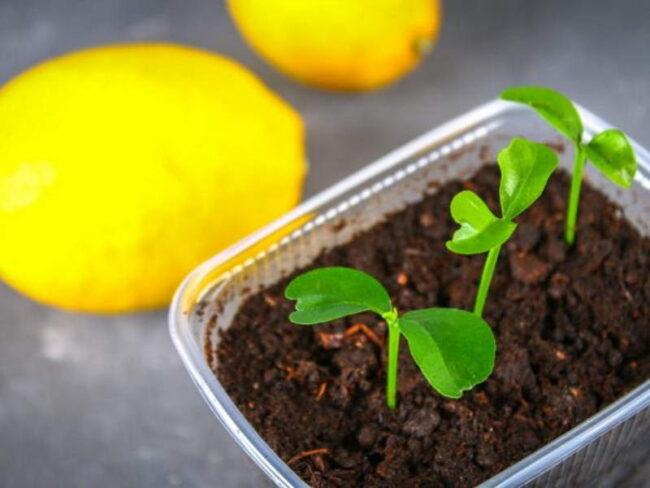
The best time for sowing is spring. After extracting the seeds from the pulp of citrus fruits, without letting them dry out completely, they are sown in small pots filled with a special substrate consisting of peat soil and sand.
Then you need to moisten it with a sprayer and put it in a room with relatively constant humidity, a temperature of about 24°C and plenty of light. The vessel can be covered with glass or transparent film, but often ventilated to prevent fungal diseases. When the citrus seedlings release their first true leaf, each of them should be transplanted into a separate pot.
Please note! First, choose a pot of the right size that will provide enough space for the plant roots. The pot should have a drainage hole at the bottom to prevent excess moisture.
Young lemon trees grow very quickly, so in the first years of cultivation the plant requires annual replanting.
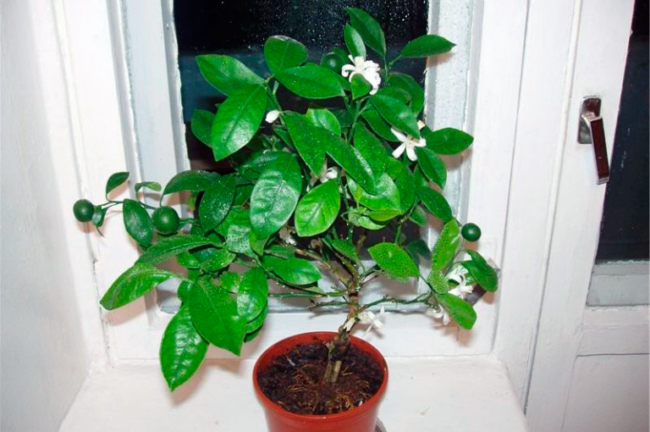
Old plants grow more slowly, so we replant them less often – only when the container becomes clearly cramped.
Pests of indoor lemon trees
To prevent pests, the plant must be provided with optimal conditions for growth and development. Lemon trees are very often affected by spider mites. These plants are also not very resistant to attacks by other pests, which include, first of all, mealybugs, scale insects and citrus mites. If symptoms of these pests are detected, chemical spraying with an appropriate plant protection product should be carried out.
Sometimes citrus leaves suddenly turn yellow and fall off. Most often, this indicates a mineral deficiency. Treat the yellowing leaves with iron chelate, which is contained in citrus fertilizer. This treatment will generally solve the problem of yellowing and falling citrus leaves.
Remember that growing lemons at home requires patience and regular care. Lemons grown at home are sweeter than those we buy in the store.


