

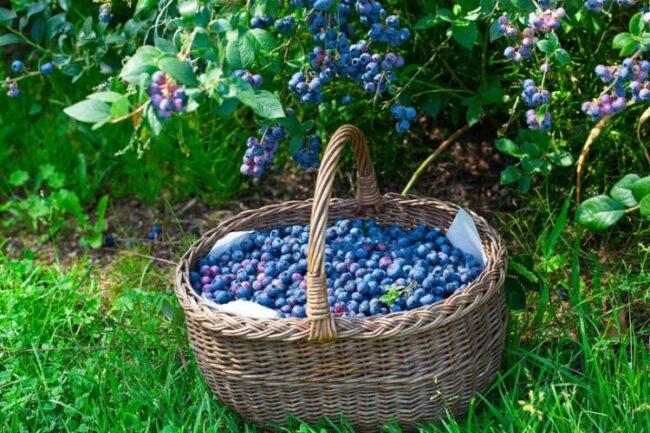
Features of garden blueberries
Blueberries, also called blueberries (Latin Vaccinum corymbosum L) are a species of perennial plant from the Ericaceae family, found both in nature and cultivated on plantations. Originally from North America, it has also spread to Japan, New Zealand, Great Britain and the Netherlands, where it grows naturally.
She feels great in our climate. The shrubs can grow over 2 meters if left unpruned. The shoots are highly branched, the leaves are elliptical, slightly serrated.
The flowers are collected in inflorescences and have a bell-shaped corolla of white, white-green or pink. It blooms from April to May and is a honey plant. Blueberries are dark blue berries. The fruits ripen from mid-July to September and are much larger than blueberries. The bushes can withstand frosts down to -25° C.

The berries have high taste and health benefits. This is an invaluable storehouse of mineral salts and vitamins, and at the same time, sweet and tasty. Among them are vitamin A, B6, E, K, a large number of vitamins. C, thiamine (vit. B1), riboflavin (vit. B2), niacin (vit. B3) and folic acid.
Garden blueberries: cultivation
Owners of a garden should enrich their home space with them. American blueberries, also known as highbush blueberries, are an increasingly popular shrub that produces delicious and nutritious fruit.
The currently very popular blueberry is relatively easy to grow once you know its basic requirements. However, not every garden grows well with blueberries. How to grow these delicious fruits, what should you remember? There are several factors to consider when choosing blueberries for your garden. These are primarily the timing of ripening, fruit size, frost resistance and the occurrence of diseases.
The place where we buy blueberry seedlings is also important. It is worth buying them from a trusted nursery or gardening store so that they meet our individual requirements when it comes to fruiting.
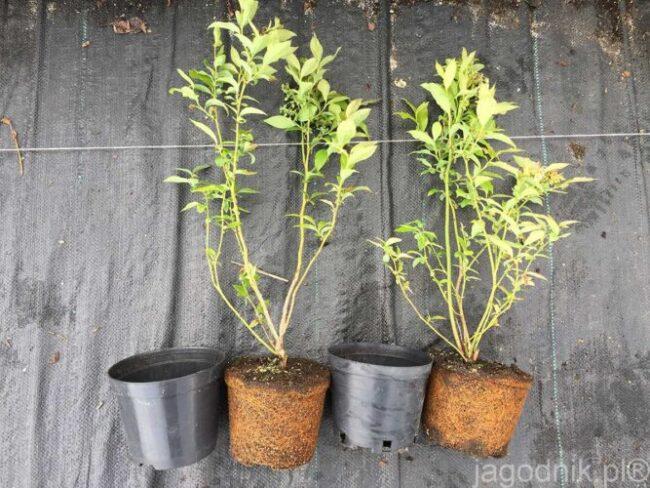
It should be planted in the ground in spring or autumn. A good solution is fruit bushes in pots. You can buy blueberries in garden centers in spring (March) and autumn (September). 2-3 year old bushes in pots with shoots 30-40 cm high take root well and begin to bear fruit the next year.
Additional Information! Seedlings with bare root systems should be planted immediately after purchase, or buried in the ground. When planting in autumn, you need to protect the plants from frost. To do this, make a mound of sawdust or pine bark around the plants to protect the base of the shoots and the root ball from freezing.
Blueberries love sunny places. Prefers acidic, moist and permeable soils with a high humus content. Acidic soils with a pH of 5.0–5.5 are best suited for them. It is also necessary to water and mulch regularly to protect against moisture loss.
The plant has a rather shallow root system, so it requires regular watering, especially during the summer heat, during flowering and fruiting. Then you should water more often. This lasts from late summer until autumn. Young plants may require regular watering, especially during dry spells.
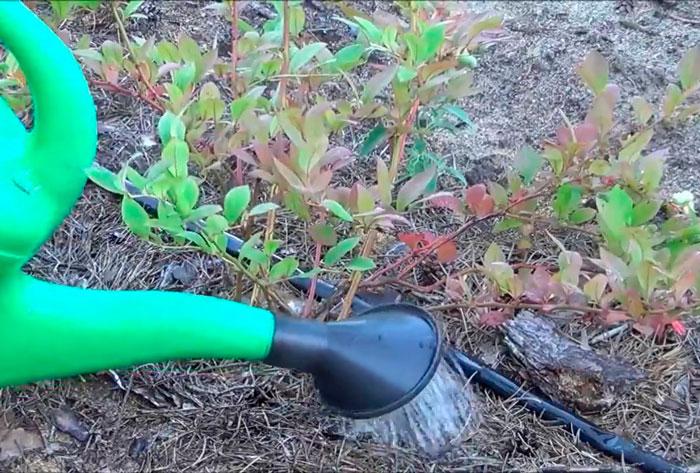
Watering blueberries requires a little more attention than watering other plants. Acidifying the soil for blueberries is an important element in growing this plant. Water is necessary for proper absorption of nutrients. This is why it is so important to properly acidify water for irrigation.
Fertilizing blueberries improves their condition and also affects the quantity and quality of the harvest. At the beginning of the growing season, it should be fertilized (once a year) using fertilizers intended for feeding plants of the heather family.
Shrubs should not be fed in late summer, as this may negatively affect the winter survival of the plants. Mulching the substrate will help reduce the evaporation of water from the soil, and will also reduce the number of weeds that can compete with young seedlings.
What is the correct soil pH for blueberries?
The reason for the poor condition of the berries or the lack of their development may be insufficient soil quality. The soil should be fertile and light enough. Blueberries do not like heavy and well-drained soils.
Highbush blueberries have special soil pH requirements. This is a characteristic feature of plants of the heather family, which prefer acidic soils. The best reaction for growing is a pH in the range of 3.5 – 5.
This pH is very rare in gardens, so before planting blueberries you need to slightly change the soil properties. If the soil pH is too high, blueberries will not develop and grow properly. The lack of suitable soil will lead to insufficient absorption of nutrients by the roots, which will negatively affect fruiting and the condition of the seedlings.
To lower the pH of the soil to the required value, use acidic peat or ready-made soil intended for growing acid-loving plants. You can use sulfur, approximately 0.5 kg per 15 meters of soil three months before the planned planting. You can also use coffee grounds. This is an organic way to acidify the soil.
If you planted blueberries in non-acidic soil, then it needs to be acidified. It is better to acidify the soil with acidic compost. Simply compost plant residues with pine needles or oak bark. The prepared compost is then added to the soil. However, it is important not to overdo the amount of acidic compost, as this can lead to acidification of the soil.
How to acidify water for watering blueberries?
Blueberries are a shrub that loves acidic soil and water, which is why it is important to acidify them, which allows you to increase the PH of the soil near the blueberries. There are several ways to acidify water for irrigation. One of the simplest and most effective is citric acid or ammonium sulfate.
There is another way, but you should approach it carefully. Mix 1/2 cup of vinegar with 4 liters of water and pour onto the surface of the soil. However, keep in mind that this method should be used in moderation, as too much vinegar can negatively affect other plants.
Note! In small quantities, this substance is safe for the environment, where it quickly biodegrades. However, you should not overdo it with vinegar, as it is potentially scalding and is even used to kill weeds.
To acidify water, it is best to use apple cider vinegar because it contains more minerals than regular kitchen vinegar. The acidity of apple cider vinegar is about 5%, which is enough to acidify the water.
Water should be applied directly to the roots of the bushes. When watering, you should avoid getting water on the leaves, as this can lead to diseases and damage.
Why don’t blueberries bear fruit?
We often wonder why our bushes do not bear fruit or turn brown during the growing season. Blueberries, although quite demanding to grow, can reward with abundant harvests if provided with the appropriate conditions.

But what if it doesn’t bear fruit or the harvest is bad? First, check the soil. If its reaction is alkaline, then it is not surprising that the blueberries did not bear fruit. Then you will have to acidify it, using regular fertilizers for acidifying the soil or enriched with microelements.
It is also worth taking care of the pollinating variety. Most fruit bushes bear fruit without a pollinator, but the yield will be small. To enjoy abundant fruiting, different varieties should be planted side by side, as cross-pollination increases fruit set on these plants.
Another reason why blueberries do not produce a harvest may be improper mulching or irregular watering. Dried blueberry bushes are not able to produce abundant harvests.
Blueberry pruning
Blueberries, like other fruit bushes, also require pruning. It also grows well even if not pruned regularly. You can limit yourself to removing old and damaged branches.
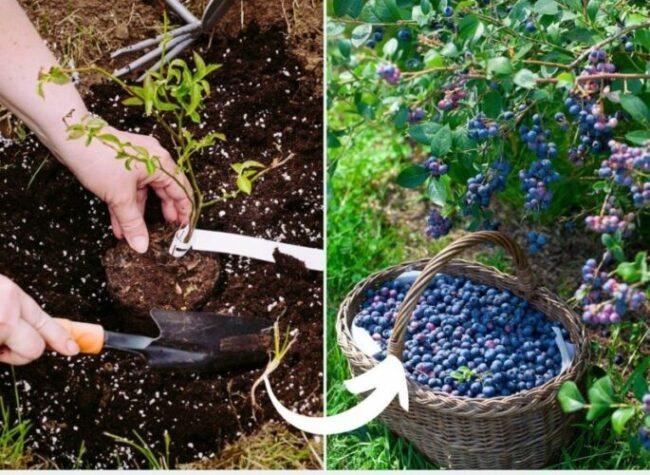
Once every few years (3-5) it is worth shortening all branches. This can be done in early spring or late autumn. Anti-aging pruning will allow the plant to create new fruit-bearing shoots, and the fruits obtained from them will be more attractive and numerous. Branches that cross each other should also be removed from the bush, and the center of the bush should be thinned out.
Remember! Pruning is done in dry and sunny weather; sharp pruning shears are used for this operation.
What fruit bushes should you choose for growing?
There are a lot of blueberries, as many as 450 varieties. However, not all of them are suitable for amateur cultivation. Which ones are especially recommended for garden plots?
List of the most popular species guaranteeing an early harvest
Bluecrop blueberries are the most popular variety, very tasty and productive, frost-resistant and disease-resistant, ideal for planting in personal plots.

Provides abundant harvests and is resistant to very low temperatures. The collected fruits tolerate transportation and storage well. This variety is self-pollinating but grows well alongside other blueberry varieties.
The fruits of this shrub appear at the end of July, but ripen even before September, which significantly expands the possibilities of using the shrub. The berries are relatively large, light blue in color, covered with a whitish coating. They have a sweet taste. Additionally, Bluecrop blueberries are easy to grow. For this reason, it is especially recommended for beginning amateur gardeners.
Another, no less popular variety is Blugold with extremely tasty, large and hard fruits. Easy to grow not only in gardens, but also on terraces and balconies, therefore suitable for amateur cultivation. Resistant to drought, disease and low temperatures. Also shows high yield. Harvesting takes place in the second half of August.
Late ripening variety, bearing fruit in early September – Darrow. Its large, fragrant, tasty fruits are ideal for desserts. It has average resistance to low temperatures, and is also susceptible to shoot rot.
The Duke variety, although distinguished by late flowering, surprises with a rather early and abundant harvest. It is resistant to low temperatures. easily withstands temperatures of -25 degrees Celsius. Moreover, it does not need pollinators.
Pests and diseases of blueberries
Blueberries are a plant that rarely gets sick, especially if good growing conditions are provided. Traces of mycelium may appear on the tops of fruiting shoots and on the fruits. A fluffy coating is a sign of gray mold. Infected parts should be removed and the plant protected with a fungicide.
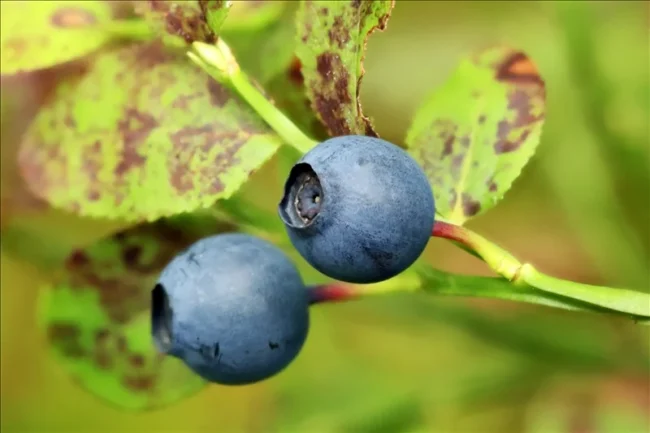
Small black spots on the leaves are a symptom of anthracnose, a disease also caused by fungi. Infected leaves quickly fall off and should be collected and disposed of.
Pests can also appear on blueberries. Usually these are insects that damage leaves. The most common pests are aphids, midges and leaf rollers. It is worth checking the leaves of the plant frequently to detect the presence of pests in advance. Large colonies of insects should be removed from plants.


