


What do zinnia bushes look like?
Annual flowers belonging to the Asteraceae family, native to North and South America.
Extremely attractive flowering annuals that come in many varieties. They come in a variety of colors and shades – from white, orange, pink and purple to unusual multi-colored combinations.
A large selection of species and varieties, ease of cultivation and low requirements allow them to be readily selected and grown in the garden and in pots. Straight, hard shoots with elongated, oval or ovoid leaves form one flower basket with a diameter of 5 to 12 cm from June to late autumn.
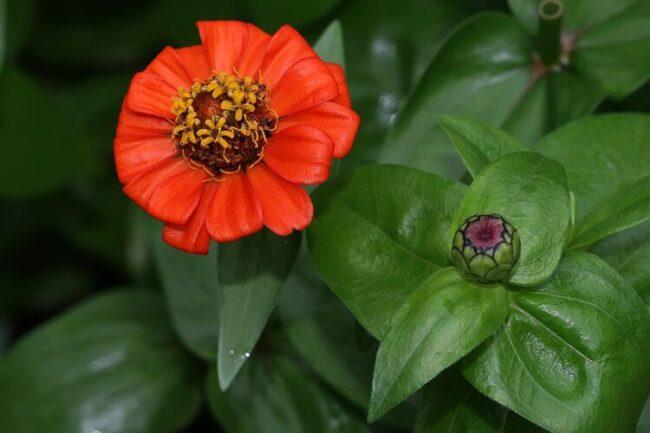
Currently, there are about 20 species and many varieties, both annual and perennial. There are two main types of zinnias that are most popular: graceful zinnia and Mexican zinnia.
The elegant zinnia, called Jacobin, is a commonly cultivated species. It reaches a height of 30 to 100 cm depending on the variety; in dwarf varieties – only up to 20 cm. It has branched stems and heart-shaped-ovate or oval leaves, which, like the stems, are covered with coarse hairs. Flower baskets can be of different sizes (up to 15 cm in diameter). Flowers can be white, yellow, pink, orange, red and purple.
Zinnia Mexicana, also known as zinnia angustifolia, has lanceolate leaves and a bushy, compact habit. Zinnia blooms from July until the first frost. The flowers are reed-shaped, 4 to 6 cm in diameter, yellow, orange and red. Interestingly, two-color specimens predominate here, for example, with yellow edges and a red center.
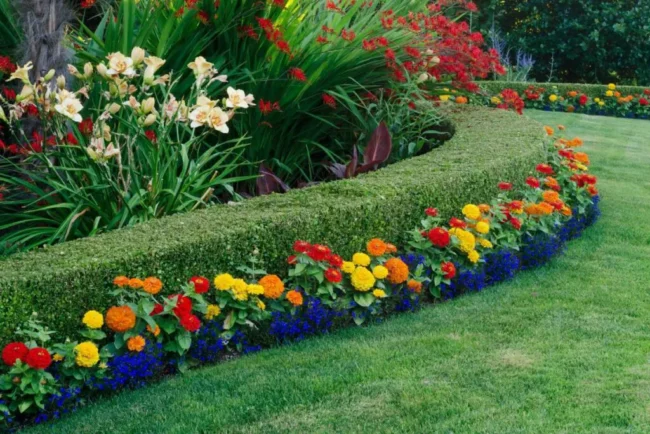
Depending on the type and variety, they vary in height. They reach a height of 25 to 100 cm, which allows them to be used in different ways: for borders or for growing in pots on a terrace or balcony.
Zinnias: planting and care
Growing majora flowers is not difficult and does not require much effort. Annual zinnias need to be re-sown every year. You can prepare seedlings yourself at home from March to April. Seeds are sown in the ground from mid-May to July due to the fact that zinnias are frost-sensitive plants. Zinnias sown directly into the ground are delayed in development and will bloom only in July or August.
Note! Before placing plants on the balcony or replanting them in the ground, it is necessary to gradually accustom them to lower temperatures and stronger sunlight. Acclimatization of plants usually takes 14 days, so in early May the seedlings are taken outside and covered or hidden indoors at night.
They need a warm, sunny place, as well as fertile soil rich in humus with a neutral or slightly alkaline reaction (pH 6.5-7.0). It is best to plant zinnias in sunny and warm places, protected from the wind. In shaded areas they bloom poorly and grow more slowly. They are ideal as front entry plants.
The soil needs to be loosened, and mulching reduces evaporation and the appearance of weeds. If the soil is of lower quality, mix garden soil with compost. Otherwise, zinnias will have small and poorly colored flowers.
When growing, you must not forget to systematically water the plants; they do not tolerate drought. Be sure to water only the base of the stem. They do not like moisture and cold, but grow well even in hot and dry summers, as long as they are watered regularly. In dry soil, they will quickly lose their beautiful appearance and become more susceptible to disease.
- Additional Information! To stimulate growth, in the spring the plants are fed with a universal fertilizer with a large amount of nitrogen. During the period of the first buds and flowering, you can use fertilizers for flowering plants, thanks to which the flowers will be better colored and the plants will bloom longer and more abundantly.
Also, do not forget to regularly remove faded flowers. This will ensure more abundant and longer flowering.
Zinnias: growing from seeds
How to sow zinnia? Seeds are sown no earlier than the second half of May, since they will not germinate at low temperatures. We place them in the substrate to a depth of 0.5 to 1 cm, maintaining the required distance. If you sow them too thickly, you will have to prune them when a pair or two of true leaves appear.
When to plant zinnia seedlings? Seeds are sown in March-April in boxes or pots. Seedlings are easy to grow on a windowsill in an apartment or greenhouse.
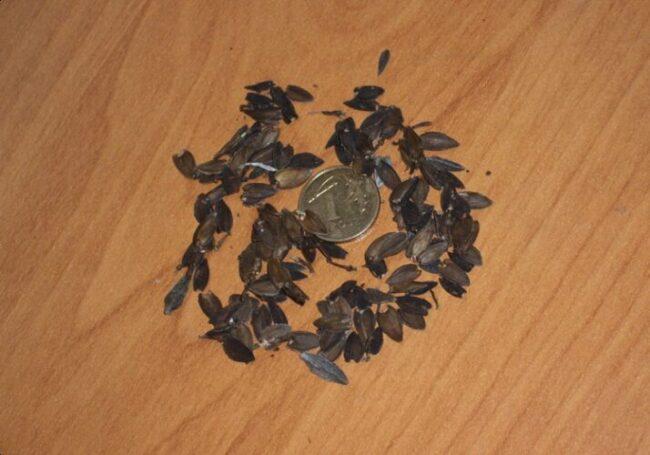
They can be scattered over the surface and covered with soil. Another way is to make holes and place one seed in each.
Sowing majors for seedlings will not pose any problems even for novice gardeners to get healthy and strong seedlings:
- fill the seedling pots with sterile, slightly moist soil;
- place the seeds in the ground to a depth of about 1 cm. No more than 3 seeds in one pot;
- you can care for seedlings on the windowsill, and on warm days put them on the balcony for several hours;
- keep the substrate constantly moist by gently spraying it;
- When young plants have 2-3 true leaves, they are transplanted into larger pots if several seeds were sown in one container.
Before planting in the ground (in the second half of May), zinnias are hardened off by taking them outside for several hours a day for a week.
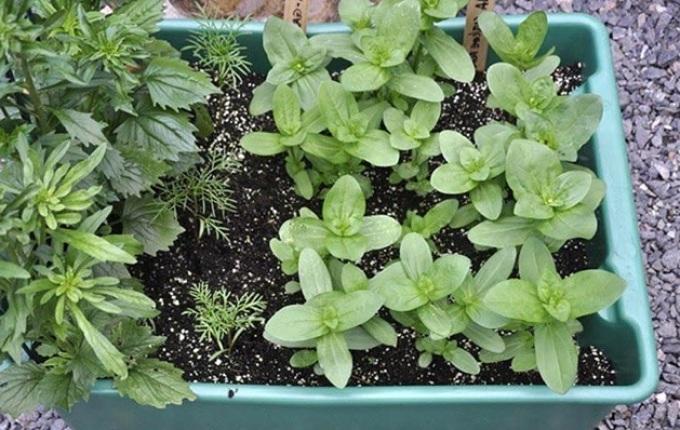
Seeds germinate quickly, usually within a week. We plant plants in a permanent location only when there is no longer a risk of night frosts. The seedling should be from 10 to 20 cm depending on the variety. Zinnias will bloom approximately 3 months after sowing as seedlings.
Zinnias look most beautiful in groups next to other tall plants. Dwarf varieties can be used to create borders of flower beds and lawns. Together with forget-me-nots they will create interesting, colorful compositions. Also look good with marigolds and sage.
Diseases and pests of zinnia
They are susceptible to developing various diseases. The most common ones include:
- powdery mildew;
- gray rot;
- Alternaria blight;
- scleroderma rot.
Powdery mildew is caused by fungi. A powdery white coating appears on the green parts of plants, most often on leaves, stems and young buds. It will be necessary to remove the affected leaves and spray the plants with the appropriate preparation.
Gray rot is the most common fungal disease, which is favored by excessive moisture and plant density. A characteristic sign is a gray coating on the leaves. It is necessary to remove the infected parts of the plant and then spray them with a fungicide.
Alternaria blight is a disease that affects leaves and shoots. The result is small green or dark brown spots.
Scleroderma rot affects entire plants, which die and rot. The disease appears at high soil and air humidity and temperatures in the range of 16-22°C. Its symptom is a white cottony coating. Fungicidal sprays are used to combat it.
In addition to diseases, zinnias can also suffer from pests. Leaf mites are small insects, 2–3 mm long, that feed inside leaves. Damaged parts of the plant should be removed and disposed of.
Aphids are a pest that are 1-7 mm long. Most often, they feed on plant juices, which as a result stop growing and dry out. Aphids are controlled using appropriate sprayers.


