

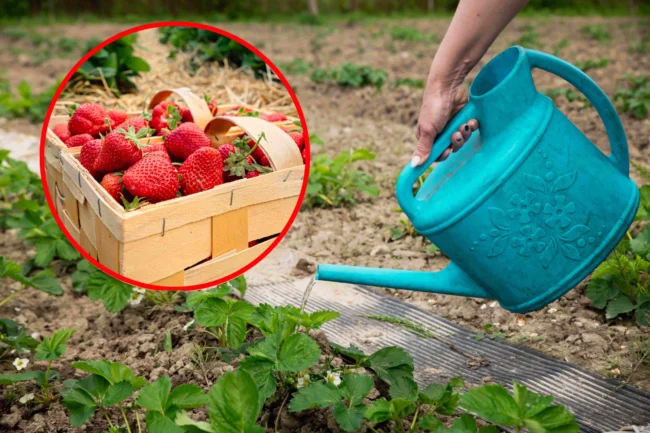
Irrigation of strawberries is the key to a bountiful harvest
Water is the most important factor affecting the size of the fruit and, therefore, the yield. If there is no way to water the strawberries, it is better not to plant them at all. During the growth of leaves and stolons, they do not have an excessive need for water, but during the ripening period of the fruit, the situation changes dramatically. If the plants dry out during this time, the fruits will begin to shrink. All the efforts to plant the plants and further care for them will be wasted. This cannot be allowed.
Let’s not skimp on water for strawberries, while the fruits are growing, strawberries need regular access to water, especially during drought. It is best to water the plants in the morning, directing a stream of water directly to the soil, not allowing the leaves to get wet, which can contribute to the development of fungal diseases.
Please note! Strawberries are very susceptible to fungal diseases, and a large amount of water promotes the development of pathogenic microorganisms. Therefore, a large amount of water is undesirable and increases the risk of fungal diseases that can completely destroy the fruit. Therefore, the soil should be kept sufficiently moist and stagnant water should be avoided, which has a negative effect on plants.
How to water strawberries for better fruiting?
Water is the most important factor affecting the size of the fruit. For this reason, it is necessary to water the plantation systematically. Strawberries in the vegetative phase, i.e. in the phase of growth of leaves and shoots, do not have a great need for water. However, these needs change significantly when the plants are in the phase of growth and ripening of fruits.
Strawberries require the most water during rooting, flowering and fruiting. A water deficit during this period has catastrophic consequences – the fruits become small, not very juicy and can even dry out on the bush. Therefore, it is very important to water strawberries abundantly during the growth and development phase of the fruits.
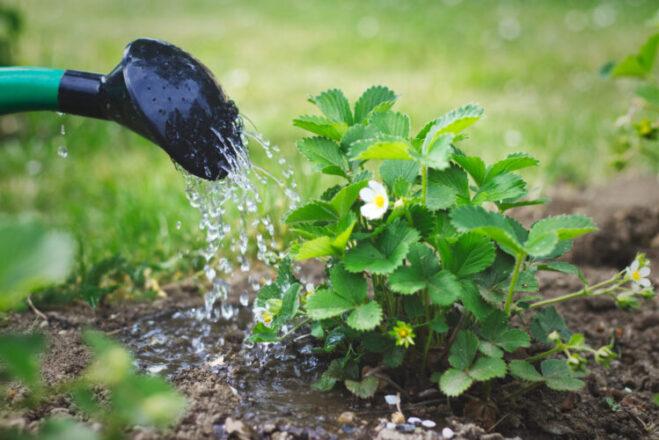
It is important to avoid overwatering or completely drying out the soil. The soil should be only slightly moist, but not wet. It is better to water strawberries sparingly but often. Watering should not be prolonged or very abundant due to the shallow root system.
In spring, and sometimes at the beginning of summer, strawberries are watered early in the morning so that they have time to dry before the scorching sun, or in the evening, when the sunlight weakens.
In summer and on hot days, it is best to water strawberries in the evening – at dusk or even after sunset, when the soil has cooled down a little. Moreover, watering at this time requires less water and allows you to achieve better results.
Strawberries should be watered only at the roots, for example, using drip irrigation or a watering can without a sieve. Too frequent spraying of leaves, flowers and fruits promotes the development of fungal diseases. If strawberries are watered frequently and too abundantly during the fruiting period, the fruits become less tasty: watery, not sweet and spoil faster.
How often should strawberries be watered? Strawberries rarely need to be watered every day. This is only necessary during long periods of heat. A lack of water in the soil can be easily recognized by the appearance of the leaves – they lose strength and wither. To reduce losses from drought, you can mulch the strawberries
Additional information! Why do you need to water your strawberry patch after harvesting? Irrigation improves the recovery of plant strength after abundant fruiting, prepares strawberries for winter, and lays flower buds for the future harvest.
Why mulch strawberries?
Strawberries grow much better if they are mulched regularly. Suitable materials include, for example, straw, agrotextile. Mulch prevents weeds from growing. It also protects the soil from drying out too quickly and from overheating, which helps to water the strawberries less often.
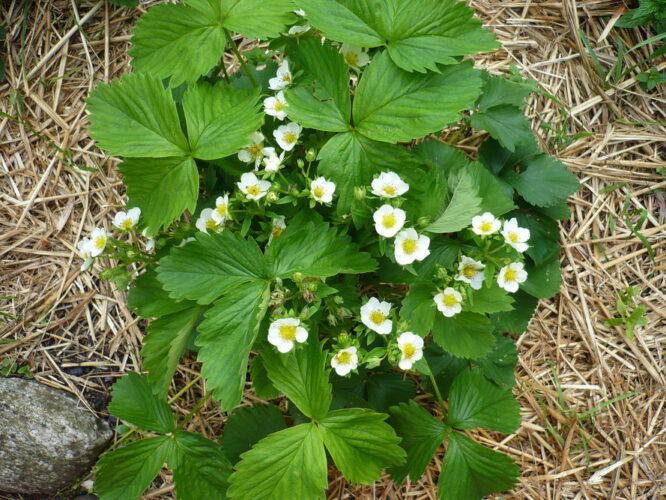
The bedding made of natural materials decomposes and turns into humus. Thanks to this, the soil retains water and nutrients better. Mulch also prevents the fruits from becoming dirty, they can be eaten straight from the bushes.
Strawberry is a perennial plant. Strawberry leaves often contain pathogens and pests. Therefore, strawberry leaves need to be removed, but at the right time of year: in spring (before the start of vegetation) and in summer (after fruiting).
This should be done manually, carefully, so as not to destroy the flower and leaf buds located close to the ground. Garden shears make the job easier. At the same time, weeds are removed. When the bed is tidied up, you can plant strawberries. Then lay down mulch.
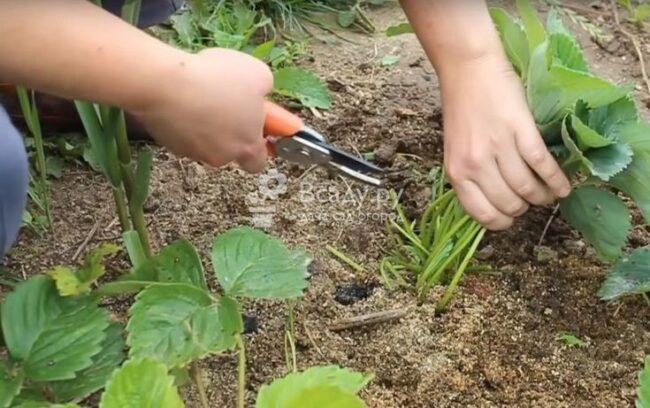
You should not postpone spring cleaning of the bed from dry leaves and weeds. Strawberries grow quickly, especially if the weather is warm. The larger the young leaves, the easier it is to destroy the flower buds between them when harvesting.
The leaves are cut at a height of about 5 cm above the ground. The treatment helps to reduce the spread of diseases such as white and red spot of strawberries, powdery mildew and gray mold. Thanks to summer mowing, strawberries are less likely to be damaged by pests, such as. Only young strawberries (up to a year after planting) do not need mowing.
Why remove strawberry shoots?
Strawberries reproduce thanks to stolons, which are popularly called runners. They release them from June to autumn. Most shoots appear after fruiting. At the end of each shoot, the strawberry produces a seedling. When in contact with the ground, roots sprout in about 2 weeks. However, the young plant is additionally fed by the mother strawberry for several months.
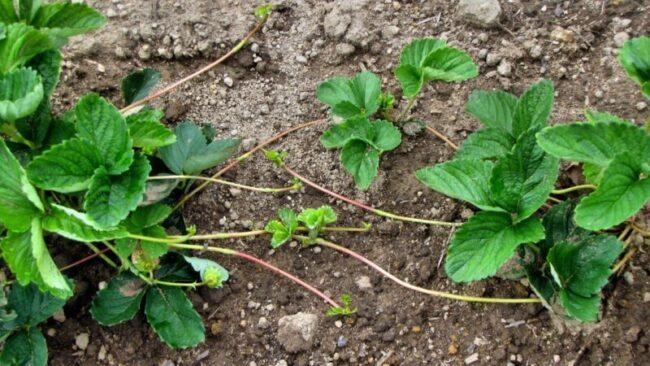
Strawberries produce a lot of these shoots and use up a lot of nutrients. This causes them to produce fewer flower buds. As a result, there will be fewer fruits next season.
Therefore, strawberry shoots must be systematically removed. Only those intended for seedlings are left. The shoots are cut with garden shears or a one-handed pruner as close to the mother strawberry as possible. You can also tear them off by hand, but then you must be careful not to pull out the mother plants along with the roots.
When to plant strawberries?
Strawberry seedlings obtained from shoots are planted in the second half of July and in August. Before planting, it is worth checking the weather forecast. If hot weather and drought are predicted, it is better to postpone planting until cooler and rainier days.
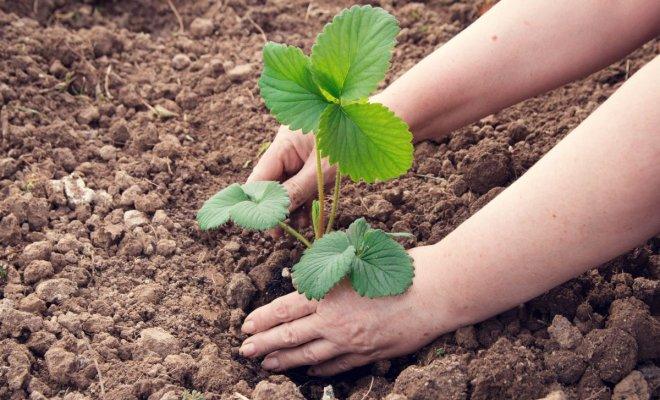
Freshly planted strawberries are quite sensitive to lack of water. In hot weather, even watering may not be enough for them to take root.
Watering strawberries with yeast
Watering strawberries with yeast gives amazing results. Yeast fertilizer is easy to prepare. Grind 1 cube, i.e. about 100 grams of fresh yeast, and mix it with 10 liters of warm water. Leave the mixture for 2-3 hours. Water the strawberries with about 500 milliliters of the resulting fertilizer.
Repeat watering the strawberries with yeast three times per season. The first time you can water them 10 days after planting in the soil to help the seedlings take root. Then repeat this process when flowers appear. The last time is after harvesting. Then new flower buds will quickly form.
Although yeast provides a lot of nutrients to plants, it does not cover their needs 100%. You can also provide strawberries with potassium, for example, using banana peel fertilizer, and calcium – crushed eggshells are great for this purpose.


