


Features of climbing hydrangeas
Climbing hydrangea (Hydrangea petiolaris) – a vine from the Hortensia family comes from the Far East, from the islands of Japan, Sakhalin and Korea.
Climbing hydrangeas are suitable for decorating walls, pergolas and fences. A climbing hydrangea with clematis creates a beautiful composition on a wall or facade. As a groundcover in shady places, it creates a dense green carpet of leaves, and at the same time blooms in an original way in summer.
Additional Information! A vigorous vine grows slowly in the first years after planting, but when it takes root well, it grows up to 50 cm per year. It can reach up to 20 m in height. Supports for climbing hydrangeas must be strong enough to support the weight of an adult plant.
Shoots are covered with red-brown bark. Adventitious roots are formed on the shoots, with the help of which it climbs walls and supports. Therefore, the plant needs a lot of free space on the wall or other support on which it climbs.
The first time climbing hydrangea blooms usually after several years of cultivation. It blooms profusely and continuously from June to July, and is always white. Flat inflorescences up to 25 cm in diameter consist of sterile and fertile flowers. At the edge of the inflorescence, sterile white flowers develop, in the center – inconspicuous, capable of forming seeds.
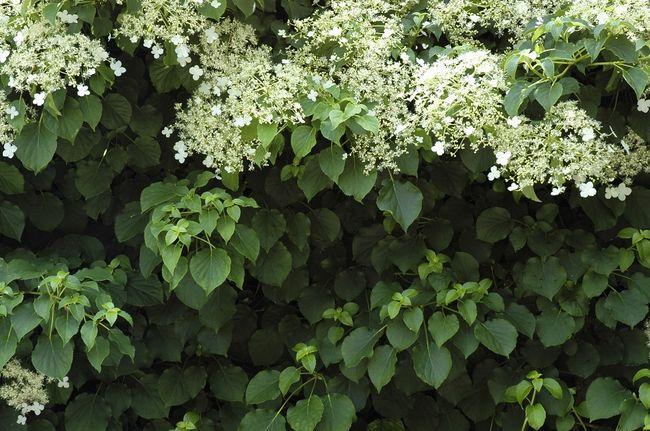
The leaves are decorative glossy green, 6 to 10 cm long, on long petioles. In autumn they turn bright yellow. In some varieties, in a mild winter, they remain on the shoots until the next spring. The fruits are capsules containing small seeds. It is a hardy, disease-resistant vine that is completely hardy.
Cultivation of climbing hydrangea
Hydrangea looks very good in landscape design. Due to the variety of its varieties, you can create various compositions in the recreation area.
Climbing hydrangeas prefer semi-shady and even shady places, and require constantly moist soil. Therefore, it is worth planting near the northern walls of buildings. With more sunlight, the plant needs more water in the soil.
Feels best on fertile, humus soils with a slightly acidic reaction. It does not tolerate excess calcium and is sensitive to dense soil.
How to plant?
The best time for planting is from March to mid-May. The planting hole should be twice the diameter of the seedling’s root ball. The bottom of the hole must be loosened and watered well.

A dry root ball can be additionally immersed in water for a few minutes. Irrigate after planting as well. A layer of mulch around will help keep the soil evenly moist.
Climbing hydrangea care
Young plants need to be watered regularly, especially in hot weather.
Note! Hydrangea quickly fades without water, its leaves curl, it blooms weaker. It needs a lot of water and should be watered regularly and plentifully. However, water stagnation should not be allowed, which the plant also does not like.
Plants, especially those growing near trees, may lack nutrition and need to be fertilized. In the spring, fertilize the plant with leaf compost, and additionally use fertilizer for rhododendrons. It is best to use rotted manure, special mineral fertilizer for hydrangeas or vegetable compost.
pruning
Climbing hydrangeas can tolerate pruning, but it’s usually not necessary if it has enough room to grow. Shoots can be shortened by about a third immediately after planting to encourage their branching.
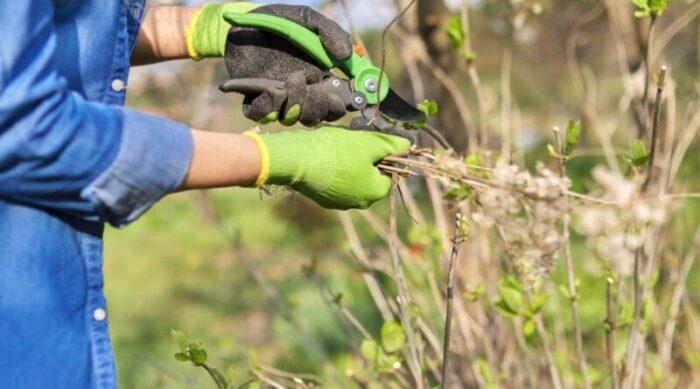
In the case of older plants, the old wood can also be cut down without any problems. The ideal time to perform this procedure is February and March.
How to propagate climbing hydrangea?
It can be propagated in two ways: grow from sections of shoots in June-July. Young, slightly lignified shoots without flowers are best suited for this purpose. This method is similar to the method of propagation of garden hydrangea.
The cuttings are cut 10-15 cm long, so that each has one leaf. In a flat pot, a substrate is prepared for planting: sand with a small amount of peat. Each seedling is dipped in a rooting agent, then planted to a depth of 3–5 cm, lightly pressing down, and watered.
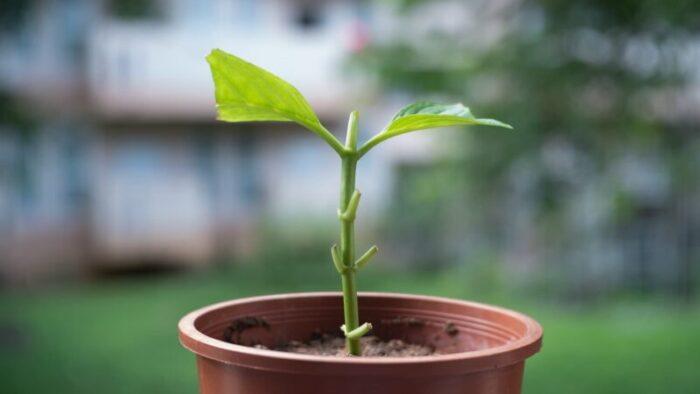
Keep the substrate slightly damp. The cuttings take root in a few weeks. In the spring they are planted in a permanent place.
Can be easily propagated from spring to late summer by layering side shoots that grow close to the ground. To do this, in the middle part of the shoot, the leaves are removed and slightly incised, removing a narrow strip of bark on its lower part with a knife.
Shallowly immersed in humus soil and keeps the site constantly wet. During the growing season, the cuttings will take root, and in the fall or spring it can be separated from the mother plant and planted in a new place.
Pests and diseases of hydrangea
Climbing hydrangeas are strong vines, rarely affected by diseases and pests. Well supplied with nutrients and growing in an ideal location, the hydrangea rarely succumbs to disease.
Sometimes they are affected by chlorosis – the leaves turn yellow. The cause of the disease is usually an iron deficiency. However, it happens that chlorosis is caused by too alkaline soil. As a result, hydrangea roots cannot absorb nutrients, especially iron and manganese.
If the symptoms are underestimated, the plant will eventually weaken and lose its beauty. This can be prevented with a dose of soil for rhododendrons or peat.
Note! Hydrangeas do not cause big problems if they are provided with acidic soil. Then they will be able to properly absorb nutrients from the earth.
When the pH of the substrate is low enough, hydrangeas have large, strongly colored leaves and buds. They are also more resistant to pests and diseases.
Powdery mildew can also be observed from time to time. They are favored by warm and dry weather, as well as overfertilization of plants with nitrogen. On infected leaves, a gray powdery coating appears on both sides. Infected parts of the plant should be removed as soon as possible. This will prevent the spread of the disease.
Prevention is always better than cure. Strong, healthy specimens will endure ailments much better. Factors that weaken hydrangeas include: excess sun, lack of nutrients and insufficient watering. Excessive sun can cause leaves and flowers to wilt.


