


Description of the noble laurel
An evergreen woody plant originating from South Asia, today it is associated mainly with the Mediterranean region. In Ukraine, the plant is not found in nature, and is grown only as a potted plant.
The bay tree can live up to a hundred years, and reaches a height of 6 to 12 meters. The trunk is covered with smooth and dark bark. The diameter is 15-40 cm. Less common in the form of a shrub.
Bay leaf – raw material, 6-20 cm long and 2-4 cm wide, have a lanceolate shape (oblong, pointed), dark green and shiny. They have a very strong and characteristic smell.

Due to their unique aroma, they are highly valued as a kitchen spice that perfectly complements the taste of many dishes.
Yellow, white or pale pink flowers are collected in inflorescences of 4-6 pieces. Appear in March-April. The fruits resemble black berries.
Bay leaf properties
Recently, the healing properties of the noble laurel are increasingly being used. In herbal medicine, astringent, antipyretic, sedative and many other properties are valued.
The beneficial effect of the bay leaf is associated with the content of active substances in it: essential oils, flavonoids, tannins, lignans, alkaloids, resins, pectins, bitterness. They also contain vitamins: A, B2, B3, B5, B6, C and folic acid, as well as minerals: calcium, iron, manganese, potassium, selenium, copper, zinc and magnesium.
Bay leaf: benefits
What medicinal properties does bay leaf have? Bay leaf treatment is most often used in the form of a self-prepared infusion or decoction.

Bay leaf to a greater or lesser extent has the following properties:
- anti-inflammatory agent;
- painkillers;
- antipyretic;
- choleretic;
- diuretic.
Note! However, bay leaf treatment cannot be considered as a replacement for traditional treatment. It will work as an adjunct to proper therapy after consultation with your doctor. For external use, bay leaf preparations can be used without special restrictions!
Infusion treatment can be used for many ailments and diseases: both internally and externally. It supports digestion and proper liver function, and helps lower blood sugar levels. Reception of infusion, decoction or ground bay leaf helps to lower blood sugar levels in patients with type II diabetes mellitus.
It is of great importance in the natural treatment of diseases of the digestive system, increases the secretion of gastric acid, and therefore effectively stimulates the intestines and the entire digestive system, supporting metabolism.
Note! Of paramount importance are analgesic and anti-inflammatory properties. In folk medicine, a decoction of bay leaves is good for various problems with joints and bones.
Due to its broad antibacterial and antiviral properties, bay leaves are used for various types of upper respiratory tract infections. When coughing, syrup, decoction or infusion of bay leaf is recommended. This facilitates the expectoration of residual secretions, and thus helps to clear the airways.
Additional Information! In addition, chest compresses are made from cooked warm bay leaves, which are effective in relieving painful coughs and symptoms of bronchitis.
Sometimes bay leaf is used for insomnia, as it has calming, relaxing properties.
bay leaf oil
Laurel oil contains, among other things, omega-9 monounsaturated fatty acids, palmitic acid, flavonoids and antioxidants. Thanks to this, laurel oil has numerous beneficial properties:
- anti-inflammatory, antiseptic;
- slows down the aging process of the skin;
- regenerates, accelerates healing, softens the skin;
- soothes inflammation and symptoms of acne, psoriasis, eczema, seborrhea;
- fights dandruff;
- supports hair growth;
- has warming properties, relieves pain in the joints and muscles.
Laurel oil – how to use?
Laurel oil is best used diluted with other oils or as an ingredient in cosmetic formulas. Undiluted, it should only be used topically.

A small amount without dilution is applied to skin lesions such as acne. On large areas of the face, it is best to apply it by mixing it in a 1:1 ratio with another more gentle oil, such as sweet almond oil or macadamia oil. For a highly hydrating blend, it can be combined with aloe vera gel or hyaluronic acid.
A few drops of bay oil can be added to cosmetic products such as creams or masks.
Can also be added to hair care products such as shampoos and conditioners.
Laurel oil can also be applied to the scalp and massaged to promote blood circulation, stimulate hair growth. This is best done 15 minutes before shampooing.
You can make oil from bay leaves: pour about 20 g of crushed leaves into 200 ml of oil, for example, sunflower, leave in a dark place for 10 days.
Recommended for use in rheumatic and arthritic pains. It can also be used topically for inflammation. Thanks to its warming properties, it soothes rheumatic and arthritic pains, and also brings relief from muscle pain, sprains and dislocations of the joints.
In turn, bay leaf oil is used in the manufacture of cosmetics. This oil has anti-inflammatory, antiseptic, antifungal properties. Recommended for acne-prone and sebum-prone skin, as well as for the treatment of many skin conditions such as eczema, psoriasis and athlete’s foot.
How to make bay leaf tea
Pour 5 g of chopped bay leaves with a glass of boiling water and cool.

Decoction : Throw 5 g of crushed leaves into a pot of cold water, bring to a boil and cook for about 5 minutes. Such a decoction should be poured into a thermos, tightly closed and set aside for about 5 hours, strain and drink in small portions throughout the day, but not more than 3 days!
Bay leaf in cosmetics
Bay leaf is also widely used in cosmetics for hair, face and body care. Due to its anti-inflammatory, antibacterial and cleansing properties, it is ideal for skin care.
The infusion can be used successfully for acne-prone skin, as well as for relieving many skin problems and washing wounds to speed up the healing process.
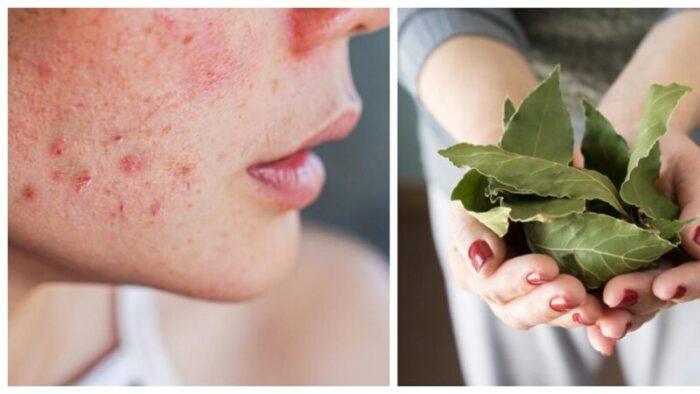
It tones, improves blood circulation, suppresses inflammatory processes responsible, among other things, for the formation of acne.
A decoction of bay leaf also works well as a hair rinse, as it has a positive effect on the hair follicles. It helps in the treatment of various diseases.
Bay leaf infusion used for hair improves their condition: strengthens bulbs, reduces hair loss and stimulates hair growth, eliminates dandruff. After washing, apply the infusion to the hair without rinsing.
Contraindications and side effects
Use should be discussed with a physician. The active substances in bay leaf can interact with medications, such as some antibiotics.
It should also be borne in mind that it has a strong effect, so you need to be careful. An overdose can be toxic to the body! A side effect may be irritation of the digestive tract, leading to abdominal pain, nausea, or vomiting.
It should be remembered that any cosmetics, including natural ones, can cause allergic reactions. Therefore, before applying it to the entire face or hair, it is good to do a test on a small invisible area of the skin.


