

 All types of roses with description

This beautiful decorative flower, due to its popularity, has many varieties. According to the main classification, these shrubs are divided into 7 groups: large-flowered, border (multi-flowered), miniature (dwarf), park, ground cover, climbing and English. There are 200 wild species and about 20,000 varieties known.
Individual groups and varieties differ in the size and shape of the bushes, appearance and color, requirements for cultivation, resistance to diseases and pests, sensitivity to frost. Some of them bloom only once per season, others repeatedly, some smell beautifully, others have no smell.
The most interesting and popular varieties of roses:
Large-flowered – definitely the largest group, characterized by large (8 to even 20 cm in diameter) lush flowers growing singly at the top of the stem. Therefore, they look beautiful in bouquets.

Beautiful flowers also tempt with a charming aroma. They come in a variety of shades. They reach a height of 50 to 120 cm. Their shoots are rigid, and the leaves are dark green and shiny.
Large-flowered roses look great in open spaces. Such roses can be planted along garden paths or as a rose alley. The first flowers appear in the summer – and until late autumn. Some varieties bloom only once.
Please note! Large-flowered roses have high requirements and are difficult to grow. The soil should be fertile, humus, sandy-loamy and constantly moist, and the place should be sunny (roses do not like hot weather, so light air is recommended).
This species also requires regular pruning. The first cut should be made in the spring, a year after planting. Flowers that fade should be removed. Large-flowered rose is resistant to negative temperatures (up to -20 degrees). It likes complex fertilizers, compost or manure.
Border roses grow low and branch out strongly, creating a spectacular dense blanket in the garden. On one shoot they give even several dozen tiny flowers. Flowers can be single, semi-double or double, of various colors. Border roses usually have no scent. However, their advantage is beautiful colors of almost any color.
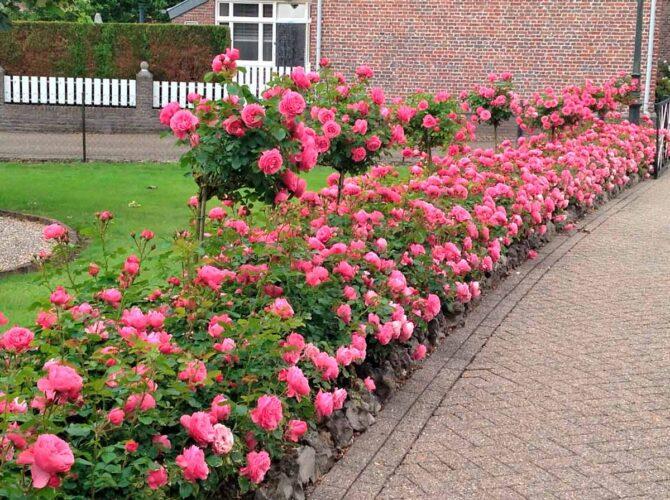
Rose beds can be single-color or multi-colored. They look best when planted in single-species groups. These shrubs are also suitable for low hedges and look good along garden paths. They bloom for a very long time and abundantly – from June to October. From several to a dozen flowers can grow on one shoot.
Undemanding in cultivation, they can grow in a sunny or semi-shaded place. The soil should be moderately moist and rich in humus. But almost any type of soil is suitable for them.
These varieties are quite resistant to diseases and tolerate low temperatures well, but they should be hilled before winter. A mound of about 20 cm should be poured, protecting the budding site (bush grafting), as well as the root ball and the base of the shoots.
Miniature roses , also called dwarf roses, come from a dwarf variety of China rose. These miniature versions of multi-flowered shrubs are easy to grow and frost-resistant.
Miniature roses are small, about 40 cm tall, making them ideal for growing in a pot indoors during the winter months.
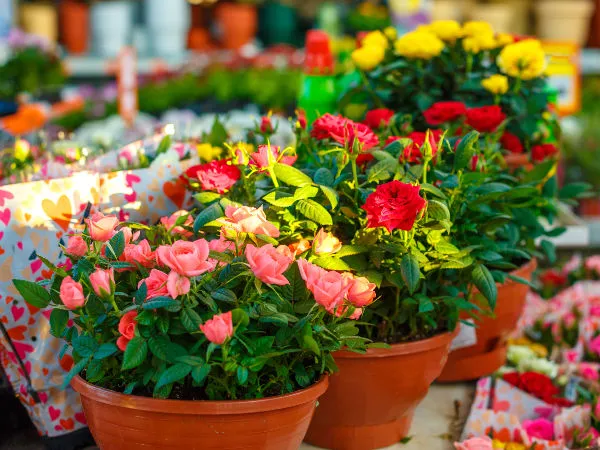
They also look good in flowerbeds and rock gardens. Roses bloom throughout the season (from May-June to autumn). There are pink, red, white and yellow flowers of a beautiful, regular shape.
Park roses are large, abundantly flowering shrubs with flowers 7-10 cm in diameter. This is a large group of roses that can most often be found in parks. Their straight, rigid shoots often hang down decoratively, but these plants do not require support. Some varieties have a wonderful aroma.
The bushes look best planted individually, and are also suitable for hedges. Due to their large size, plants should be given enough space in the garden. Most varieties bloom throughout the season, repeating their bloom, but some only bloom once.
They require a sunny location, regular watering and pruning. They are resistant to frost and diseases. However, it is recommended to cover them with soil or compost for the winter.
Groundcover roses have long, strongly branching shoots, creeping close to the ground. They bloom abundantly, creating colorful carpets in parks and garden plots. They are white, red, pink, yellow. They bloom for a very long time and abundantly (from June to late autumn). Up to several dozen flowers can develop on one shoot.
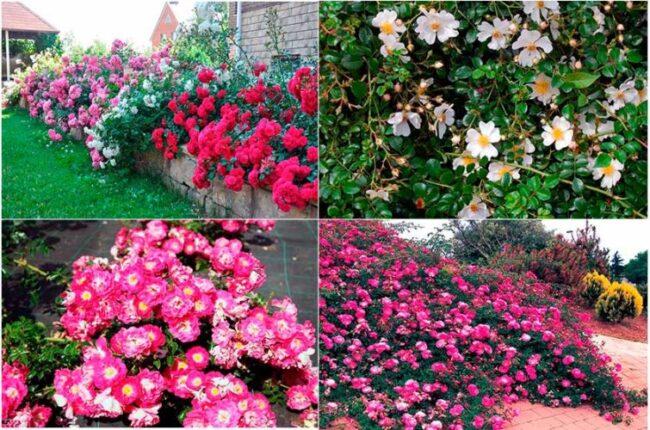
The bushes have a powerful root system, so they can be used as lawn plants. They are ideal for landscaping slopes and sloping areas. They can grow both in flower beds and in rock gardens.
Very easy to grow, resistant to frost and diseases. They should be planted in humus soil enriched with compost. This can be a sunny place or partial shade. Watering should be abundant (they are sensitive to water). Trimming is possible, but not necessary.
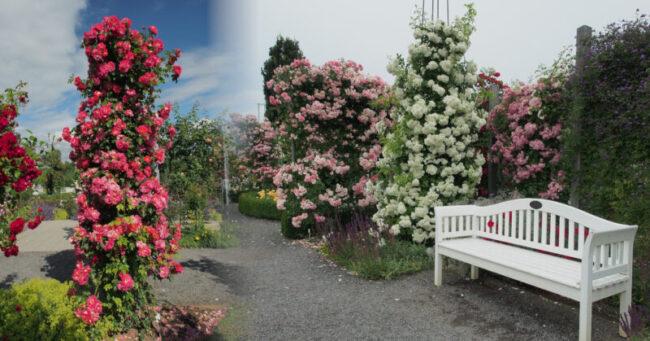
Climbing roses require appropriate supports, since their shoots are flexible and resistant to damage, which allows them to be planted near gazebos and building walls. Depending on the variety, climbing roses vary in the size of their flowers. They can have rigid or flexible shoots.
They require tying to supports and look most beautiful when planted next to a gazebo or lattice. They can also be planted near fences, walls and the sides of buildings. Some varieties bloom only once per season, others – repeatedly.
Climbing roses are easy to grow, but care is slightly different from other varieties. You will have to wait several years for the impressive effect. Climbing roses that bloom repeatedly need protection from frost. They are not as resistant to pests. They should also be pruned once a year after the shoots have finished flowering.
English roses are a modern group created by crossing old species with new ones. From old varieties, English roses inherited beautiful, fragrant flowers, from new ones – resistance to diseases and unfavorable habitat and weather conditions, as well as repeated flowering and interesting, pastel colors.
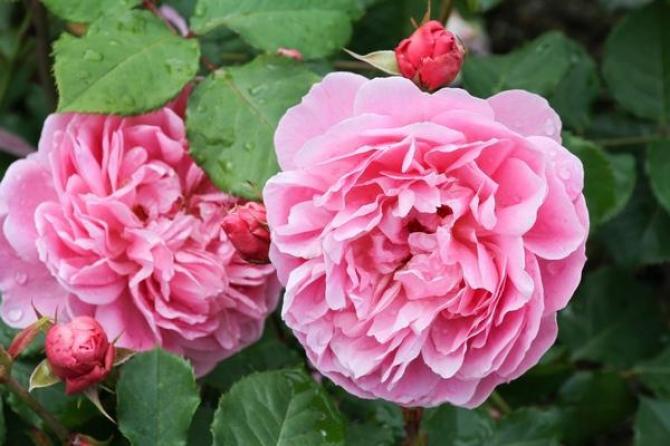
English roses form dense bushes of natural form and are somewhat reminiscent of park or climbing roses. They have glossy dark green leaves, and large flowers can be single, double or semi-double.
With proper care, English roses bloom several times a season, from June to autumn. The most important thing for them is regular watering and fertilization. English roses require soil rich in nutrients, especially phosphorus and magnesium. Special products for roses should be used and the bushes should be watered with manure in the spring. There is no need to trim them, just remove dried flowers. They look good in flower beds, can also serve as a good shelter for a fence or grow on pergolas.
Rose growing area
Growing roses in your own garden depends on where you plant them. The choice of location is crucial. The rose, although it seems capricious and demanding, is pleasant to grow, provided that its requirements are strictly observed. It requires a sunny, wind-protected, but not stuffy place. It needs constant access to fresh air.
Additional information! When choosing a location, avoid the proximity of large shrubs and trees with which the rose can compete for water and nutrients in the soil. A rose growing in the company of fast-growing plants that absorb water will not grow very large, and flowering will be sparse.
What kind of soil do roses like?
The plant will not feel good in either too alkaline or acidic soil. The optimal soil reaction for roses is neutral (about 6.5 pH). Roses do not like excess moisture, so after preparing the appropriate area and choosing the best soil, it is worth ensuring proper drainage of excess water.
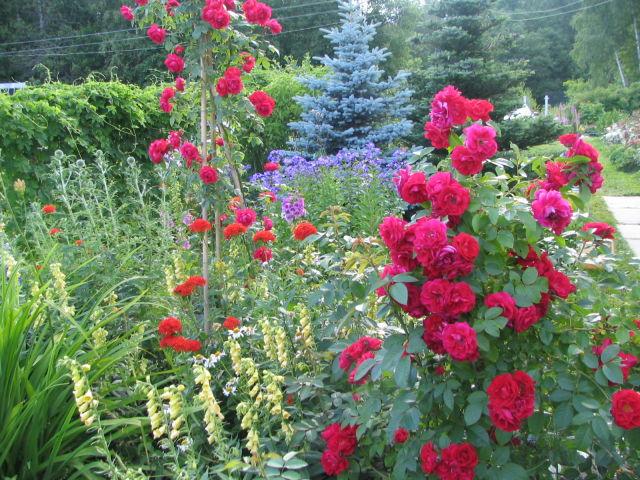
What plants to plant roses with? Choosing the right plants and shrubs to plant next to roses is important for a harmonious garden landscape. In the center of the flowerbed, it is worth placing spectacular roses with perennials of various inflorescence shapes. Delphiniums, lupines, foxgloves and aconites beautifully emphasize the correct shape of roses, and also make a very decorative background. Good “partners” for roses are decorative perennials, shrubs or vines:
- lavender;
- clematis;
- delphiniums;
- sage;
- geranium;
- lilies;
- lupine.
Planting roses
Roses are best planted in spring or autumn. In autumn, the bush will be less exposed to drying out, will have time to take root and will begin to grow faster in spring.
Before planting a rose in a permanent place, it is recommended to mix the soil with compost or manure. In the chosen place, dig a hole with a diameter of 30-50 cm. It is important that the roots have enough space to grow. The prepared substrate for roses can be mixed with garden soil.
If you purchased a bush in a container, you need to carefully remove the root ball from the pot so as not to damage it, which will lead to the plant becoming ill after planting in the ground.
When planting, it is best if the grafting site protrudes above the ground by several centimeters. After planting, the bush should be watered generously.
Rose care
Rose requires proper care to grow properly and bloom profusely. How to care for a rose in the garden? The key factors are proper watering, fertilizing and regular pruning of the plant.
Fertilization is a very important element of rose care. A rose that is not fertilized enough or not fertilized at all will quickly deteriorate, bloom poorly, and become more susceptible to disease.
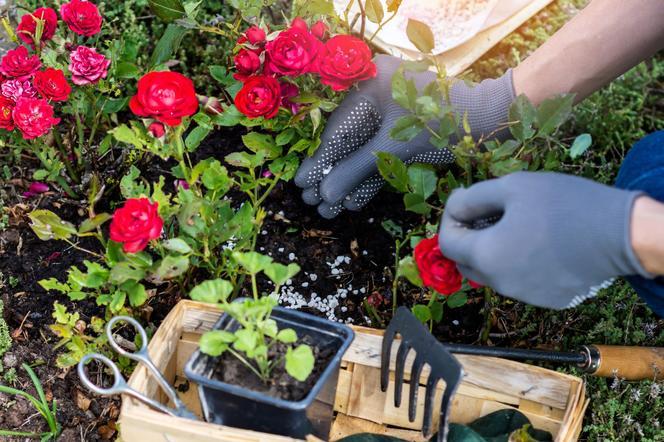
How to fertilize a rose correctly? It is very important to choose the right fertilizer. Roses love both organic and mineral fertilizers. A good choice is organo-mineral fertilizers for roses. Organic fertilizers, such as manure or compost, maintain the humus level at the proper level and also create better conditions for the development of beneficial microorganisms. When choosing manure, make sure that it is sufficiently composted. Fresh manure can burn the delicate roots of the rose.
Watering
How to water roses correctly? Although the rose quickly and strongly takes root and is able to draw water from deeper layers of soil, it still requires regular watering. Especially during periods of heat and drought, as well as after transplanting to a new location. Regular watering is also necessary for young plants, older plants are less sensitive to short periods of drought.
Water only the soil under the plant, in no case should you soak the flowers and leaves of roses. Also, do not spray. This is a direct path to dangerous diseases that like to attack weakened plants.
Trimming
Pruning is one of the most important procedures in rose care. Pruning makes the plant thicker, enhances flowering and allows more fresh air and sunlight to penetrate the bush. Thanks to this event, the rose gets sick less often and care for it is simplified.
How to prune a rose correctly? The rose is delicate and susceptible to various diseases, so for pruning you should use well-sharpened and clean pruning shears. You should be careful not to crush the shoots when pruning the plant.
Another important issue when pruning is the correct choice of the direction of bud growth. It should be directed towards the outside of the bush, since new shoots will grow in this direction later. Shoots growing inward thicken the bush.
Winter roses
After the flowering period, make sure that the rose survives the winter without problems. Roses tolerate winter well, but young plants can freeze. Therefore, it is worth helping them survive this difficult time.
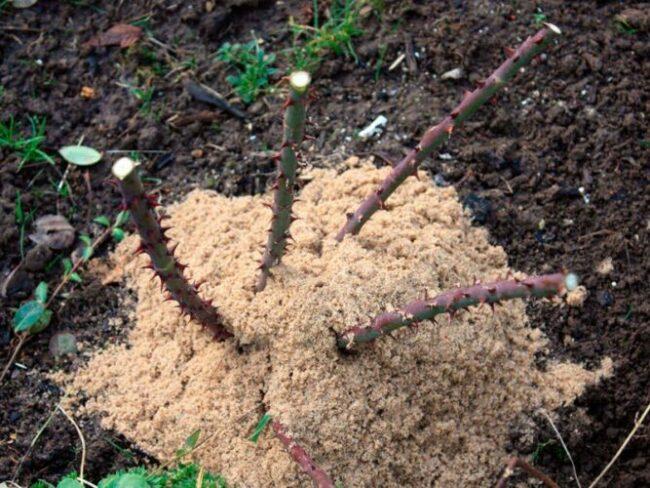
Already at the end of October, when the first frosts appear, the bush should be prepared for the coming winter. To do this, you can make a 20-centimeter mound of soil or peat around the base of the shoots, and then cover it with branches of coniferous plants. A mound prepared in this way will perfectly protect the base of the shoots, the place of grafting of the plant and, above all, the roots. The above-ground part of the plant should be covered with white agrotextile, straw or a jute bag.
Pest control
Pests that attack roses most often damage leaves and flower buds. It is easy to find out where pests feed by noticing holes in the leaves, spots or changes in the color of the leaves.
How to deal with pests living on roses? Depending on the type of pest, appropriate spraying should be used. The most common pest of roses is aphid, for which you can buy ready-made sprays in any gardening store.
Roses are also often affected by the pink leafhopper, the symptoms of which are light spots on the leaves. The leaves eventually turn completely white and fall off. Bushes infected with the leafhopper are sprayed with selected preparations.
Another pest that often attacks roses is the spider mite. If small, yellow, scattered spots appear on the plant, you should react to them quickly, since the spider mite attacks the plant at an alarming rate.
Rose is a plant that can be found in every flower bed. It will look especially attractive at the entrance to the house or in the front garden.


