


Take care of roses in autumn
Roses in the fall require a number of care procedures to protect these plants for the winter. Autumn is also an ideal time to plant new rose seedlings in the garden or replant existing ones.
What to do when planting roses in the fall? Autumn is the ideal time to plant new roses in the garden. Autumn planting is supported by a large selection of seedlings of these shrubs at this time of year.
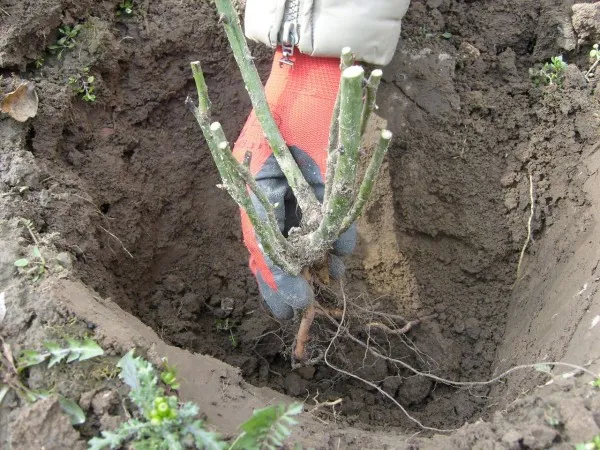
The choice of location is an important issue. The best position for roses is a sunny and ventilated place with a high humus content in the soil. Roses can root quite deeply, so it will be good if the soil is deeply tilled (not too compacted). Roses prefer humus and sandy-clayey soils. If the soil is too loose, you can add compost to it, and if the soil is too dense, you can loosen it with sand.
In autumn, when planting roses, we usually make mounds. If a long autumn is expected, the embankments can be made later. You just need to pour them in before frost sets in. The mound is usually a layer of soil 15-20 cm thick. It helps to protect primarily the lower parts of the shoots.
You can also transplant old rose bushes to new places. Transplanting roses during this period minimizes the risk of damage to the bushes and makes it easier for them to adapt to a new growing location.
Note! During the fall, fallen leaves with disease symptoms should be systematically raked and removed from under the bushes, as pathogens and pests (for example, downy mildew, black spot on rose leaves, spider mites) can overwinter in them, which will become a source of infection in next season.
For the same reason, diseased leaves should not be thrown into compost, but burned or buried deep in the ground, away from flower beds.

It is also worth prophylactically spraying the bushes with appropriate plant protection products, which will help protect them from the strong development of infection in the next season.
Fertilizing roses in autumn
Fertilizing roses is a very important stage in caring for these shrubs. It is necessary to take care of fertilizer, but you cannot use any fertilizer. It is important to choose the right fertilizer for roses and apply it at the right time. Lack of proper fertilizers very quickly deteriorates the appearance of roses, which lose their beautiful appearance, bloom poorly and become susceptible to disease.
See how, when and with what to fertilize roses so that they bloom magnificently and grow healthy! Preparing roses for winter should begin with proper fertilization. Such fertilizers have a properly balanced composition and contain compounds that strengthen the bushes and increase their resistance to adverse conditions.

However, these cannot be fertilizers with the addition of nitrogen, which stimulate the bushes to further develop the green parts. The last feeding of plants with fertilizers containing nitrogen should be carried out no later than the end of July. Autumn fertilizers are completely devoid of nitrogen or contain it in small quantities.
Autumn pruning of roses
All roses require pruning, including large-flowered, border, climbing and even miniature varieties for healthy, vigorous growth and beautiful, abundant flowering. This must be done regularly, on time and correctly.
Proper pruning allows them to branch well and produce more flower buds. To some extent, it also protects plants from the development of diseases and helps maintain them in good condition throughout the season. However, in order for pruning roses to bring the expected results, the procedure must be carried out correctly.
Roses should generally not be pruned before winter, as the risk of damage from hard frost increases. By pruning a rose, we reveal the delicate structure of the shoots. This treatment stimulates the bushes to form new flower buds, which may not have time to develop before winter and will be destroyed by frost, which will negatively affect the condition of the bush. Only very diseased shoots that are dangerous to the plant can be cut out.
Note! Heavy pruning of roses should only be done once a year. It is best to do this in the spring. However, in the case of park and climbing roses that bloom once per season, pruning is best done after flowering. Pruning these roses in the spring will significantly reduce flowering in the summer.
At the end of the season, you should carefully inspect the bushes and check whether they need sanitary pruning, which involves removing diseased, pest-infested, broken, deformed, and dry shoots. You can also slightly thin out too dense bushes by removing weak, thin shoots that lie on the ground and intersect with others.

Strong, healthy shoots should not be shortened or pruned, because such treatment stimulates the plant to form new growths that will not have time to become lignified before winter, and will also be subject to frost. We have to wait until spring to prune the roses harder.
Preparing roses for winter
It is important to properly prepare roses for winter. Some more delicate varieties will require more durable protection, such as tying with non-woven fabric. Others will need a solid mound of soil, compost, sand, sawdust or bark (about 0.20 cm high) at the base of the bush.
Note! It is not always necessary to cover roses with fir branches, but it certainly won’t hurt. In winter, the sun and wind are more dangerous for roses than temperature changes. In January and February, when the sun often comes out, moisture in the shoots begins to evaporate, but the roots are not able to replenish the lack of water from the frozen ground. This means that roses usually die not because of a harsh winter, but because of drought.
Climbing roses require special protection, however, as they are usually not completely frost-hardy. In their case, the base of the bush is covered with a mound of earth (about 30 cm high), and the shoots are removed from the supports, bent to the ground and covered with straw. Older, overgrown specimens can be protected on a support by wrapping them in straw mats, jute or non-woven material.

To create a mound, do not take soil near the bush, as this will expose parts of the plant’s roots and expose them to frost. The soil will have to be brought from another part of the garden.
Take your time to cover the roses. We begin to cover roses only if necessary (depending on the air temperature). We try not to cover them too early, and not to delay this until severe frosts. Covering roses for the winter must be carried out in a timely manner, since covering too early can stimulate further development of the bushes, and too late will not be able to protect the bushes from stronger frosts. It is best to protect roses after the first, stronger frosts (usually the end of October or the beginning of November) .
It is also worth knowing when to remove mounds from roses. It’s hard to predict here, but usually you shouldn’t take them off before April. Removing the mounds too early will cause overnight temperature changes in April to damage the plants.


