

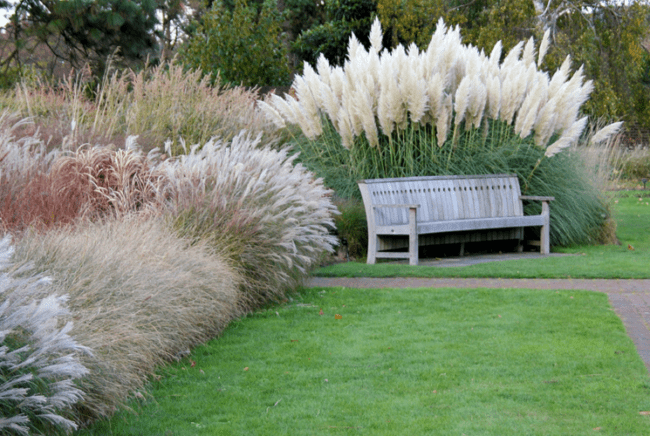
Features of ornamental grasses
A huge advantage of ornamental grasses is that they are quite easy to grow. They come in different varieties – from short to tall, from modest to very lush, they can be annual or perennial. Usually perennial.
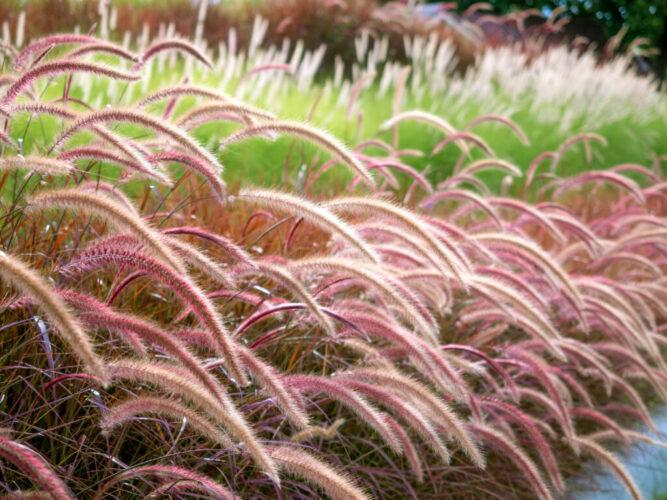
First of all, you should choose the species that will suit the conditions of the garden. They have different shapes and colors. The extraordinary diversity decorates the garden and helps to create unusual compositions, decorates the garden in winter. You can choose species and varieties from the family of cereals, sedges and reed plants.
Please note! The main rule is to select species with similar requirements. Colourful ornamental grasses contrast attractively with shrubs and perennials with ornamental leaves. The most popular types of ornamental grasses for the garden include: blue fescue (low species), millet, pampas grass and Chinese miscanthus (high ornamental grasses).
Many ornamental grasses are attractive in late summer and fall when the leaves change color. Species with attractively colored leaves (such as Imperata cylindrica Red Baron) should be planted with plants of uniform color. Grasses with dark green leaves look good between colorful perennials and shrubs.
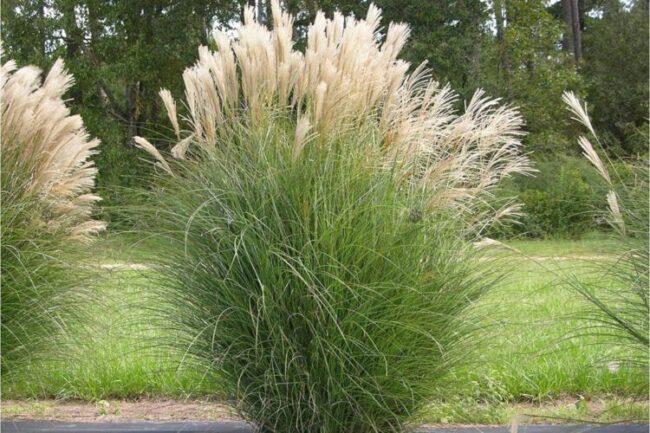
Miscanthus is certainly one of the most beautiful types of ornamental grasses grown in home gardens. Tall garden ornamental grass is a good background for smaller plants. It can be combined with many groups of plants.
When and how to plant ornamental grasses?
Ornamental grasses with a formed root ball can be planted throughout the season. However, the optimal time is autumn for frost-resistant species, and spring for more sensitive species. However, the more favorable time for planting grass is spring. Plants have a lot of time to adapt to the current conditions and develop their root system. Young plants have a harder time surviving the winter.
Between March and May, warmer temperatures and more sunlight help young plants to root and grow quickly. Spring planting usually allows the grasses to acclimate well. However, it is important to wait until the threat of the last frost has passed and the soil has warmed up properly.
Additional information! Summer is not the best time to plant ornamental grasses. However, if you did not have time to do this in the spring, you can plant them in early summer, when the temperature is not too high. Planting ornamental grasses in the summer will require more attention and intensive watering of young, not yet rooted plants so that they survive the summer heat.
A better choice than planting in the summer is to wait until fall, or at least the first weeks of September. September and October are months when temperatures are still moderate and rainfall supports the natural irrigation process. Fall planting allows the grasses to stabilize and grow before winter sets in. However, it is important to finish planting a few weeks before the first frost is expected. The plants need time to acclimate.
Planting ornamental grasses
The vast majority of grasses prefer full sun, only a few like more shade, for example, Japanese sedge, palm sedge, pearl sedge, giant sedge and summer sedge.
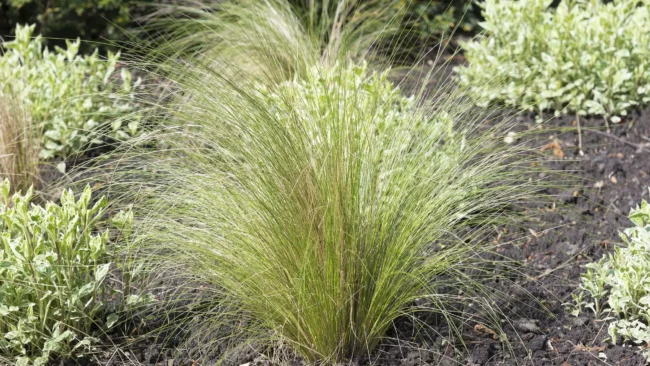
After preparing the soil, you can begin planting. There are seedlings of herbaceous plants grown in containers on sale. Before planting, it is worth immersing the roots of the plant in water for about 30 minutes to moisten them properly. Dig a hole slightly deeper and wider than the root ball of the seedling.
The plant is placed in a dug hole and then covered with soil, trying not to damage the roots. It is also important not to plant the plant too deep – the root crown should be at ground level. After planting ornamental grasses, they should be watered generously.
Herbs should not be planted too densely, the distance between plantings depends on the rate of growth and shape.
Caring for ornamental grass
Ornamental grasses for the garden do not require complex care, but they should be watered regularly, especially during drought. Before they take root, the lack of water is replenished by watering. A lack of water can significantly slow down their growth. Old specimens are no longer so demanding in this regard.
It is also worth using multi-component fertilizers to provide plants with the necessary nutrients. In the spring, it is worth feeding them with nitrogen, later potassium, phosphorus and microelements will be more appropriate.
If the soil is rich, this is not necessary. Excessive abundance of nutrients limits their lifespan. With a small dose, you can speed up the growth of plants. If necessary, fertilizing can be repeated at the beginning of summer.
When to trim ornamental grasses?
Trimming is also an important element of ornamental grass care. It is recommended to cut them in early spring, before the growing season begins (however, this does not apply to evergreen species). Trimming slightly reduces the frost resistance of the grass, which may be important for more sensitive species. Other grasses are trimmed as needed.
When to replant ornamental grasses?
Overgrown lumps should be rejuvenated by division. Transplantation is a great way to propagate herbs, and it is extremely easy to get new seedlings from them.
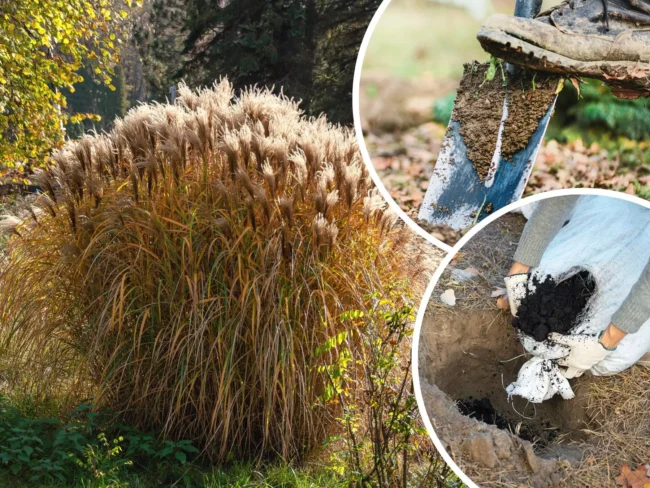
Replanting ornamental grasses has several important purposes. Firstly, it allows you to refresh and rejuvenate plants that may lose their decorative qualities over time. Secondly, it prevents the lump from becoming too dense, which can lead to poor growth and even disease.
Please note! The choice of the transplanting time depends on a number of other important factors. The right moment is crucial for their healthy growth and aesthetic appearance. Different types of grass require transplanting at different times of the year, for example, grasses that bloom earlier are best transplanted in the fall, and those that bloom later, in the spring.
The most optimal time is spring. It is best to do this at the beginning of the growing season or before it begins.
Protection from diseases and pests
In addition, it is worth paying attention to resistance to diseases and pests. Herbaceous plants grown in gardens are relatively resistant to diseases and pests. However, it is worth monitoring the condition of the plants and responding to possible symptoms of infection.
Fungal diseases can be controlled with fungicides, while pests can be controlled with appropriate insecticides. Factors that cause problems include excessive soil moisture, strong shade, and excessive nitrogen fertilization.
How to protect ornamental grasses for the winter?
Herbs often require root ball protection in the first years of cultivation. Young seedlings have a weak root system, so to ensure that they survive the first winter in a new place, at least protect their roots by covering them with bark or a layer of fallen leaves.
The treatment is carried out after the onset of frost. Mulch should not be laid too early. Covering of ornamental grasses should be done when the temperature drops below zero and when frosts persist for several days with no prospect of improving weather.
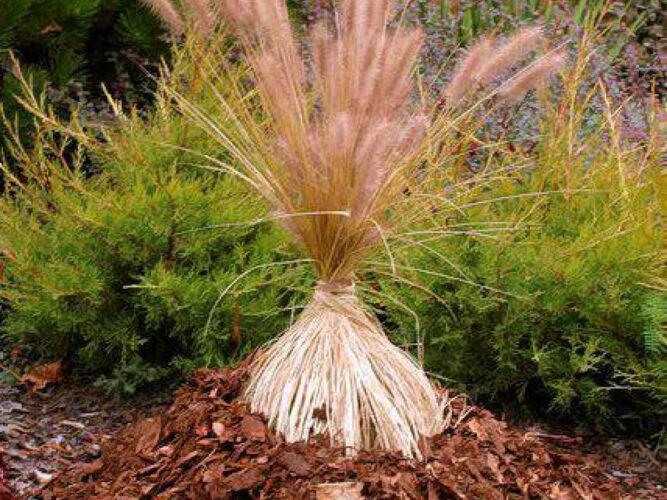
For most grasses, it is enough to cover the roots for the winter, but there are species that need protection of the above-ground part as well. This applies, for example, to the wintering of pampas grass or miscanthus. The plant cover should be removed after the winter at the turn of March and April. It is recommended to remove it gradually.


