

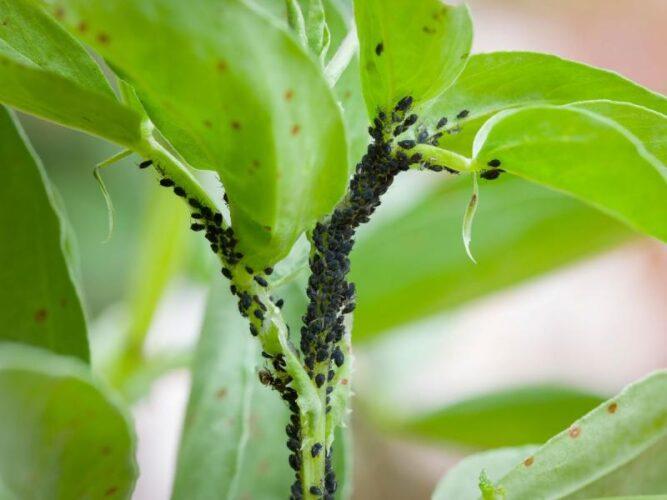
Why do you need to fight aphids?
These are small insects that feed on nutrient-rich liquid from plants and in large quantities can significantly weaken plants. Aphids feed on green parts of plants, especially young shoots, leaves and flower buds.
It appears in the garden already in spring and is present in the garden until late autumn. Aphids reproduce very quickly, so it is important to fight them. Many generations can appear in one season.
Aphids move quite slowly and are relatively easy to deal with. Unfortunately, they reproduce very quickly. Therefore, at the first signs of pests, you need to react immediately. Their invasion can lead to the complete death of the plant if you do not react in time.
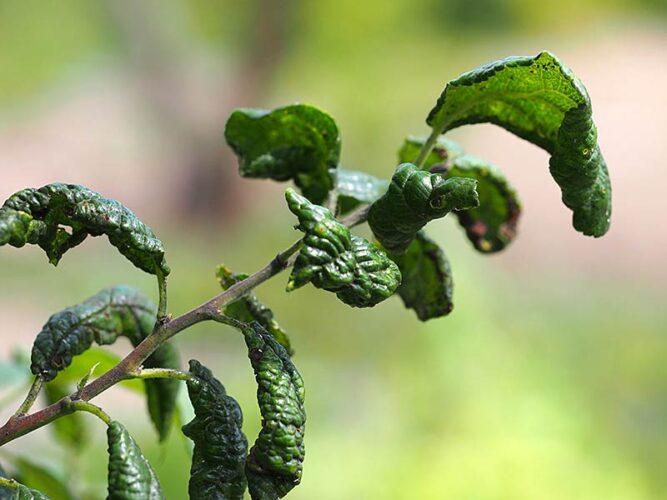
The consequences of aphids feeding on plants are very serious. They create unsightly cocoons on leaf blades in which they reproduce, sucking the juice out of plants. These pests can carry diseases that are dangerous to plants. In addition, aphids secrete sticky honeydew, which promotes the growth of fungi. Fungi can weaken plants and spoil their appearance.
What plants are affected by aphids?
Aphids do not attack all plants in the garden, so many of them are able to survive the invasion of these pests. However, there are species that these insects especially love. These include the following plants:
- coral viburnum;
- roses;
- jasmine trees;
- currant;
- hibiscus;
- petunia, chamomile;
- begonias;
- nasturtiums;
- conifers;
- chrysanthemum;
- vegetables such as carrots, beets, cabbage, cucumber, tomato and beans;
- fruit trees.
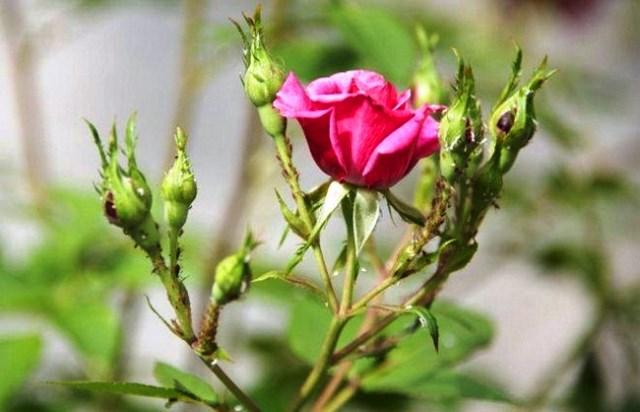
Aphids often feed on weeds and then reproduce on other plants. Systematic weed removal should certainly help.
Natural Ways to Control Aphids
The main way to combat aphids is to prevent their appearance. To get rid of pests, you can’t always use chemicals. Natural methods can help against aphids.
Pay attention! Which insects eat aphids? Beneficial insects such as lacewings and ladybugs are a natural and easy way to save your garden. Planting garlic, onions, mint, fennel, yarrow or dandelion in your garden will help attract these insects.
Water is the simplest home remedy
Small clusters of aphids on the tops can be simply washed off with a high pressure hose. Repeat several times to also get rid of aphid eggs. Using this method several times will quickly get rid of the pests. It will take a long time before they return.
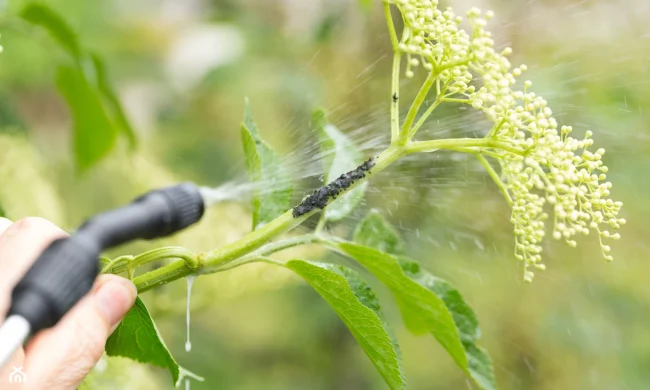
Vinegar against aphids
Luckily, there are many ways to combat aphids, and one of the easiest and most environmentally friendly is using vinegar. Vinegar contains acetic acid, which is lethal to aphids. It damages their armor and digestive system. Not only is it a natural and environmentally friendly way to combat aphids, but it is also a cheap and easily accessible product.
Vinegar Spray Recipe:
- 100 ml of spirit vinegar,
- 1 liter of water,
- A few drops of dishwashing liquid.
Mix all ingredients in a spray bottle. Spray the plant thoroughly from all sides, including under the leaves where aphids often gather. Use for several days in a row to completely get rid of the pests. Spraying should not be done on a sunny day, as this can cause leaf burns.
For spraying, you can use apple or white wine vinegar, and instead of dishwashing liquid, add a few drops of rapeseed oil. Do not use vinegar on flowering plants, as it can harm bees.
Soap spray
Potassium garden soap is a very good product that naturally fights pests and plant diseases. Its base is potassium salt, and additional ingredients are fatty acids and glycerin. Gray soap is very sticky and dissolves well in water. It is usually made from oils such as olive or linseed oil.
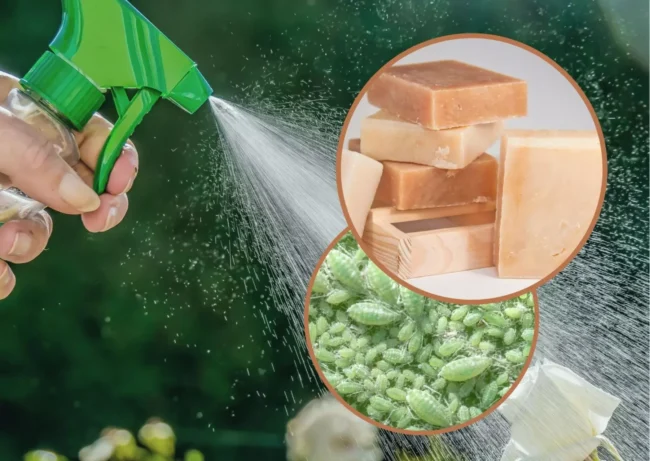
This natural substance is a safe and effective way to combat aphids. Soap dissolves fat, which is an important component of the aphid shell. Without it, the aphid becomes defenseless and dies. This is especially important for edible plants, since this substance does not contain harmful ingredients, it can be used for vegetables and fruits.
When applied to plants, it creates a protective layer that fits tightly to the shoots. This leads to the death of aphids underneath. In addition, potassium soap contains ingredients that support antibacterial and antifungal processes. This prevents the development of diseases, which are often one of the consequences of pest attacks.
Soap Spray Recipe:
- 20 g potassium soap;
- 1 liter of warm water.
Dissolve the soap in warm water, mix thoroughly to obtain a homogeneous mixture. Repeat spraying every few days until you get rid of the aphids completely.
Nettle gruel
You can use a decoction of nettle. Place whole shoots of the plant in a bucket and fill them with water. For 1 kg of fresh nettles, 10 liters of water. Cover the container and stir approximately every 12 hours for the next 4 days. After this time, the suspension will be ready for use. This mixture can be fatal to aphids.
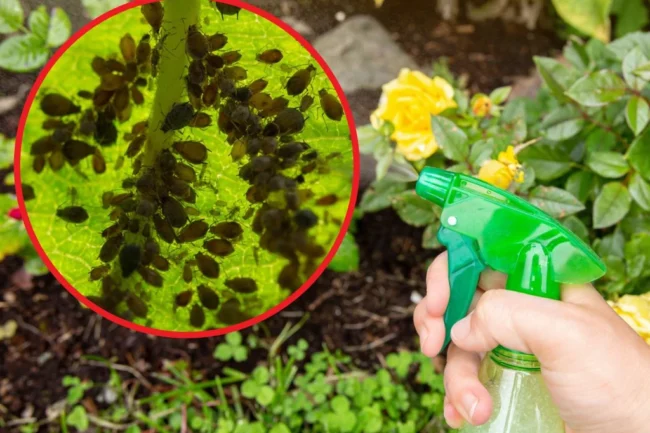
The preparation is diluted in water in a ratio of 1:20. The plants are thoroughly sprayed with this product from below and above the leaves to reach all the places where pests accumulate. Nettle can also be used to remove other pests, such as caterpillars and whiteflies.
Additional information! Nettle infusion is not only a natural remedy for fighting aphids, but also an excellent fertilizer for plants. Nettle is rich in nitrogen, phosphorus, potassium and other minerals necessary for proper plant growth.
Spraying with milk
It is necessary to prepare a solution in advance in a 1:1 ratio of milk and water, and then spray the plants. Milk contains substances that are toxic to these insects.
You can use cow, goat or oat milk for spraying. Milk can cause leaves to stick together, so test it on a small area of the plant before spraying. Spraying milk is easy, safe and cheap, and milk is a natural fertilizer for plants.
Garlic and onion decoctions
Natural and safe aphid control is important for edible plants because it does not leave harmful residues.
Garlic contains allicin, a chemical compound with strong biocidal properties. Allicin destroys aphid cells, which in turn kills them.
You can use fresh or dried garlic for cooking. Crush 200 g of garlic, pour 10 liters of water and bring to a boil. Set aside for 24 hours, then strain and dilute with water in a 1:1 ratio. This product will also help get rid of other pests.
Onions contain sulphides, which damage and kill aphids. It is a natural herbicide that can also repel other pests. 100 g of onions are cut into small pieces, poured with 10 litres of water and brought to a boil. Set aside for 24 hours, filtered and diluted with water in a ratio of 1:1.
Baking soda for aphids
In many cases, baking soda is the most effective home remedy for aphids. The baking soda solution is gentle on plants, but effective in killing the insects.
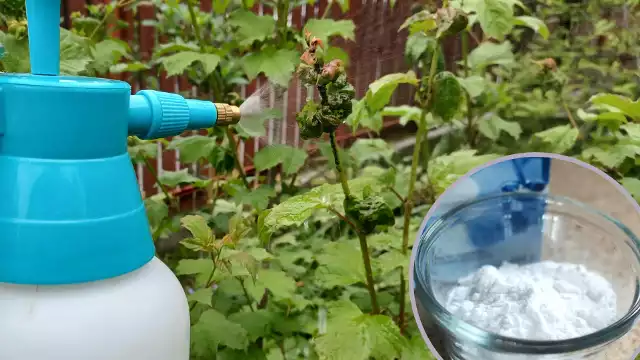
Dissolve ½ teaspoon of baking soda in 1 liter of warm water with a few drops of dishwashing liquid, then spray the plants. It is better to spray in the evening, when there is no full sun, so as not to damage the plants. Spray the decoction thoroughly, also under the leaves. Repeat several times at intervals of 1-2 weeks.
Planting aphid-repelling plants
Aphids do not eat all plants in the garden. They avoid places where there is, for example, garlic, lavender, catnip, lemon balm, mint and sedum. Therefore, it is worth planting these species next to plants that are especially vulnerable to this pest.
Remember! Aphids avoid not only edible, but also decorative garlic, so you can successfully plant different varieties of this plant throughout the garden.
Plants that repel aphids:
lavender;
calendula;
marigold;
basil.
Not only does nettle decoction work against aphids, but also the presence of this plant in the garden. Plants that repel aphids are best placed near seedlings that are most susceptible to pest attacks. Try to regularly remove wilted flowers and wilted leaves to keep aphid-repelling plants healthy and strong.
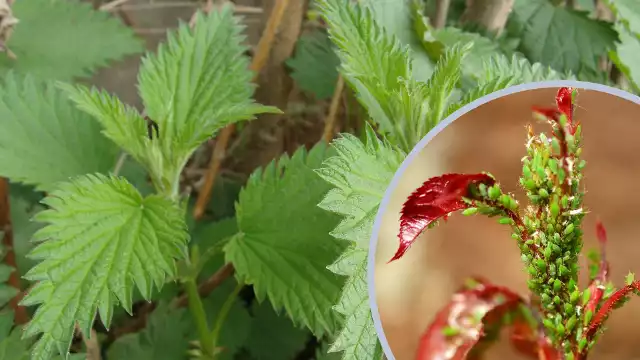
You can plant nasturtiums around vegetables. Pests love this species and willingly feed on it. This will allow them to leave the crop alone. Thanks to nasturtiums, you can not only protect the crop, but also acquire a beautiful garden decoration.
You can also destroy aphids mechanically, i.e. crush them. This is an effective method that allows you to get rid of most pests, but it is quite labor-intensive. Therefore, it is usually used at the beginning of the invasion, when there are not too many insects on the plant shoots.
When natural methods do not work or we are short of time, it is also worth using aphid remedies available in stores. The most effective preparation against aphids will act almost immediately, guaranteeing the creation of an effective barrier against insects.


