

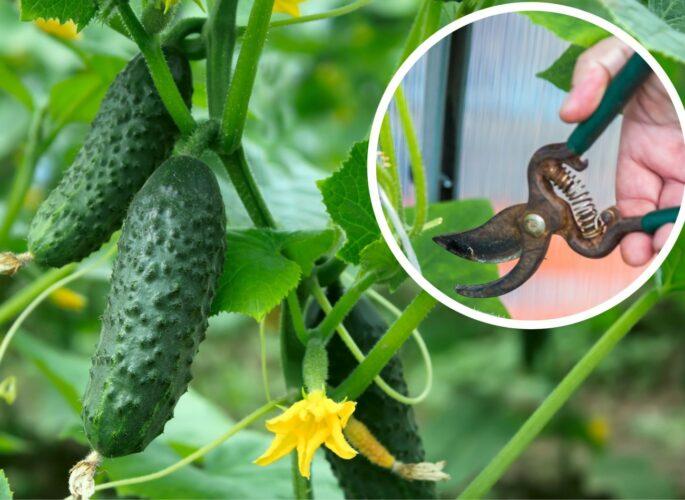
Basic rules for growing cucumbers
Cucumbers (lat. Cucumis) belong to the pumpkin family. Their characteristic feature is that they form large leaves. This allows plants to carry out photosynthesis and develop unhindered.
Growing this crop is not very difficult. The optimal position for cucumbers is light partial shade, where the plants are not exposed to too intense sunlight. Moreover, cucumbers grow well in areas fertilized with manure in the fall. It is a rich source of nitrogen, as well as macro- and microelements, the deficiency of which is manifested by deformations of the fruit.
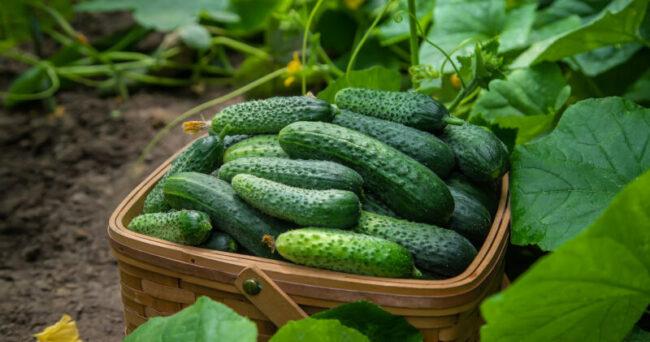
Cucumbers germinate at an average air temperature of 15-16°C. These vegetables are very sensitive to frost, so sowing should be done at a time when there is no risk of frost. It is best to sow directly into the ground from the second half of May to the first half of June. Temperatures during this period allow vegetables to germinate and develop, and the risk of frost is very low.
When growing cucumbers, you must remember to water them, but the mistake is to water the plants too much and spray the stems, which can contribute to the development of many dangerous diseases caused by fungi. Moreover, excess water causes root rot, which prevents the plant from absorbing nutrients from the soil, which in turn negatively affects its growth.
Additional Information! If during fruiting the leaves of a cucumber turn yellow and fall off, this indicates a lack of nitrogen in the soil. In this case, nitrogen fertilizers should be used.
A mistake that novice gardeners often make when growing is to sow the vegetable too thickly. A large number of seedlings does not mean a large amount of harvest, rather the opposite. Plants sown too densely cannot fully develop due to lack of space and compete with each other for water, resources, light and even air. In conditions of excessive density, flowers develop very poorly, and the fruits are small and dry.
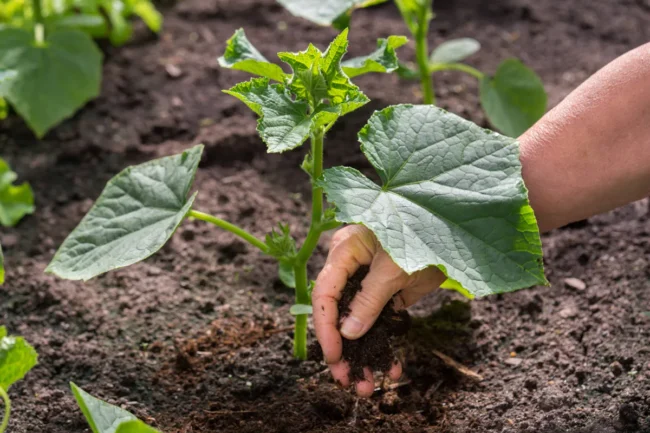
Planting too densely also increases the risk of disease because there is not enough ventilation between the stems. The optimal distance between seedlings is 15-20 cm, and between rows 80-120 cm. This distance provides free access to resources and reduces the risk of developing diseases.
Note! Overgrown cucumbers on the shoots will inhibit the formation of new fruit buds, which will significantly reduce the yield. They should be collected as soon as they reach the desired size. It is better to collect once every two days, and in the case of fertile varieties – even every day. Regular collection promotes flowering of plants and the appearance of new fruits.
Why do you need to remove cucumber leaves?
When growing these vegetables, it is not the increase in green mass that matters, but the number of fruits. Therefore, some leaves are not needed and can be removed. This treatment puts the plants in a slightly stressful situation. As a result, they begin to produce more flowers, which produces more of the desired fruits.
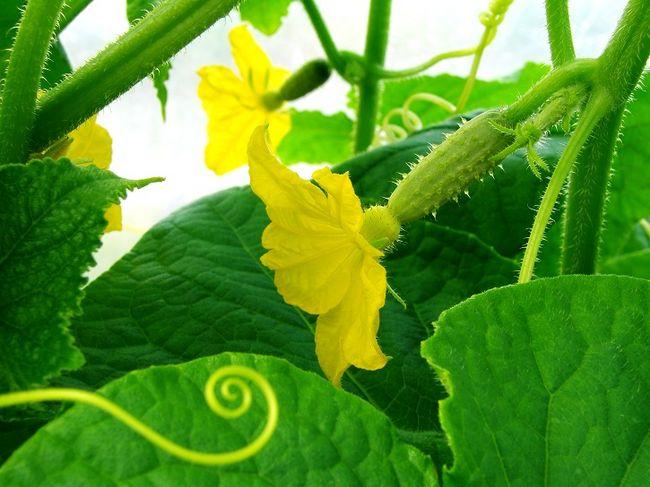
Thickening leads to weakening of plants and promotes the development of pathogens and pests. The plant should be unloaded by cutting out long shoots with a significant mass of leaves. Excess leaves on a plant restrict the transport of water and nutrients to the top of the plant, slowing growth. Systematic pruning of cucumber leaves helps maintain plant health.
Make sure that all fruiting shoots are properly illuminated. The fruits may have an uneven color or be light due to difficulty in light penetration into the plant. Even worse, excess leaves impede air circulation and plants can develop fungal, bacterial diseases and pests.
Pruning should be done systematically. Longer breaks in pruning should be avoided. Strong removal at the same time negatively affects the further growth and yield of the crop.
How and when to trim cucumber leaves?
Overgrown leaves are a source of disease, especially at high relative humidity. They are cut with a sharp knife or scissors at the base, without damaging the stem, in the first half of the day. This operation promotes the development of new shoots from the leaf axils, which bloom and produce buds.
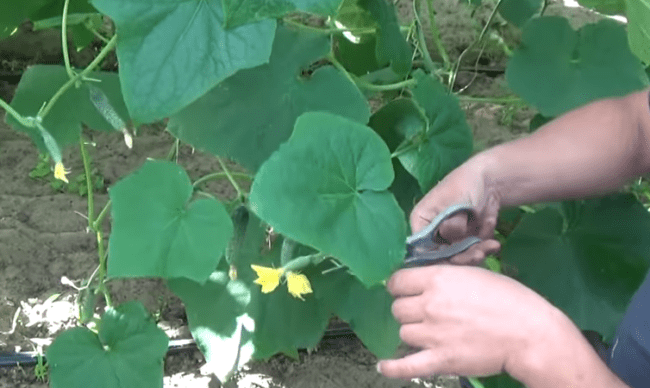
When should you remove leaves on cucumbers? Pruning should begin about 2 months after sowing, when the greenery begins to cover the fruit, touch the ground, or die. If you remove the green parts too early, you risk stunting the plant’s development because it will not be able to photosynthesize.
However, pruning these parts is not only intended to increase yield. So this process:
- the risk of developing fungal diseases is reduced;
- fruit ripening accelerates;
- Nutrient and water deficiency is prevented.
Cutting off the leaves can encourage the appearance of side shoots in cucumbers. Thanks to this, the bushes branch and become larger. This, in turn, allows for higher yields.
Large foliage protects the fruits from the sun. This means that the fruit is not ripening fast enough. To ensure that the fruits ripen at the same time, the leaves are removed as they appear.
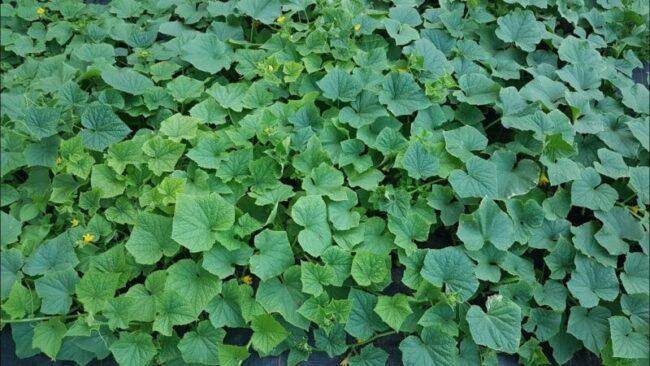
Water can accumulate on the leaves, which creates ideal conditions for the proliferation of pathogens, which also contributes to the death of shoots. As a result, plants may begin to suffer from diseases such as powdery mildew. Removing the leaves prevents the development of this disease.
Leaves need a lot of substances to develop. As a result, they take them away from the fruits. Because of this, cucumbers grow small and do not reach the desired size. Removing the green parts prevents this and allows for abundant, larger harvests. In addition, the need for watering and frequent feeding of plants is reduced. Greens should be removed from below every 7-10 days. Thus constantly stimulating the development of flowers and side shoots.
The leaves cannot be torn off with your fingers. This will only crush the stem and risk tearing off part of the main shoot, causing injury. Pathogenic microorganisms can penetrate through it and the plant will become sick. Remove with scissors or a knife, making sure the tool is clean. Use sharp tools to make an even cut. Dull scissors can crush leaf petioles.
The cut should be made close to the leaf blade, leaving the entire petiole, and not just part of it, as there is a risk of pathogens entering the plant.
Note! Healthy leaves can simply be thrown into the compost where they will decompose. However, if parts of the plants show obvious signs of fungal diseases, it is better to burn them or throw them away.
How many leaves should be left on the shoots?
Each shoot should have 20–25 leaves. It can be easy to lose control and remove too many of them, which will negatively affect plant development. Therefore, the oldest parts are cut off first and the young ones are left. This way, even if a lot of leaves are removed, the cucumbers will still be able to photosynthesize.
Removing leaves is critical for proper development of cucumbers. Crop rotation should be monitored. Cucumbers should never be planted in one place for several seasons in a row. They can be returned to their original place no earlier than after 4 years.


