

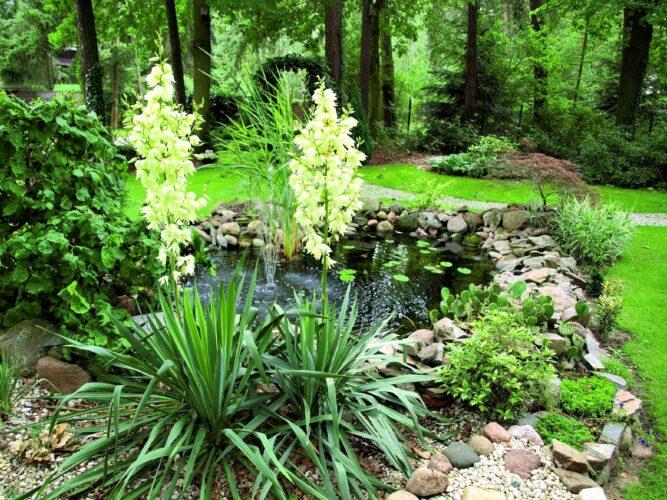
Yucca garden: description
Yucca garden or Carolina is a perennial plant belonging to the asparagus family (Asparagaceae). It is native to the southeastern regions of the United States and thrives in our region. It is worth knowing that this plant is known by several names: yucca (Kerpela), fibrous.
This is a big beautiful plant. Thick and hard leaves are collected in bunches. Their height can reach about 50 centimeters. A yucca flower can reach up to 2 meters in height, although in natural conditions it grows much larger.
The flowering period usually occurs between June and July. During flowering, garden yucca produces a long shoot-inflorescence, on which bell-shaped flowers of light colors appear: most often white or creamy white. Not everyone knows that these flowers are not only beautiful, but also edible. Yucca flower petals are crisp, have a pleasant, slightly sour lemon flavor, and a distinct floral aroma. Yucca flowers are a great addition to salads.
Note! Unfortunately the flowers can be bitter. This happens thanks to saponins – substances that are found mainly in the roots of this plant, but can also penetrate into other parts. An easy way to get rid of the bitter taste of yucca is to simply boil the bitter flowers for a few minutes and drain the water.

Yucca garden looks great in groups with low ground cover perennials and herbs, next to which it grows well.
Yucca garden: cultivation
Homemade yucca is undemanding, so it can be recommended even to novice gardeners. This plant is resistant to frost, heat, and also tolerates drought. Garden yucca should be planted in a sunny, warm place, protected from strong winds. In shady places it may not bloom at all. In nature, yuccas grow even in very poor soil.
The plant does not like too much water or constant moisture. The substrate must be well drained. Excessive watering in impermeable soil will cause the roots to rot and the leaves to wilt. In winter we water yucca less often, in summer more abundantly, but still the substrate must be permeable and allow the plant to drain moisture normally.
Yucca fertilizer
It is worth strengthening the yucca after winter and using appropriate fertilizers. This will prepare it for flowering. In summer, fertilizers are also applied regularly, since due to the large number of flowers the plant may weaken. Then it will be more difficult for him to survive the winter.
Remember! In summer, fertilizers without nitrogen (or with its minimum dose) should be applied. It is also worth using natural fertilizers. You can use wood ash or compost for this. Yucca is a long-lived plant, and with proper care it can last for many years.
Reproduction of garden yucca
After flowering, it is enough to dig up a large specimen and separate the young daughter rosettes from it, which can be planted in a new place as independent plants. Each part must have roots. Yucca, in the form of a small seedling, will not bloom in the first year. Usually she does this only after two or three years.

You can propagate garden yucca using stem cuttings from the mother plant. When the yucca plant blooms, the mother plant dies and replacement plants appear at the base. Cut the shoot with a sharp knife and do not forget to care for the wound after cutting. A young yucca shoot should be placed in a mixture of peat and sand without direct contact with the sun.
Yucca – transplant
If the plant is grown in the garden, replanting is done extremely rarely; yucca grows in one place for more than 20 years. But there are situations when a perennial plant urgently needs a transplant. It is better to do this when the plant is not blooming. For garden specimens, replanting is carried out in early spring or autumn. It is best to replant the plant in the spring. Garden yucca should be transplanted early enough in the fall so that it takes root before winter. Then you can trim off its leaves.
Trimming
After flowering, the impressive yucca inflorescence loses its beauty, dies and becomes unattractive. Therefore, it should be removed (along with dead leaves), cutting it as low to the ground as possible.
Note! After the flowers fade, all dead parts of the plant should be removed. If you leave the shoots-inflorescences, they will weaken the plant. In addition, being on the plant for a long time, they do not look very impressive.
For this purpose, it is necessary to use strong and sharp tools (for example, a strong pruner or even a saw), since the shoot of the inflorescence at the base is very hard, strong and thick.
When carrying out processing, be careful not to damage the young daughter rosettes formed around the main rosette, because it is from them that beautiful flowers will develop in the future.
Yucca garden – wintering
Garden yucca is frost-resistant and evergreen. However, it is worth protecting it from extremely low temperatures so that it blooms more beautifully in summer. To protect the roots, it is enough to use spruce branches.
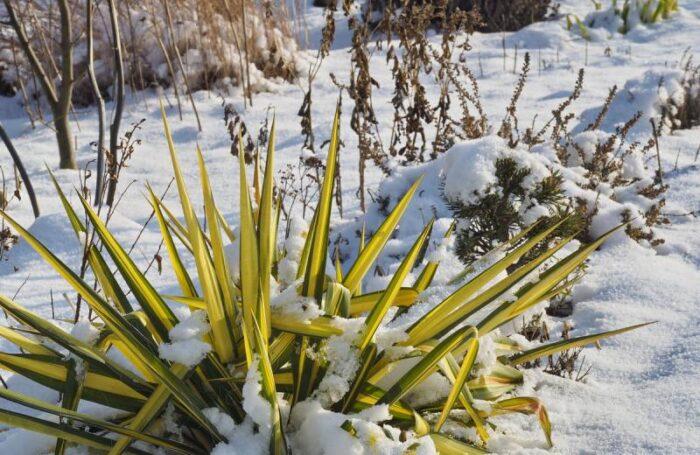
It is worth knowing that the plant does not like to be covered with snow. Excess moisture may result in leaf spots or leaf dieback. The plant should be opened after the frosts have stopped, at the latest at the turn of March and April.
Yucca diseases
Yucca rarely gets sick, but there are several diseases that can affect yucca both in pots and in the ground. Infected leaves of yucca growing in a place that is too humid and too little sunny. Brown spots appear on the leaves, sometimes with a gray coating. They grow and destroy all the leaves.
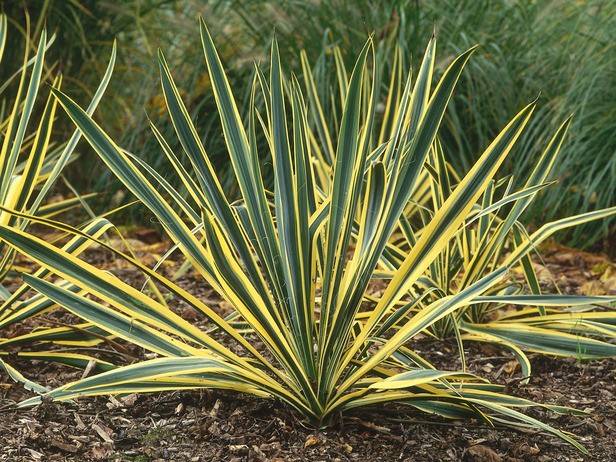
To reduce this risk, maintain constant substrate humidity at a low level, ensure its permeability and provide good sunlight. Late blight. This happens when the ground is too wet and too cold – as a result, the yucca turns brown and stops growing. It is worth spraying with a special preparation. Spraying is also useful when pests appear. Mealybugs, thrips and aphids appear on yuccas.


