


What should not be planted next to roses?
Roses are beautiful and popular flowers, and when choosing plants for your garden around them, there are several factors to consider to ensure they have the best growing conditions and health.
Note! A mistake that many novice gardeners make is planting roses in the wrong company. Some plants can compete with roses for water and nutrients and even lead to the death of rose bushes. Because of such mistakes, roses do not bloom and get sick.
In order for roses to grow beautifully and bloom profusely, you should know which plants cannot be planted next to them. There are plants that roses do not like very much, but there are also those whose neighborhood helps them a lot.

Some plants should not grow next to them because they compete very strongly with each other for the same nutrients and mineral salts taken from the soil.
What roses don’t like
Plants that negatively affect roses, their list is small. It is not recommended to plant roses together with the following crops:
- Rhododendron is demanding on the soil: it must certainly be acidic, Rose, on the contrary, requires neutral soil.
- Hydrangea prefers acidic soils, which are completely unsuitable for rose bushes.
- Tulips – a bulbous crop requires annual digging, which will damage the roots of the rose.
- Dahlias, like roses, are prone to powdery mildew, and it is necessary to dig up the tubers every year, disturbing the roots of the rose.
- After flowering, irises are unattractive and can spoil the appearance.
- Phloxes are perennials and pair well with roses, however both crops are prone to powdery mildew.
It is undesirable to plant these crops with roses that will harm her with their neighborhood. Plants that quickly capture free space and will eventually displace the rose.
- Loosestrife is an invasive plant with a powerful root system.
- Lily of the valley is desirable to be planted away from other crops due to its active growth.
- Highlander bird grows well on nutritious soil and “strangles” rose bushes.

Aggressive crops are best placed away from roses by organizing a separate flower bed for them.
Note! Roses will not do well in the company of rhododendrons, heather, Japanese skimia, and other plants that like a soil pH of 6-7. The same goes for plants that like moist soil.
A rose cannot grow in a thicket of shady bushes or among ordinary weeds, for then its beauty will fade and it will wither. Do not mix roses with plants that need to be dug up, such as irises, dahlias or begonias.
Roses don’t like being near tall trees
Roses love the sun, so avoid planting them under tall trees. They grow best in areas that provide them with a large dose of light during the day. For roses, a secluded, protected from strong winds and, most importantly, sunny place is ideal. In such conditions they will definitely bloom profusely. They should not be planted next to tall trees, shrubs or perennials because the plants compete for sun, water and nutrients.
Additional Information! If you plant rose bushes next to tall and spreading trees or shrubs that block the roses’ access to sunlight, the effect may not only be to slow down flowering. Lack of light can expose roses to pests or diseases such as rose rust, black spot or powdery mildew.
However, it is worth knowing that there are varieties of roses that look better in a semi-shaded place. In light partial shade, the color of their flowers does not fade from the sun and does not lose its intensity. These roses include some varieties of the German company Kordes.
Moisture-loving plants should not be planted next to roses.
Rose bushes require fertile, humus and permeable soil. Constantly wet and poorly drained soil leads to root rot. Therefore, roses should not be planted with plants that require moist soil. Roses do not like too frequent watering and do not tolerate overwatering well, which can lead to root rot.
Additionally, rose bushes grow best in fertile, humus-rich, well-drained soil. If moisture-loving plants are planted with roses, it is important to consider that roses require good drainage soil and do not tolerate excess moisture. Therefore, when choosing moisture-loving plants for proximity to roses, it should be taken into account that the soil must be sufficiently drained. This is especially important
Acidophilus plants next to roses
Avoid planting plants that require acidic soil, that is, low pH, near roses. Acidophilous species include rhododendrons, Japanese skimia, bellflower, and heathers. Roses require soil with a reaction close to neutral (pH 6-7), and acidic soil has a very bad effect on their growth and health. Soil that is too acidic can be fatal to roses.

Irises, gladioli or tuberous begonias. They bloom at about the same time as roses and compete with them in appearance. In addition, they need to be planted and dug up every season, which can damage the rose’s roots.
Roses do not like the proximity of expansive plants
Expansive plants that grow quickly and vigorously are also poor neighbors for roses. Such plants interfere with the proper air circulation needed by roses, but also compete with them for water and nutrients.
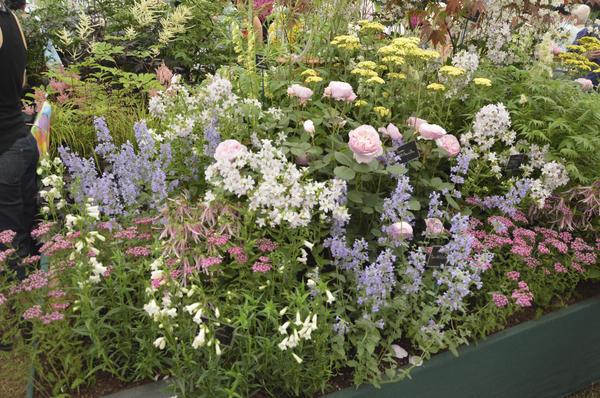
Unsuitable companions for roses include, among others: spurge, Japanese anemone, knotweed, creeping bugle, mint, and bamboo grass. For roses, the proximity of plants that grow quickly and like to compete with other species for water and nutrients can be unfortunate.
Perennials can be alternative companions to roses in your garden, creating interesting variation and enhancing the overall appearance. Choose perennials that have some similar shapes when caring for roses. This includes light levels (sunny or shaded conditions), soil type and water use.


