


Verbena: characteristic
Verbena, a member of the verbena family, is popular primarily in Europe, although it also grows in much of Asia and the Americas. In nature, verbena is a perennial, but in our climatic conditions it is most often grown as an annual seasonal plant that blooms in summer.
Garden Verbena is the most popular and most cultivated species, derived from the wild Verbena incisa, Verbena platensis and Verbena peruviana species found in both Americas.
Hybrid verbena has highly branched, densely leafy stems. The leaves are incised, dark green. Single flowers are small, but collected in impressive inflorescences at the tops of the shoots. They appear in large numbers from early June to September.
Not only flowers are decorative, but also juicy green leaves. Verbena was also valued for its healing properties. Verbena officinalis relieves cold symptoms, eliminates skin problems and calms nerves.
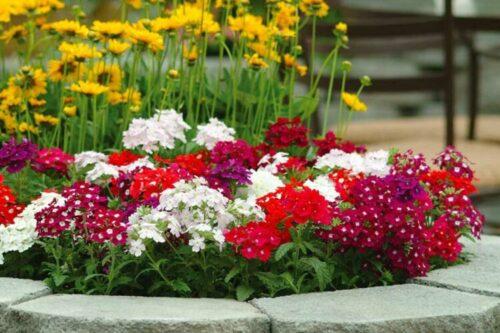
You can choose from several types of flowers that differ in color, height and habit. They have a wide range of colors: white, red, pink, various shades of purple, blue.
Note! Garden vervain can be found in flower beds, but more often it is planted in pots and boxes on balconies and terraces. Compact, beautiful flowers, they are especially recommended for growing in containers.
Veined and Canadian verbena are more common in gardens than balconies, although they also grow well in containers. They look beautiful along the edges of the tracks, and are also suitable for rockeries.
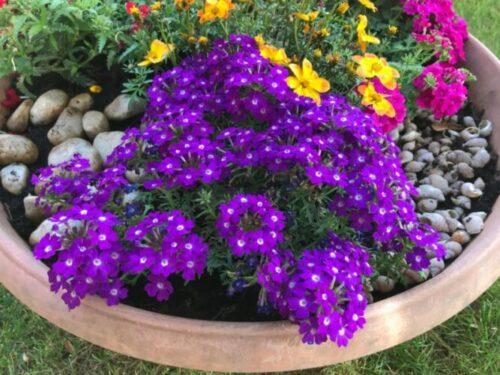
Verbena can be combined in compositions with other plants with similar requirements, such as geranium, sage, zinnia, begonia.
Cultivation of verbena
Growing vervain is not difficult. Species are resistant to disease and environmental conditions. However, it should be remembered that the better the conditions for the plants, the better they will grow and bloom profusely.
All types of verbena prefer sunny places where they grow best. They also tolerate partial shade well, but in such conditions flowering is less abundant. Feel good in urban environments. Resistant to adverse factors such as air pollution.
Verbena prefer fertile, humus and permeable soils with a neutral to slightly alkaline pH. They do not grow well in very poor and sandy, barren soils. Verbena should also not be planted in heavy clay and moist soils, because too much water in the substrate greatly increases the risk of infection with fungal diseases. If the soil is not very permeable, drainage should be done before planting verbena.
When and how to plant verbena?
You can sow verbena yourself from seeds or buy ready-made seedlings at a flower shop or garden center.
Seeds are sown in late February or early March in a greenhouse, or simply in a box on a home windowsill. Soak the seeds for 8 hours. When young plants reach 10-15 cm, it is worth pinching the tops of the shoots to make them branch beautifully.
A characteristic feature of verbena is its high sensitivity to cold. The best time for planting in open ground is mid-May, but only so that there are no sudden changes in temperature. Planted at a distance of about 20 cm from each other.
Verbena care
Verbena is worth growing primarily for its beautiful appearance. Another argument in favor of growing verbena can be its healing properties.
Note! All types of verbena are very sensitive to excess moisture, which is why they often die in cold and rainy summers. They are resistant to temporary water shortages, but require regular watering in very hot summers.
However, they should not be poured, as this can significantly reduce flowering and even lead to rotting and death of plants.
The first fertilization must occur before the first planting in the ground. Abundantly and for a long time flowering plants should be fed throughout the season with a multi-component fertilizer for flowering plants. Natural top dressings in the form of compost or biohumus are also suitable.
In the middle of summer, fertilizers rich in potassium and phosphorus are applied. Avoid significant nitrogen content in the preparation. This ingredient has a positive effect only on leaf growth. Fertilizers rich in potassium and phosphorus will encourage flowering.
pruning verbena
Verbena should be pruned regularly. Removing unnecessary shoots will allow her to bloom better. Remove all broken, as well as faded shoots.
Verbena: types
Varieties of verbena differ primarily in the size and color of the flowers. More often you can find common verbena, but other species are also common in culture.
The most popular varieties include these types.
Verbena ordinary – the most common species. Its height is about 70 centimeters, common verbena: has very small pale pink flowers. It is grown mainly for vegetable raw materials.
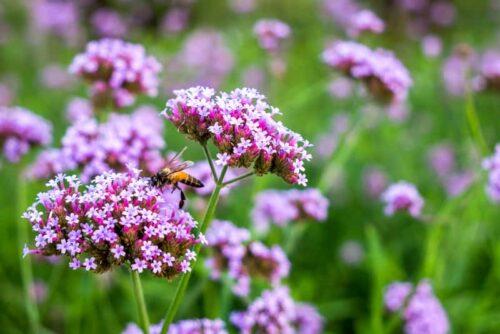
Shrub verbena has a sprawling shape, reaching up to 120 cm. The characteristic leaves are slightly serrated along the edges. Bush vervain flowers are usually blue-violet in color.
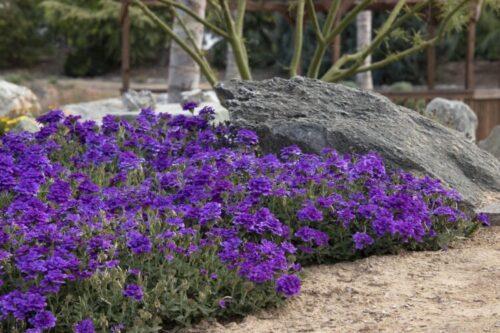
Hard verbena is one of the smallest varieties of the plant, as it reaches only 30-40 cm in height. The stems are rarely leafy, and the flowers are pale blue, sometimes turning into a lilac hue. A characteristic feature are the tiny hairs growing on the plant. Great for flower beds.
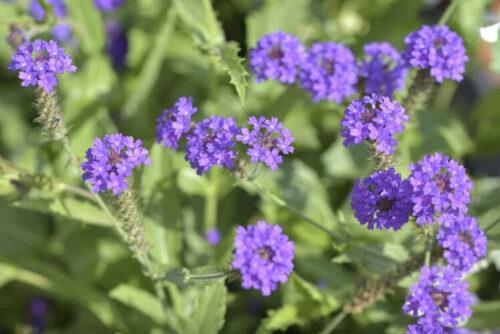
The well-known lemon verbena . Valued mainly for its strong lemony aroma. It grows up to 120 cm. It is characterized by small white flowers and long leaves.
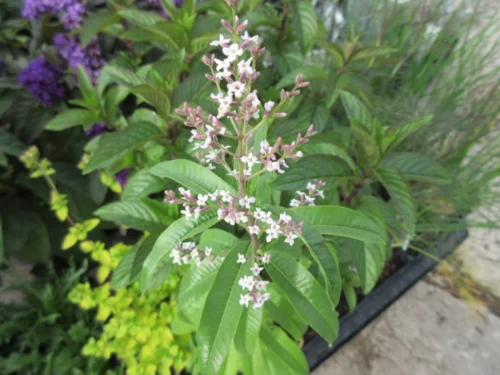
Canadian verbena reaches a maximum of 40 centimeters in height, but the stems are heavily leafy. It has characteristic flowers with pink, purple and red coloration. Blooms from mid-June to September. In addition to beautiful flowers, it is also famous for its extremely decorative leaves, bright green and pinnate.

How is verbena propagated?
Verbena is very easy to propagate, both from seeds in early spring and from cuttings in late autumn.
Additional Information! Balcony verbena can be propagated by cuttings. To do this, at the end of summer or autumn, the tops of shoots about ten centimeters long are cut off, dipped in rooting powder and placed in potting soil.
In the garden, verbena is often propagated by self-sowing. To sow on their own, collect seed pods in the fall. In February, the seeds can be grown in seedling boxes on the windowsill. It is possible to transplant the plant outside only after the last frost.
What diseases and pests threaten verbena?
Plants are rarely attacked by pests and diseases. Aphids and spider mites can be common threats. First of all, leaves are affected, flowers are somewhat less common.
If pests are removed quickly enough, all affected parts of the plant will recover. Those growing in dark places can get sick with powdery mildew, which is fought with fungicides.
Medicinal properties of verbena
Verbena tea strengthens the body. It is good for digestion and helps with liver diseases. It has anti-inflammatory properties (relieves upper respiratory tract infections and allergy symptoms). Used as an expectorant, astringent, and antipyretic. Improves mood and makes it easier to fall asleep. Relieves painful menstruation. Helps with problems with the bladder and has a positive effect on potency.
Also used externally. Compresses with decoction reduce fever, soothe wounds on the skin. Helps with eye fatigue and conjunctivitis. Gargles prepared from the leaves help with purulent sore throat.
Verbena tea recipe:
Pour 1 tablespoon of grass with 1 cup of boiling water and leave to infuse for 10-20 minutes. Use it twice a day.
Verbena tea should not be drunk by people allergic to this plant, pregnant women and young children.


